 Vin
Where to Find VIN Number on Car: Complete Guide
By VinCheck Editorial Team, Editorial Standards & Review · Published 2026-10-01 · Updated 2026-10-01 · Reviewed by VinCheck Editorial Standards
You're standing beside a used car, phone in hand, and the seller wants an answer before you've finished checking the paperwork. The quickest way to identify the vehicle is usually in plain sight, behind the windshield on the driver's side. But finding one VIN isn't enough when you're buying a car. The useful check is to compare the number in several places and stop if those sources disagree.
Table of Contents
- Where to Find VIN Number on Car
- How to Read and Decode Your VIN
- Real Example of VIN Verification Workflow
- Troubleshooting When VIN Is Obscured or Missing
- Next Steps for Vehicle Verification and History Reports
Where to Find VIN Number on Car
Start at the lower-left corner of the dashboard, viewed through the windshield from outside the car. On most modern passenger vehicles, a small plate or label sits where the dashboard meets the glass on the driver's side. You shouldn't need to open the hood, remove a panel, or climb under the vehicle to read this primary identifier.
The location is deliberate. U.S. rules had already pushed manufacturers toward a visible, permanent VIN position by January 1, 1969, and the modern format used for most passenger vehicles contains 17 characters, as explained in NHTSA's VIN guidance. A visible dashboard plate lets an inspector compare the car with its records before accepting the vehicle's identity.
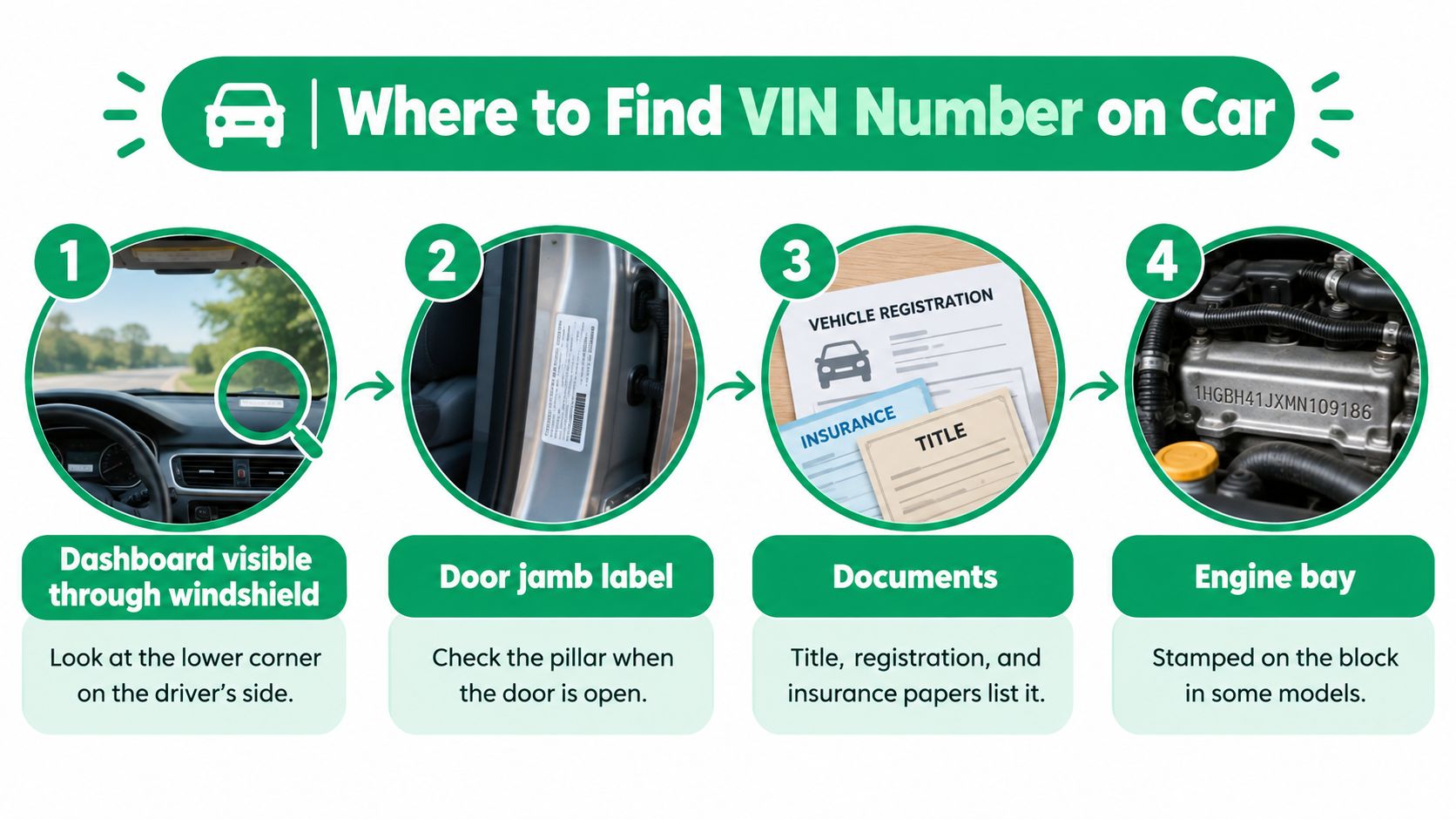
Use a three-point check
Read the dashboard VIN carefully, including every letter and number.
Next, open the driver's door and inspect the doorjamb or doorpost label. Look for the VIN on the certification label, then compare it character by character with the dashboard plate. The door label is useful confirmation, but it deserves scrutiny because a replacement door can carry a label from another vehicle.
Finally, compare both physical locations with the VIN printed on the title, registration, and insurance documents. NHTSA identifies these records as common places to find the number, and the same identifier should appear consistently across the vehicle and its paperwork. If you're checking a specific model, this Toyota Camry VIN reference can help organize the lookup after you've copied the number.
Practical rule: Don't treat a clean-looking dashboard plate as proof by itself. Agreement between the dashboard, doorjamb, and documents is what gives the number weight.
If the VIN is for a car you may sell rather than buy, accurate identification also helps you prepare an honest vehicle description and compare offers. A cash offer for your car can be considered after you've confirmed that the VIN and ownership records match.
How to Read and Decode Your VIN
A modern U.S. passenger-vehicle VIN has 17 characters, but it isn't random. It's divided into sections that describe the manufacturer, vehicle attributes, and the vehicle's individual production identity. The exact meaning of some positions varies by manufacturer, so decoding should confirm the vehicle, not replace a physical inspection.
Read the three main sections
The first three characters form the World Manufacturer Identifier, often called the WMI. They identify the manufacturer and the region or country associated with production. Don't use the first character alone to identify a car. Read the opening group together.
Characters four through eight generally make up the Vehicle Descriptor Section, or VDS. Manufacturers use these positions to describe attributes such as the model line, body type, restraint system, engine family, or other equipment details. The position assigned to the engine isn't universal across every brand, so a decoder that understands the manufacturer is safer than relying on a generic character chart.
The final portion is the Vehicle Identifier Section. It includes the model-year code, assembly plant information, and the vehicle's production sequence, although the precise arrangement depends on the manufacturer. The model-year character can repeat in the standard cycle, so it should be checked against the visible vehicle, title, and registration rather than treated as standalone proof.
Decode for consistency, not curiosity
Use a reputable VIN decoder to compare the decoded make, model, body style, engine description, and model year with what you can see. A mismatch doesn't automatically prove fraud. It might reflect a manufacturer-specific coding system, an imported vehicle, a transcription error, or a replacement component. It does mean you should pause and investigate.
A useful comparison looks like this:
| Check | What you're testing |
|---|---|
| VIN opening characters | Does the manufacturer and production region make sense? |
| Descriptor section | Does the coded vehicle type match the car in front of you? |
| Model-year information | Does it agree with the title and seller's description? |
| Plant and sequence details | Do the decoded results remain consistent with the vehicle record? |
Motorcycles and imported vehicles need extra care. International standards prioritize a VIN on the right side of the vehicle, preferably toward the front, with a durable and difficult-to-alter marking, while approved locations can differ by vehicle type and market. That's why a motorcycle may not present the same dashboard view as a U.S. passenger car. For a motorcycle-specific check, use a decoder that supports two-wheeled vehicles, and don't reject a vehicle just because its VIN isn't in the usual U.S. dashboard position.
For a passenger vehicle, you can use this 2023 Honda Civic VIN check as a lookup step after confirming the characters yourself. If decoding conflicts with the car, stop there and resolve the identity before ordering parts, arranging insurance, or paying for a history report.
Real Example of VIN Verification Workflow
A buyer inspecting a used sedan began with the dashboard plate, exactly as he should. The number was visible through the windshield, the plate looked properly fitted, and the seller's paperwork appeared complete. Instead of accepting the first match, he opened the driver's door and compared the doorjamb label.
The numbers didn't agree. Several characters matched, but the final part of the sequence was different. That's the kind of discrepancy people miss when they glance at a label instead of reading the full VIN one character at a time.
What the mismatch suggested
The vehicle had likely received a replacement door after a collision or major repair. A replacement door can carry its own original certification label, so the doorjamb VIN may identify the vehicle from which the door came rather than the car standing in front of you. That doesn't prove the entire vehicle is stolen or improperly repaired, but it means the buyer no longer has a clean identity match.
The buyer then compared the dashboard VIN with the registration and title. Those documents agreed with the dashboard, not the door. He photographed all three locations, asked the seller for repair documentation, and held off on the purchase while the discrepancy was investigated.
A mismatched door label is not a cosmetic defect. It's a reason to verify the vehicle's identity and repair history before money changes hands.
The correct response
The buyer shouldn't have tried to remove the label, replace it, or accept a verbal explanation. He needed the seller to provide documentation and, if necessary, arrange inspection by the motor-vehicle authority or a qualified professional. A history report could add useful information about title brands, accident records, recalls, or prior sales, but it couldn't make conflicting physical identifiers disappear.
This workflow also protects against practical problems after purchase. Recalls, registration, insurance, service records, and ownership records depend on the correct VIN. If the wrong number is used, the buyer may receive information for another vehicle and miss issues belonging to the car being inspected.
The decision was simple: if the seller couldn't explain the conflict with documents that stood up to independent verification, the buyer walked away. A bargain isn't a bargain when the vehicle's identity is uncertain.
Troubleshooting When VIN Is Obscured or Missing
A missing or unreadable dashboard plate doesn't always mean criminal tampering. Windshield replacement, collision repairs, corrosion, fire, and body-panel work can damage a label or its mounting area. The right response is to gather independent evidence, not to fill in the missing characters from memory.
Start with the driver's doorjamb, then check other locations permitted by the vehicle's design. Mainstream vehicles may repeat the VIN on the engine block, firewall, frame, or another permanent metal area, but placement varies by make, model, market, and vehicle type.
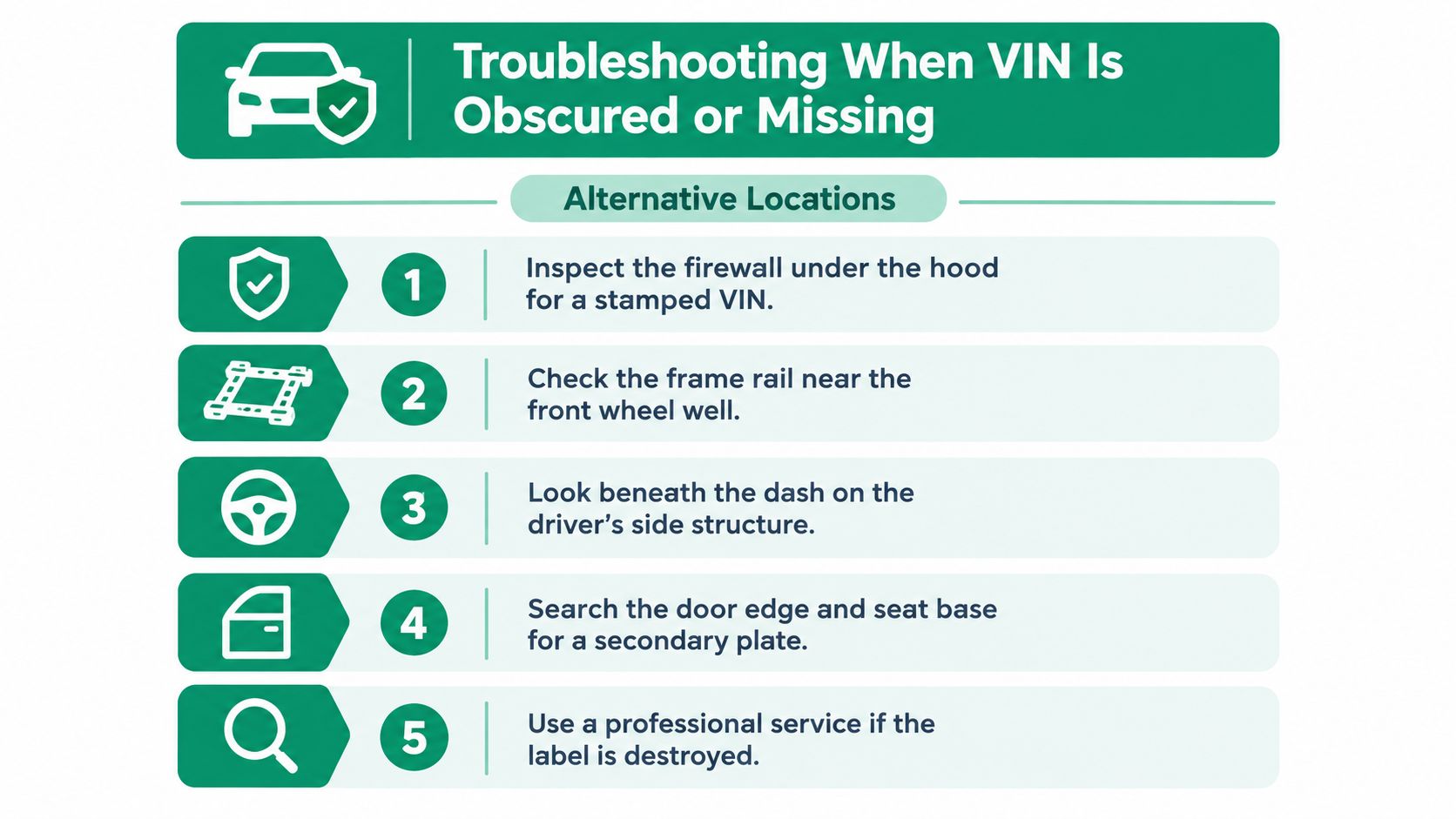
Separate damage from warning signs
A damaged label has a plausible explanation when the surrounding repair history supports it. Fresh fasteners, disturbed paint, uneven attachment, adhesive residue, scratches around the plate, or a label that doesn't sit like the surrounding factory fittings deserve closer attention. Don't make a criminal accusation from one visual clue, but don't ignore a cluster of them either.
Use the following fallback order:
- Door structure: Check the doorjamb and doorpost, while remembering that a replacement door can carry the wrong label.
- Under-hood areas: Inspect the firewall or engine bay for an approved stamped or affixed identifier, without sanding, scraping, or altering anything.
- Chassis areas: Look for a manufacturer marking on the frame or structural area where the vehicle design permits it.
- Vehicle records: Compare the title, registration, insurance documents, service invoices, and any original sales paperwork.
- Professional inspection: Ask a qualified inspector, dealer, DMV representative, or law-enforcement agency to handle a destroyed or suspicious identifier.
Older cars and imported vehicles require more patience because they may not follow the placement or coding conventions used by modern U.S. passenger cars. Motorcycles also commonly use different approved locations. The absence of a dashboard plate alone isn't enough to determine that the vehicle has a false identity.
When sources conflict
Suppose the title matches the dashboard, but the door label differs. Treat the dashboard and paperwork as leads, not a final verdict. Photograph each location, preserve the documents, ask for repair invoices, and have the vehicle inspected through the proper authority before transferring ownership.
The same approach applies when the VIN is partly unreadable. Never guess a character and run a report as though it were confirmed. A single mistaken character can return the wrong vehicle and create false confidence.
A professional should also be involved when the VIN area has been altered, moved, or replaced. Private plate swapping isn't a legitimate repair method. The vehicle's identity must be established through records and inspection, not recreated by the seller or buyer.
Next Steps for Vehicle Verification and History Reports
Finding the VIN is only the first gate. A reliable pre-purchase check combines the physical number, the decoded vehicle description, and the history attached to that identifier. If any one of those layers disagrees with the others, delay the purchase until you know why.
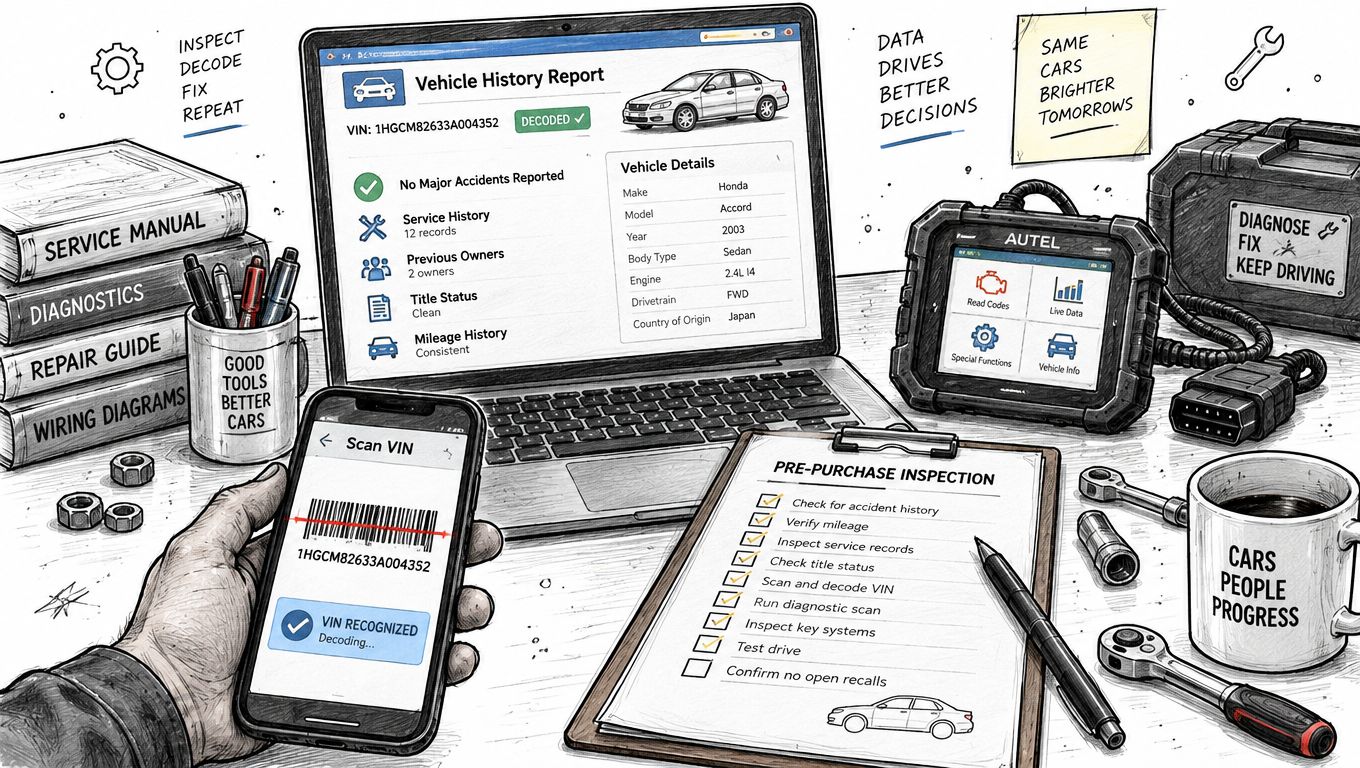
Write the VIN down from the dashboard, then verify it against the doorjamb and documents. Enter the confirmed number into a decoder and compare the result with the advertised model, engine, body style, and model year. A decoder can identify a basic mismatch, but it can't tell you whether a plate has been moved or whether a repaired vehicle is safe to buy.
Build the record before you negotiate
Run a history lookup only after you've confirmed the characters. Depending on the service and jurisdiction, a report may reveal title brands, salvage or flood records, theft information, mileage inconsistencies, recalls, liens, and prior auction activity. Treat a clean report as one piece of evidence, not a substitute for looking at the car.
A practical inspection file should contain:
- Photographs of every VIN location, including the dashboard, doorjamb, and any secondary marking.
- Copies or clear images of the title and registration, with sensitive personal information protected when sharing them.
- The decoder result, checked against the vehicle's visible specifications.
- The history report, saved with the date of the lookup.
- Repair and maintenance records, especially when the vehicle has signs of body work.
- Written explanations for discrepancies, supported by invoices or official inspection records.
For example, a history lookup for a 2023 Toyota Camry is useful only when the VIN entered is the same number physically verified on the car. Entering a number copied from an advertisement can confirm the advertisement's data while saying nothing about the vehicle in front of you.
A plate lookup can help when a seller has supplied only a license plate, but use it as a starting point. Retrieve the associated VIN, then compare it with the dashboard and paperwork. The physical vehicle remains the final object of inspection.
Use the video below as a visual aid for the inspection process, but keep your own written comparison as the record you rely on.
Walk away when the seller refuses access to the VIN, pressures you to skip the doorjamb check, or offers explanations without documentation. You can always find another car. You can't safely assume that mismatched identifiers will be easy to fix after purchase.
VinCheck offers VIN decoding and vehicle history reports that can help you compare a confirmed identifier with title, accident, salvage, theft, mileage, recall, lien, and auction records. Visit VinCheck after you've photographed the VIN locations and want a documented history check before committing to the vehicle.
About the author
VinCheck Editorial Team — Editorial Standards & Review
The VinCheck Editorial Team reviews every published article against NMVTIS data accuracy and NHTSA recall validity. This byline appears on collaborative pieces and quick-update posts.