 Vin
What Is a Lien on a Vehicle Title? a Plain-English Guide
By VinCheck Editorial Team, Editorial Standards & Review · Published 2026-09-15 · Updated 2026-09-15 · Reviewed by VinCheck Editorial Standards
A lien on a vehicle title is a recorded security interest held by a lender or creditor until a debt tied to the vehicle is paid. While it's active, the lienholder is listed on the title and the owner can't transfer or refinance the car without the lienholder's release.
You may discover this at the worst possible moment. You've bought a used car from a private seller, signed the paperwork, and arrived at the DMV expecting a routine transfer. Then the clerk points to the title record and says a lender still has a claim on the vehicle. The seller insists the loan was paid off, but the state can't complete the transfer until the lien is formally cleared.
That situation becomes much easier to handle when you know what a lien means, how it gets recorded, and why payment alone doesn't always remove it from the title.
Table of Contents
- What a Lien on a Vehicle Title Really Means
- How a Lien Actually Gets Placed on a Title
- What an Active Lien Means for Buyers, Sellers, and Lenders
- How to Check Whether a Vehicle Has a Lien
- How Liens Are Released and Cleared
- Why Lien Rules Differ by State and Title Format
- A Practical Checklist Before You Buy or Sell
What a Lien on a Vehicle Title Really Means
You can hold the keys, insure the car, and pay its registration while a lender still has a legal claim connected to it. That claim is a vehicle-title lien, a recorded security interest that remains until the related debt is satisfied. New York DMV describes a lien as a security interest held by someone other than the owner, with the lienholder identified on the title certificate and DMV records.
In everyday terms, the vehicle is collateral. It backs the loan in much the same way a house backs a mortgage. The bank or finance company does not necessarily own the car, but its claim gives it rights tied to repayment. If the borrower defaults, that claim may support repossession under applicable law.
Plain-English translation: “Security interest” means the creditor has rights connected to the vehicle because the vehicle backs the debt.
A perfected lien has been recorded in the legally recognized place and manner, so other parties can identify and respect the creditor's claim. For an ordinary titled vehicle, perfection usually involves noting the lien on the certificate-of-title record. The result is similar to placing a visible warning label on the vehicle's ownership file. However, commercial situations can follow different rules. A vehicle held as inventory may require a UCC filing rather than relying only on title notation.
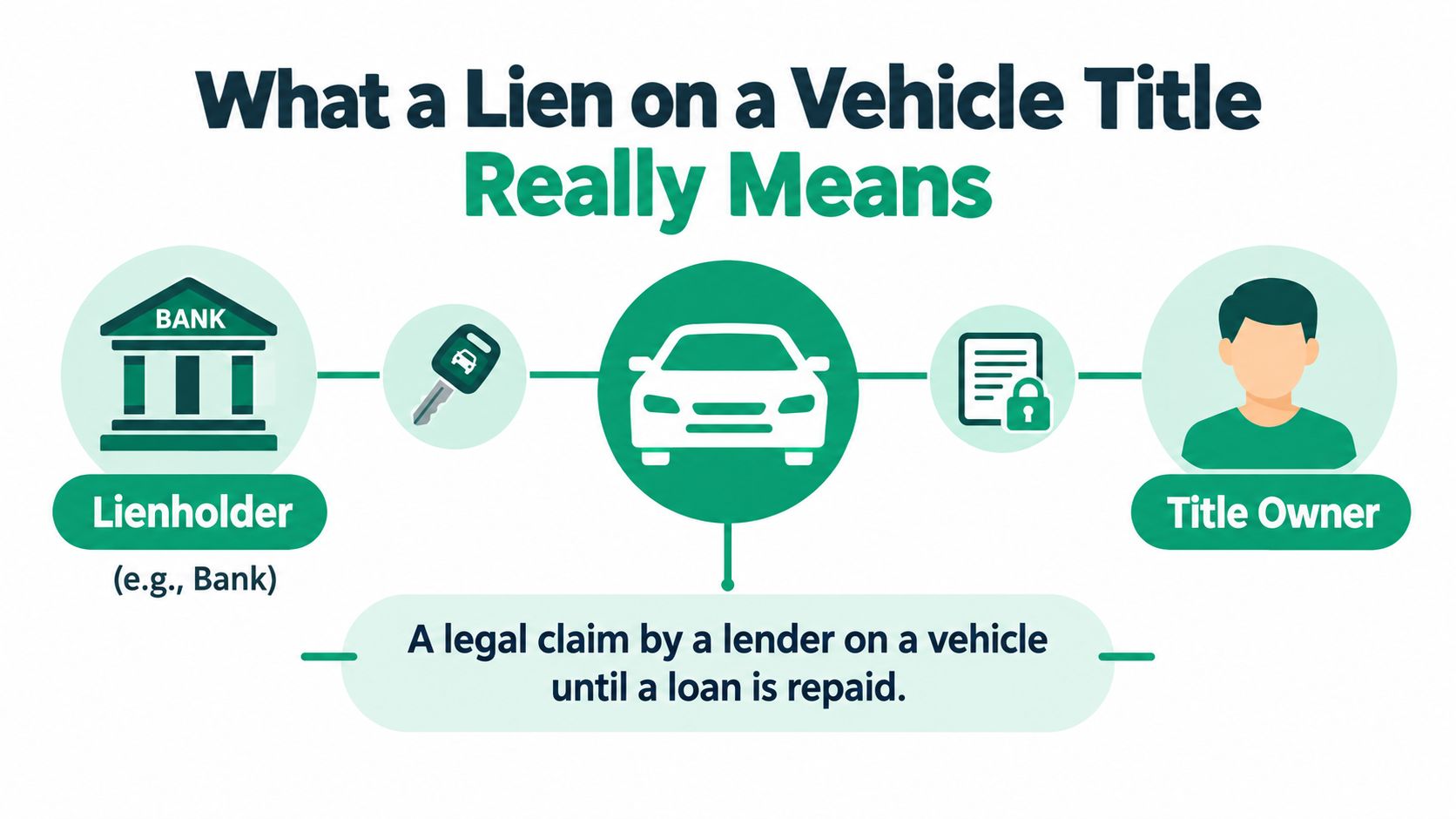
Why the DMV cares
An unreleased lien means the title record is not fully clear. The owner may encounter restrictions when selling, transferring, registering, or refinancing the vehicle because the lienholder still appears in state records. At the DMV counter, a seller's statement that the loan balance is zero may not resolve the problem.
Paying the loan and clearing the title are separate administrative events. The borrower must satisfy the debt, and the lienholder must provide or file an official release. Only then can the state remove the encumbrance from its records. That post-payoff gap is why a buyer should inspect the title status and lien-release paperwork before agreeing to a purchase.
How a Lien Actually Gets Placed on a Title
The process starts before the DMV sees the title. A buyer applies for financing, and the loan agreement identifies the vehicle as collateral. The lender approves credit based partly on that collateral and requires the lien to be recorded so the lender's interest is visible to other parties.
The paperwork usually involves several actors:
- The buyer signs the loan documents. The agreement establishes the repayment obligation and connects the vehicle to the debt.
- The dealer or seller supplies vehicle information. The VIN, purchase details, and ownership documents become part of the title application.
- The lender provides lien information. The lender identifies itself as the secured creditor.
- The state titling agency records the lien. The lienholder's name is added to the paper title record or stored electronically.
Some explanations describe a UCC-1 financing statement as a federal filing, but that wording can mislead. A UCC-1 is generally a public financing statement filed under state commercial-law systems. For an ordinary titled vehicle, the certificate-of-title record is usually the important perfection mechanism. The exact filing path can change with the vehicle's use and legal classification, so a commercial inventory vehicle shouldn't automatically be treated like a privately owned family car.
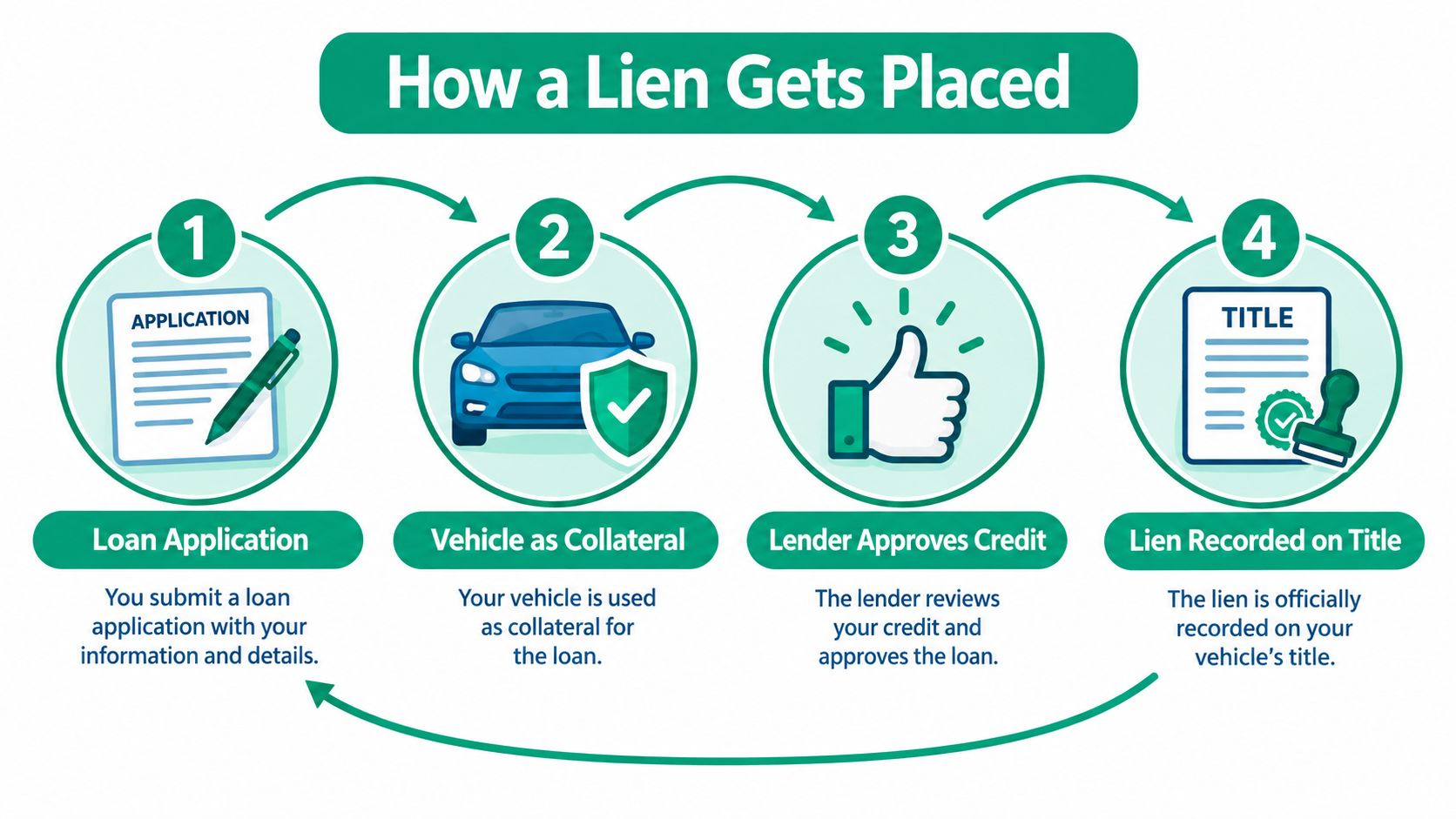
Paper titles and electronic records
In a paper-title system, the lienholder may receive or control the title document while the loan remains open. In an electronic system, the state keeps the ownership record in its database instead of issuing a paper title to the lender. California's DMV explains this structure through its Electronic Lien and Title program (California ELT program).
A lien can also arise after the vehicle's first sale. A later title loan, private secured loan, or qualifying repair-related claim may create a different kind of lien, subject to state rules and required documentation. The common thread is a recorded claim tied to the vehicle.
Removing the lien reverses this chain. The debt is paid, the lienholder issues a release, and the state updates its title record.
What an Active Lien Means for Buyers, Sellers, and Lenders
An active lien creates different problems for each person involved. The seller may still have possession of the car, but the lienholder retains title-related rights. The buyer may hold the keys and a signed bill of sale, yet still lack the clean ownership record needed for registration.
The seller's problem
A seller usually can't sign over a clean title while a lien remains active. The sale must be coordinated with the lienholder, often by confirming the payoff amount and arranging payment directly to the creditor. If the sale proceeds go to the seller first, the buyer can be exposed to a release delay or an unresolved balance.
The buyer's problem
A buyer who skips lien verification could pay for a vehicle that can't be registered in the buyer's name. An unreleased lien can also create repossession exposure if the former borrower has a continuing default, because the creditor's recorded claim is still attached to the vehicle. A signed bill of sale doesn't automatically override the state title record.
The lender's position
The lien protects the lender's collateral and supports enforcement if repayment defaults. It also creates an administrative obligation after payoff. The lender must issue a signed release, electronic release, or comparable official satisfaction document so the DMV can clear the record (vehicle lien management guidance).
A lien isn't the same as co-ownership. Two individuals may appear on a title as owners without either being a creditor. A lienholder appears because it has a security interest, not because it shares ordinary ownership.
| Party | Main Restriction | Key Risk | Required Action |
|---|---|---|---|
| Buyer | May not obtain a clean transfer | Registration delay or creditor action | Verify the lien through the title and DMV |
| Seller | Can't transfer the vehicle cleanly | Sale proceeds may not clear the debt | Coordinate payoff and release |
| Lender | Must protect its collateral and update records | Administrative disputes after payoff | File or transmit the release |
The practical lesson is direct: never treat possession of the car as proof of clear title. Confirm the record before money and keys change hands.
How to Check Whether a Vehicle Has a Lien
Start with the vehicle identification number, or VIN. Use the same VIN from the dashboard, the title, the seller's paperwork, and any history report. A mismatch is a reason to stop and ask the DMV for clarification before proceeding.
Begin with the title record
On a paper title, look for a section labeled lienholder, security interest, or similar wording. The lender's name may be printed directly on the certificate. Don't rely only on a photograph supplied by the seller. Ask to inspect the original document when possible, and compare the VIN and owner information carefully.
An electronic lien may not produce a paper title showing the lender's name. California describes ELT records as electronic ownership records stored in the DMV database, while Virginia explains that participating lenders can release liens electronically and the DMV can then mail an updated title to the owner (California and Virginia electronic title details).
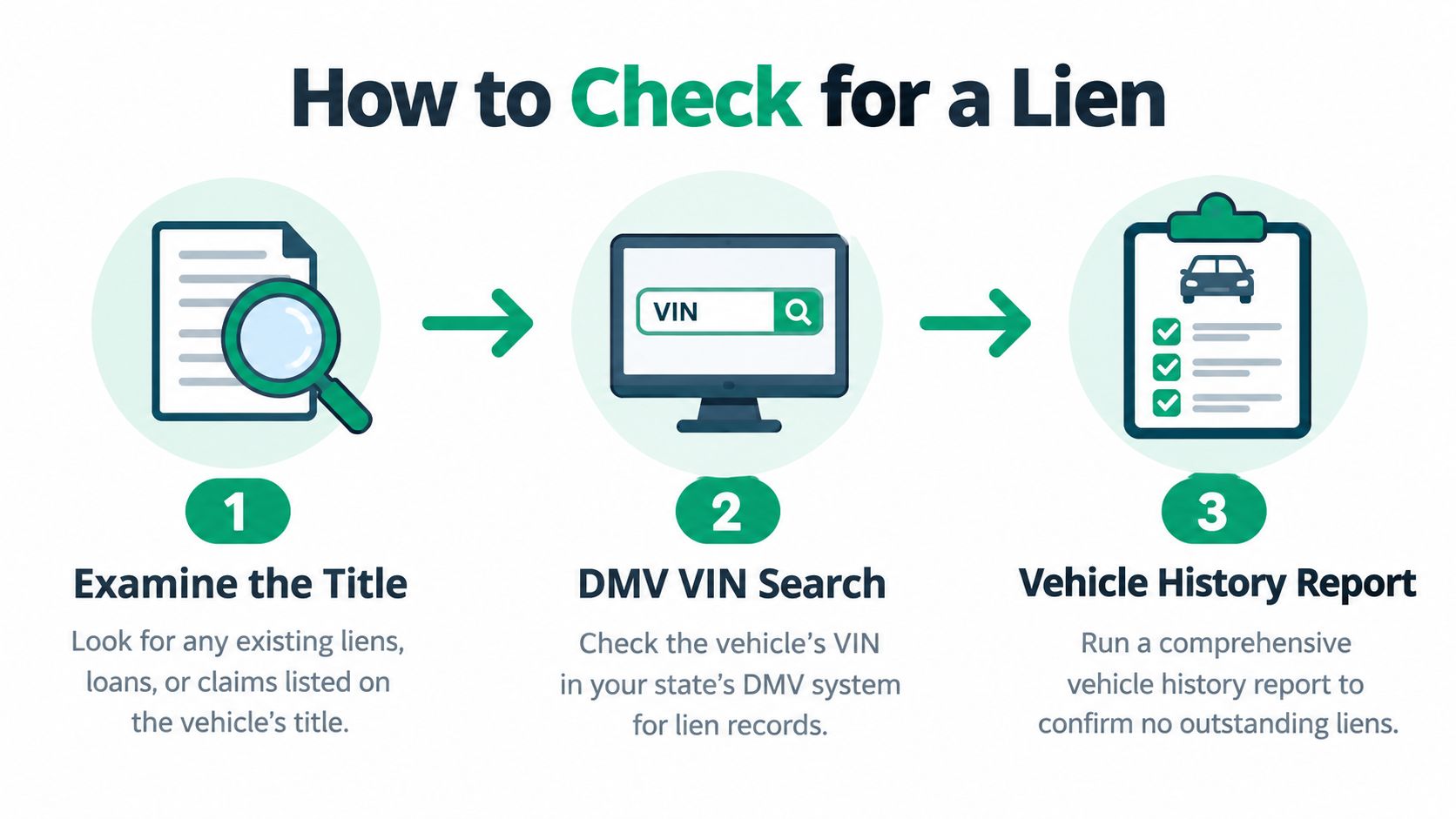
Confirm through official and independent records
Use the state DMV's VIN-based title or lien inquiry process. Rules and fees differ, but the state record is the controlling source for the title status. If the seller says the loan was paid, ask the lienholder to confirm the payoff and release status using contact information obtained independently, not only a phone number supplied by the seller.
A paid vehicle history report can add context by showing title events, brands, financing indicators, and other records. For broader guidance on record checks, review these MVR check insights from My Safety Manager. You can also use a Toyota Camry VIN check as an example of the kind of VIN-specific search buyers perform.
Use a report as a screening tool, not as a substitute for the DMV. A report that mentions an unreleased lien, a title transfer interruption, or inconsistent ownership details warrants a direct call to the state titling agency.
How Liens Are Released and Cleared
The release process begins when the borrower satisfies the debt, but the title isn't necessarily clear at that exact moment. The lienholder must complete its part by issuing a formal release or transmitting an electronic release to the DMV.
For a paper-title transaction, the owner may receive a signed lien-release letter or a title showing the lien has been satisfied. The document should identify the vehicle accurately, including the VIN, lender, owner, and relevant loan information. Keep the original paperwork, because a scan or informal email may not meet the state's requirements.
New York illustrates why formal processing matters. Its DMV generally requires original proof that the lien was satisfied, the original title certificate, and a $20 filing fee, unless the state record has already been updated (New York lien-removal procedure). That fee is state-specific, so check the DMV in the state where the vehicle is titled before mailing anything.
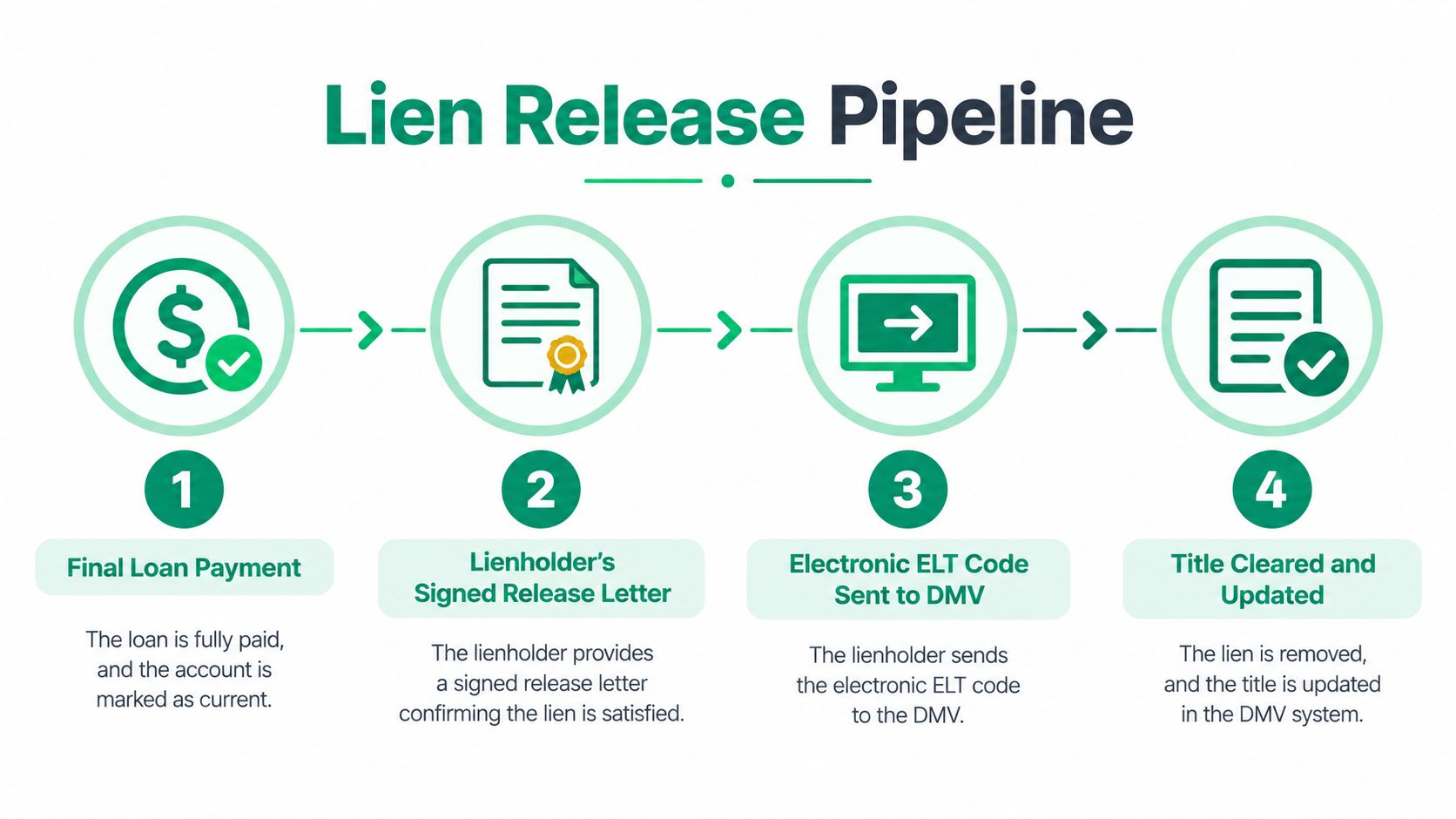
If the lender uses ELT
With an electronic lien and title system, the lender sends a release code or electronic satisfaction directly to the state. Virginia says that, when a lender participates electronically, the release can occur automatically after payoff and the DMV can mail a new title to the owner (Virginia electronic lien program information).
If the lender is out of business, contact the state DMV and ask for its abandoned-lien or defunct-lender procedure. Depending on the jurisdiction, the process may involve additional evidence, a surety bond after a required waiting period, or a court order. Don't assume a generic lien-release form will solve the problem.
Keep an evidence trail: Send payoff confirmation and follow-up requests in writing, retain delivery records, and ask the lender exactly how it will release the lien.
Why Lien Rules Differ by State and Title Format
A buyer can pay the seller and still face a title problem at the DMV. There is no single national lien workflow. Each state sets its own rules for title records, release documents, fees, electronic systems, and exceptions. A bill of sale may prove the purchase, but it does not always clear the lender's claim, especially when the vehicle crosses state lines.
The title format changes what you can see. On a paper title, the lienholder may be printed directly on the certificate. With an electronic title, the ownership and lien information sits in the state database instead. California's ELT program illustrates this model, where the lender's interest is handled through electronic records rather than a paper title held by the lender (California ELT program). The buyer may therefore need a DMV record inquiry or confirmation from the lender before treating the title as clear.
State exceptions can alter the paperwork. Georgia says a lien release is not required in some older-vehicle situations. In other applicable cases, its guidance requires the release to be mailed or delivered within five days after the debt is satisfied (Georgia lien-release guidance). Rhode Island materials show that electronic transmission may cover both first and additional liens. A record can therefore contain more than one creditor, and each applicable lien must be addressed.
| Title Format | How Lien Appears | How Release Is Sent | Clearance Time |
|---|---|---|---|
| Paper title | Lienholder printed or recorded on certificate | Signed release or updated title | Depends on lender and DMV processing |
| Electronic title | Record stored in the state database | Electronic lender transmission | Depends on system and participation |
| Older-vehicle exception | State rule may alter paperwork | State-specific evidence or release | Must be confirmed with the DMV |
| Multiple-lien record | More than one creditor may appear | Each applicable lien must be addressed | Depends on priority and release status |
For an out-of-state purchase, check the DMV instructions in both states. The title-issuing state controls the existing lien record. The destination state controls registration and transfer requirements. That distinction tells you which office must clear the old claim and which office will accept the new ownership record.
A Practical Checklist Before You Buy or Sell
A clean transaction starts before anyone signs the bill of sale. Buyers should ask for the VIN, inspect the title information, and verify the lien status through the state DMV. Sellers should contact the lender directly and obtain payoff and release instructions before advertising the vehicle as ready for transfer.
Buyer checklist
- Match the VIN: Compare the dashboard, door label, title, bill of sale, and history records.
- Inspect the title: Look for a lienholder name, security-interest notation, or an electronic-title explanation.
- Run a DMV inquiry: Use the state's official VIN-based title or lien search process.
- Request payoff confirmation: If a lien exists, ask the lender how much remains and how the release will be delivered.
- Control the payment: Use a DMV-verified or escrow-style process when the seller still owes money, rather than handing over the full amount without a release plan.
- Confirm the update: Ask the DMV what proof it needs and verify that the title can be issued in your name before taking possession.
A vehicle history report can help you compare title events and financing indicators before you spend time negotiating. A Toyota Camry value and history reference can show the type of information buyers use alongside official DMV records.
Seller checklist
- Contact the lienholder: Ask for the current payoff amount and the exact release procedure.
- Check every creditor: Confirm whether a co-signer, secondary lienholder, or additional security interest appears in the record.
- Keep originals: Retain the release letter, updated title, payoff receipt, and DMV confirmation.
- Explain the timing: Tell the buyer whether the lender will release electronically or send paper documents.
- File the transfer correctly: Follow the title and registration instructions for the state where the vehicle is titled.
Troubleshooting requires patience but not guesswork. A mismatched VIN needs DMV review. An out-of-state electronic title may require coordination between both state agencies. A lost release letter should be requested again from the lender. If the lender no longer exists, ask the DMV for its formal abandoned-lien procedure.
The most important next step is simple: confirm that the title is clean and transferable in your name at the DMV before money changes hands. Once the seller has your payment and you have the keys, a lien problem becomes much harder to solve.
VinCheck can help you screen a vehicle by VIN for title, lien, accident, mileage, theft, recall, and related history indicators before you commit to a purchase. Use the available VinCheck tools as an additional record-checking step, then confirm the final lien and title status directly with the relevant DMV.
About the author
VinCheck Editorial Team — Editorial Standards & Review
The VinCheck Editorial Team reviews every published article against NMVTIS data accuracy and NHTSA recall validity. This byline appears on collaborative pieces and quick-update posts.