 Vin
Mileage Discrepancy on Title Explained and Fixed
By VinCheck Editorial Team, Editorial Standards & Review · Published 2026-09-10 · Updated 2026-09-10 · Reviewed by VinCheck Editorial Standards
You're standing at a dealership counter with a buyer ready to sign. The car looks clean, the dashboard shows a believable reading, and the inspection didn't reveal anything alarming. Then someone compares the current odometer with the previous title and finds that the older document shows more miles than the car does today. The sale pauses immediately.
A mileage discrepancy on title can look like a simple clerical mistake, a replaced instrument cluster, or evidence of odometer fraud. The paperwork may not tell you which explanation is correct. It only tells you that the mileage record no longer lines up, and that the next title transfer may carry a formal odometer brand.
That distinction matters. A branded record can damage trust, reduce marketability, complicate financing, and affect what a future buyer is willing to pay. Yet an innocent owner may still have a path to prove the correct mileage with maintenance records, inspection documents, and work orders.
The National Highway Traffic Safety Administration estimates that odometer fraud affects 3.47% of vehicles during their first 11 years, with about 452,000 cases annually and average consumer losses of $2,336 per case. The same study calculated nationwide annual losses of roughly $1.056 billion, with confidence bounds from $737 million to $1.376 billion. These figures come from NHTSA's foundational odometer fraud study.
This guide follows the paperwork from the first mismatch to the final decision. You'll learn what the title brand means, how to separate fraud from a cluster replacement or disclosure error, which records strengthen your explanation, and how a state motor vehicle agency may review the evidence. By the end, you should know whether to walk away, renegotiate, or work to correct the record.
Table of Contents
- What a Mileage Discrepancy on a Title Really Means
- Common Causes Behind a Mileage Discrepancy
- How to Investigate and Document a Discrepancy Before You Buy or Sell
- How to Correct a Mileage Discrepancy and Avoid a Permanent Brand
- How a Mileage Discrepancy Affects Value Insurance and Reporting
- Making a Confident Decision With a Branded Title
What a Mileage Discrepancy on a Title Really Means
Think of a vehicle title as a mileage passport. Each owner, dealer, inspection station, or state agency adds another stamp to the vehicle's travel history. The current odometer is only the latest stamp. The title and disclosure documents preserve earlier entries, and a later reading generally shouldn't be lower than an earlier verified reading.
An odometer discrepancy is commonly applied when the mileage verified during a transfer is lower than a prior mileage recorded on the surrendered title or disclosure statement. In plain language, the paperwork says the vehicle had traveled farther before than the current reading suggests. Oklahoma's title rules describe this situation as a discrepancy that can follow the vehicle's record across later transfers, including transfers between states. See the Oklahoma odometer discrepancy regulation.
The title can also communicate different things about the reading:
- Actual: The signer is stating that the displayed mileage is the vehicle's true mileage.
- Not Actual: The displayed reading isn't known to represent the vehicle's true total mileage.
- Exceeds Mechanical Limits: The odometer has reached the limit it can display and no longer communicates the full mileage.
- Odometer Discrepancy: A verified reading conflicts with an earlier recorded reading.
These labels aren't interchangeable. A replacement cluster may explain why the dashboard shows less mileage, but the explanation doesn't automatically restore the reading to “Actual.” The agency needs evidence that supports the vehicle's true mileage and the sequence of events.
Practical rule: Treat the title brand as a statement about the reliability of the mileage record, not as automatic proof that someone committed fraud.
Once a discrepancy is entered, it typically remains in the paper trail during subsequent out-of-state title transfers. That persistence is why a buyer should compare the current odometer, prior title readings, and disclosure forms before signing. A clean-looking vehicle can still carry a permanent paperwork problem.
Common Causes Behind a Mileage Discrepancy
A mismatch has two separate questions behind it. First, what caused the numbers to differ? Second, can the owner prove that explanation well enough for the state to accept it? The title system may react to the mismatch before it knows the answer to the first question.
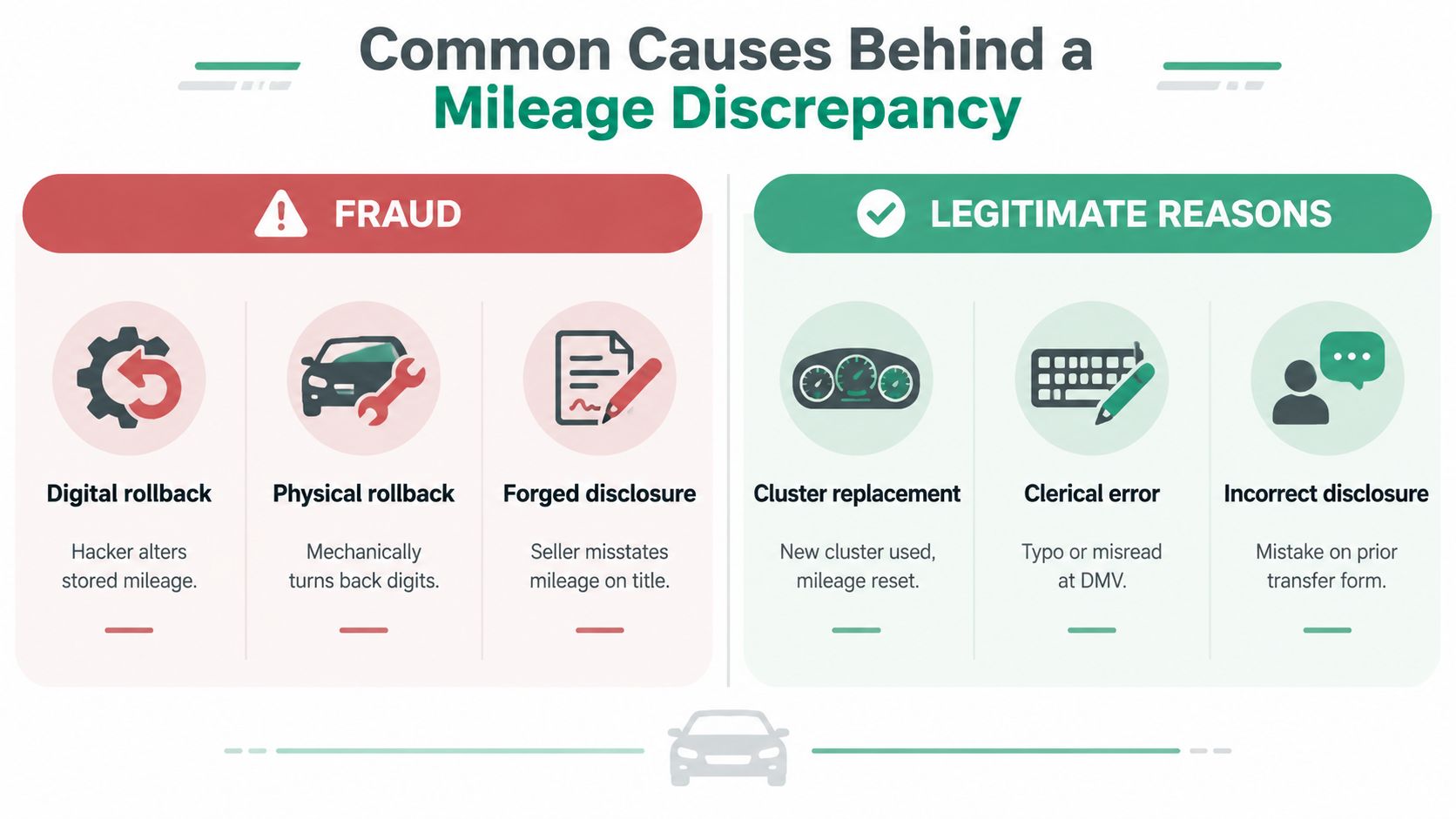
Fraud is one possible cause. Someone may alter stored digital mileage, mechanically turn back digits, or submit a false odometer disclosure. NHTSA says that more than 450,000 vehicles are sold each year with false odometer readings, confirming that the problem remains active in the used-car market. You can review the agency's current odometer fraud guidance for the federal enforcement context.
Legitimate explanations can produce the same warning:
- Cluster replacement: A damaged instrument cluster is replaced, and the replacement unit displays a lower or unknown reading. The repair itself may be legitimate, but the owner needs the invoice, parts documentation, and mileage records from before and after the replacement.
- Clerical error: A clerk, seller, or buyer enters the wrong digit, misreads the display, or copies a number incorrectly. A single inconsistent entry surrounded by matching records may point toward paperwork trouble rather than tampering.
- Incorrect disclosure: A prior owner makes a mistake on the transfer form. The error still becomes part of the vehicle's official history unless the agency accepts evidence supporting a correction.
- Mechanical limits: An older vehicle may have an odometer that has passed the limit it can display. That situation can lead to an “Exceeds Mechanical Limits” status rather than a straightforward mileage statement.
- Digital or physical rollback: An altered reading becomes more suspicious when service records, inspections, auction entries, and title events show a descending pattern or unexplained gaps.
The important point is that innocence doesn't erase the paperwork problem. Oklahoma rules recognize that a discrepancy brand may appear alongside “Actual,” “Not Actual,” or “Exceeds Mechanical Limits” statuses, depending on the verified disclosure and the title history. The Oklahoma title-status regulation illustrates why a lower current disclosure can still trigger a formal record issue even without direct proof of rollback.
A seller with a replaced cluster should start building the file before attempting a transfer. A buyer should compare the documents before relying on a verbal explanation.
How to Investigate and Document a Discrepancy Before You Buy or Sell
Begin with the vehicle, not the seller's explanation. Record the VIN, photograph the dashboard showing the current odometer, and note whether the display appears original or recently installed. A photo creates a dated reference for your file, though it doesn't prove the vehicle's total mileage by itself.
Build the mileage timeline
Collect every document that can place the vehicle at a particular mileage. Put the records in chronological order and compare the numbers rather than reading each document in isolation.
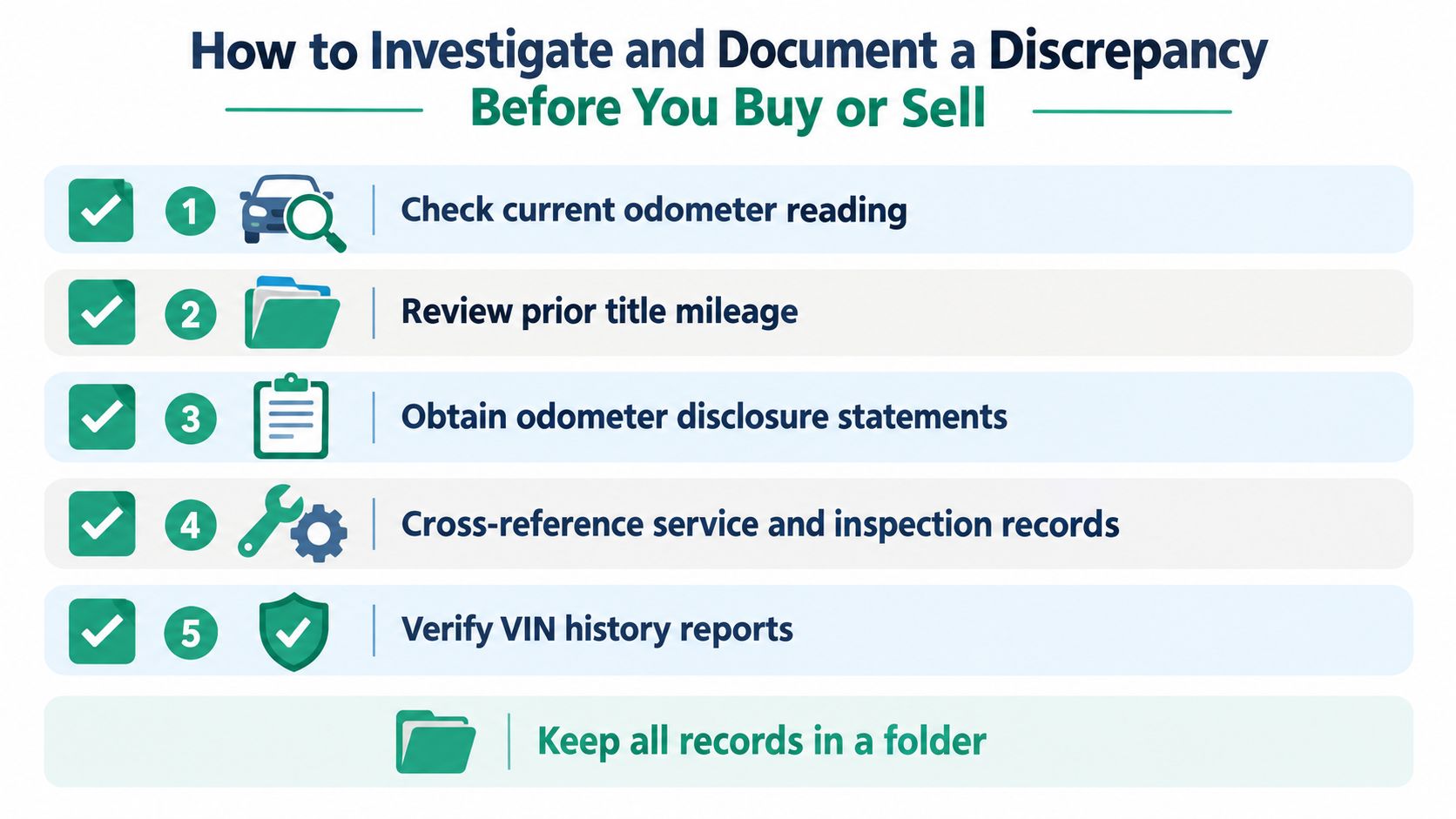
- Current odometer: Photograph the reading and write down the date of inspection.
- Prior title: Identify the last recorded mileage and whether the title contains an odometer status or brand.
- Disclosure statements: Request signed odometer disclosure forms from relevant transfers. Look for numbers that don't match the titles issued around the same time.
- Service and inspection records: Oil-change invoices, repair orders, state inspection receipts, tire invoices, and warranty documents can establish that the vehicle had reached a particular mileage before the current reading appeared.
- VIN history: Review title events, auction records, accident entries, salvage records, and mileage entries for a descending sequence or a sudden unexplained change.
A service invoice is especially useful when it clearly shows the VIN, date, mileage, repair description, and business identity. A vague handwritten note is weaker because it's harder for an agency or buyer to connect it to the vehicle and event.
Keep originals safe, send copies when possible, and label every document with the event it supports.
Check independent records
The seller's folder is only one source. Compare it with a VIN history report and any records available through the state title agency. A history report can surface a mileage entry that the owner never saw, while an inspection record may confirm that the vehicle had more miles before a cluster replacement.
For an additional mileage review, you can use VinCheck's Toyota Camry VIN check as one research option. The useful result isn't a single number treated as unquestionable truth. It's the pattern formed by title events, service documents, auction listings, inspection records, and the dashboard reading.
Decide what the pattern supports
A lone lower entry with a matching repair invoice may support a clerical error or cluster replacement. Several lower entries, missing disclosures, altered-looking documents, or a seller who refuses to provide records deserve much more caution.
Don't ask only, “Can this car be driven?” Ask, “Can the mileage be defended in writing?” If the answer is no, the buyer should price the vehicle as a documentation risk or decline the transaction.
How to Correct a Mileage Discrepancy and Avoid a Permanent Brand
Correction starts with the state that controls the current title. Requirements differ, so contact the motor vehicle agency before submitting documents and ask which odometer correction form, inspection, disclosure statement, and supporting records it requires. Don't cross out the title or create a replacement disclosure without instructions. A homemade correction can make the file harder to review.
Submit a complete evidence packet
Organize the packet so an examiner can follow the vehicle's history without guessing. Include the title, current odometer photograph, prior titles or copies, odometer disclosure statements, repair invoices, inspection records, maintenance history, and work orders connected to a cluster replacement.
A strong packet answers four questions:
- What mileage did the vehicle show before the event?
- What happened to the original odometer or cluster?
- What mileage did the replacement display?
- Which documents connect each reading to this VIN?
If a repair shop replaced the cluster, ask for a detailed invoice or a duplicate work order. The document should identify the vehicle and explain the work. If a prior disclosure contains a typo, gather surrounding records that show the correct sequence rather than relying on a verbal statement from the previous owner.
Understand the agency's review
Virginia DMV describes a process in which the agency may hold the title while the owner gathers maintenance records, inspection records, and work orders. If the evidence supports the true mileage, the title may remain “Actual.” If the evidence isn't accepted, the title is branded “Not Actual” using the higher mileage. The Virginia DMV odometer guidance explains this proof-based approach.
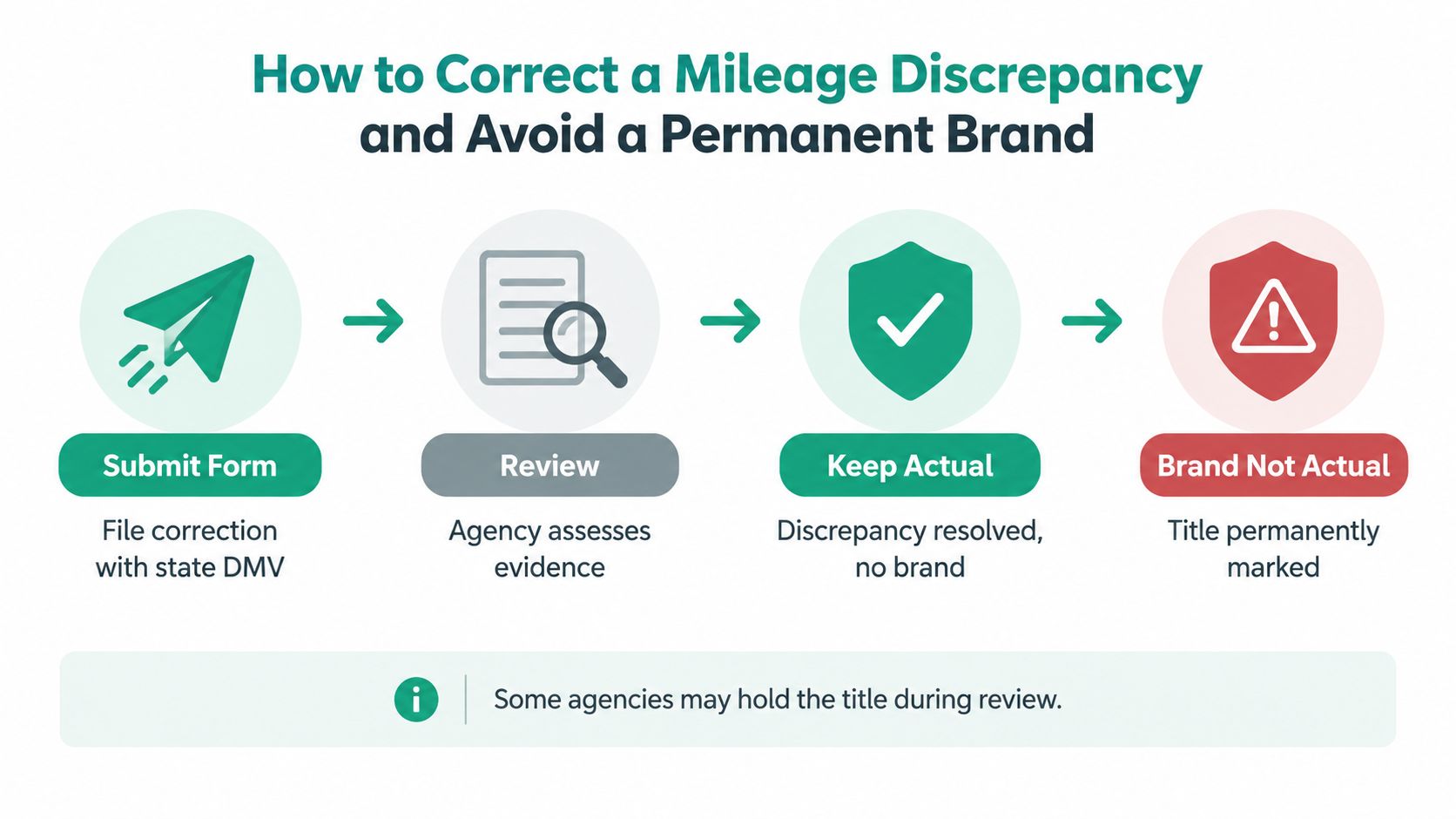
The agency isn't choosing the number that looks convenient. It's deciding whether the evidence establishes a reliable mileage record. That's why a folder containing multiple independent records is more persuasive than a single unsupported claim.
Disclose the result before transfer
If the title receives a “Not Actual” or discrepancy brand, disclose it to the buyer and follow the required title and odometer forms. Don't describe the car as having “verified actual miles” unless the official record supports that statement.
Out-of-state movement doesn't make the brand disappear. It can follow the title record into the next state, so resolve the issue before transfer whenever possible. If the agency rejects the evidence, ask for the reason in writing and consider a title professional or attorney familiar with the state's motor vehicle procedures.
How a Mileage Discrepancy Affects Value Insurance and Reporting
A title brand changes the buyer's question from “How many miles are on this car?” to “How much confidence can I place in that number?” That uncertainty affects more than the dashboard. It can influence the vehicle's marketability, financing review, insurance underwriting, and future resale.
Virginia DMV states that a “Not Actual” odometer brand can greatly diminish vehicle value. The agency also explains that supporting evidence, such as inspection records, maintenance records, or work orders, may help an owner keep the title unbranded. You can compare the official record with the vehicle's broader history before discussing price.
Value and negotiation
A buyer usually has less negotiating power when the seller can produce a consistent, agency-accepted record. A buyer has more negotiating power when the title is branded, the cause is unclear, or the supporting file is incomplete. The vehicle may still be mechanically sound, but the title status creates a future resale problem that belongs in the offer.
Use a value estimate as a reference, not as proof that the brand has no effect. VinCheck's Toyota Camry value page can provide pricing context, while the title and history records determine how comparable the vehicle really is to an unbranded example.
Insurance and lending
Insurers and lenders evaluate title status differently, so ask them directly before committing. A branded title may lead to additional questions about prior damage, ownership history, or the reliability of the mileage record. Even when coverage is available, the insurer may need a clear inspection record and documentation of the vehicle's condition.
Resale and reporting
Title brands can appear in vehicle history reporting and remain visible when the vehicle changes owners or crosses state lines. A future buyer may see the same warning and ask for the records you should be collecting today.
NHTSA's modern guidance states that more than 450,000 vehicles are sold annually with false odometer readings, and NPR reported Wisconsin DOT data showing nearly 6,000 vehicles in that state showed signs of rollback in the prior year, more than triple the year before. Those figures are documented in NPR's reporting on mileage rollback enforcement. They explain why buyers, dealers, lenders, and agencies treat an unexplained lower reading seriously.
Making a Confident Decision With a Branded Title
A branded title isn't an automatic reason to reject a vehicle, and it isn't a reason to ignore the warning. Make the decision based on cause, evidence, official status, and price.
- Buying: Walk away when the seller can't explain the mismatch or won't provide records. Consider proceeding only when the title status is clear, the evidence is consistent, and the price reflects the documentation risk.
- Selling: Assemble the disclosure forms, repair invoices, inspections, and title history before advertising. Explain the brand accurately and give the buyer a copy of the supporting file.
- Correcting: Contact the state agency, submit the requested evidence, and ask whether the title can remain “Actual” or must receive a “Not Actual” brand.
- Financing or insuring: Confirm eligibility before paying a deposit. A lender or insurer may have requirements that the seller can't answer.
Run a VIN history check, compare every mileage entry, estimate the vehicle's value, and keep a complete disclosure packet. If ownership, fraud, or title liability is disputed, seek advice from the DMV or a qualified attorney rather than guessing.
For buyers comparing vehicles by make, VinCheck's Toyota vehicle research page can help organize additional model research before you commit. The final decision should rest on the official title, the evidence behind the mileage, and your willingness to accept the resale consequences.
VinCheck can help you review VIN-linked mileage records, title brands, auction history, accidents, recalls, and other vehicle status indicators before a purchase or transfer. Visit VinCheck to compare the reported mileage with the title and service paperwork, then use that evidence to negotiate, correct the record, or walk away with confidence.
About the author
VinCheck Editorial Team — Editorial Standards & Review
The VinCheck Editorial Team reviews every published article against NMVTIS data accuracy and NHTSA recall validity. This byline appears on collaborative pieces and quick-update posts.