 Vin
Lien Check VIN: How to Verify Car Titles Before You Buy
By VinCheck Editorial Team, Editorial Standards & Review · Published 2026-09-27 · Updated 2026-09-27 · Reviewed by VinCheck Editorial Standards
More than 680 million current title records and over 1.2 billion title-history records were in NMVTIS in federal fiscal year 2024, but a VIN report still isn't the final answer on an active lien. Most liens are hidden in state databases rather than visible on the paperwork a seller hands you, so a quick search through the relevant DMV is the only reliable first step.
You may be looking at a used car right now, holding a supposedly clean title while the seller waits for your payment. The vehicle looks right, the VIN on the dashboard appears to match the advertisement, and the price feels too good to ignore. That's exactly when buyers get hurt. A lien can survive behind outdated paperwork, an electronic title record, or a release that was never properly filed.
A lien check by VIN helps uncover the problem, but it should be treated as a screening tool. Before you pay, you need a current title-status search, direct lender confirmation when financing appears anywhere in the record, and documents that match the vehicle and seller.
Table of Contents
- The Hidden Debt Risk in Used Car Deals
- Where to Search for Lien Records
- How to Interpret Lien Report Results
- The ELT Trap and Physical Documents
- Documents You Must Request Before Paying
- Your Final Pre-Purchase Verification Checklist
The Hidden Debt Risk in Used Car Deals
A first-time buyer finds a clean-looking pickup from a private seller. The seller produces a paper title, the names seem plausible, and nothing on the document immediately suggests trouble. The buyer pays, drives home, and later discovers that the state won't complete the transfer because a finance company still has a claim recorded against the vehicle.
The buyer didn't necessarily make a careless mistake. The mistake was treating the paper title as the complete ownership record. A title in the seller's hand can be old, incomplete, or disconnected from a current electronic lien record. New York's official title-and-lien service, for example, displays the number of liens, each lienholder's name and address, and the title issue date when the required vehicle details are supplied through the DMV system. That makes the state record central to determining whether ownership can transfer cleanly. (New York DMV title and lien status service)
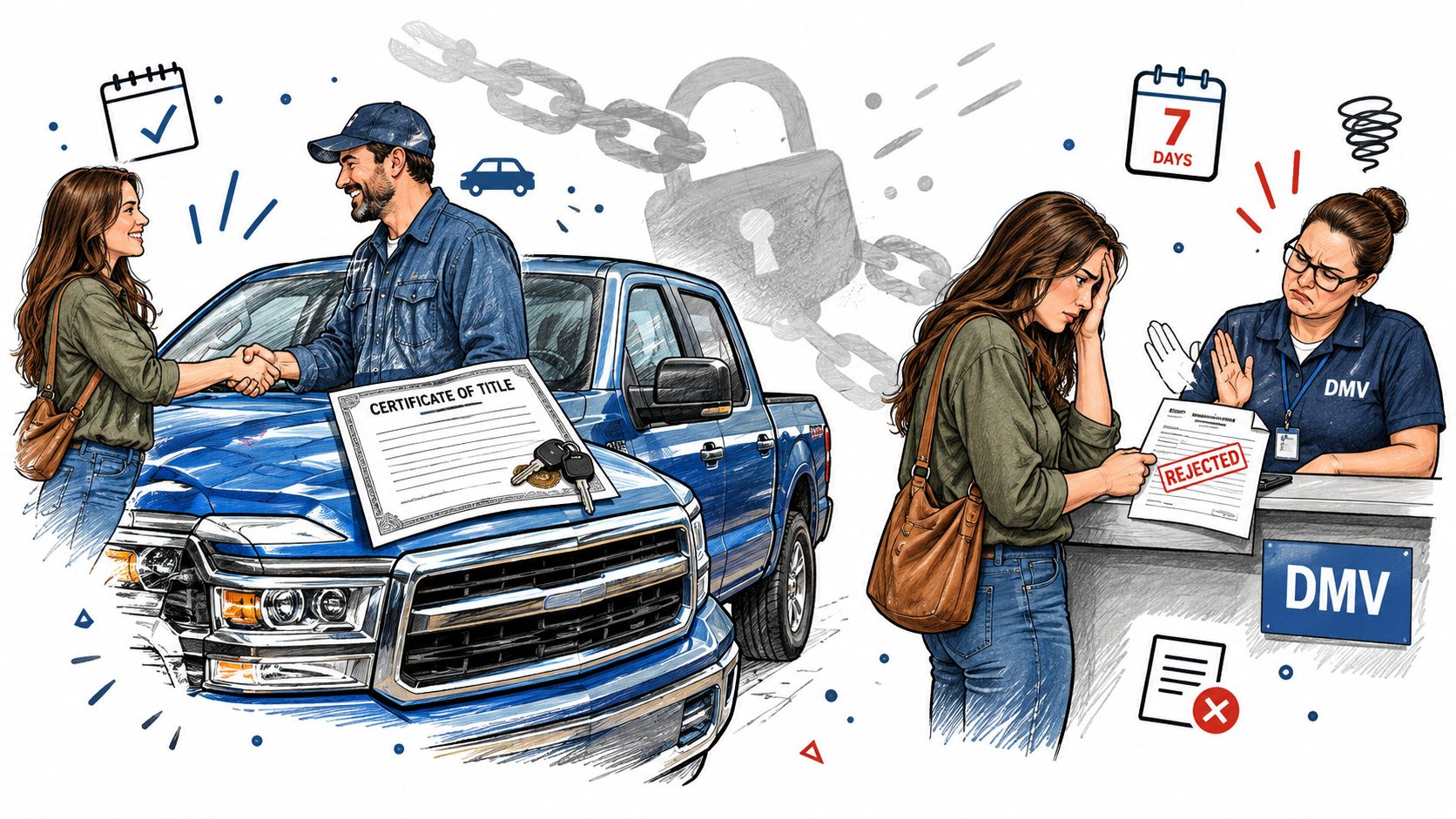
Why a clean-looking title isn't enough
A lien is a lender's legal interest in the vehicle. Until the debt is paid and the lien is released through the proper process, the seller may not have the power to deliver clear ownership. If you pay the seller first, you may be left chasing someone else while the lender remains focused on its collateral.
The danger is greater in a private sale because no dealership title clerk or finance department is standing between you and the paperwork. A seller can believe a loan was paid off while the lender's release remains unrecorded. A dishonest seller can also show you a document that no longer reflects the current state record.
Practical rule: Never confuse possession of a paper title with proof that the vehicle is free of claims.
Start with the VIN physically displayed on the vehicle, not just the number copied into a listing. Compare it with the title, the registration, and the seller's identity documents before discussing final payment. A mismatch is a stop sign, not a minor clerical issue.
Where to Search for Lien Records
No single VIN search protects you from every lien problem. Use each source for a specific purpose, then verify any active claim with the lender before paying the seller.
State DMV records
The state titling agency remains the starting point because it holds the formal title record. Search the state where the vehicle is currently titled, then check earlier states if the title history shows relocation. Some agencies require more than a VIN. New York asks for the VIN, make, and model year, while New Jersey uses its own title and lien search process, form, and fee. The CARFAX explanation of title and lien searches outlines why these state records matter.
Request current title and lien status specifically. A general vehicle-history report may show useful history without answering whether a lien is recorded now.
NMVTIS records
NMVTIS helps screen for title brands, theft indicators, salvage information, odometer issues, and total-loss records. Its national coverage makes it useful for identifying problems that a single-state search may miss. Review the NMVTIS data and transaction details for the system's scope and reporting context.
Use NMVTIS as a title and theft screen, not as final proof that the vehicle has no lien. Lien information can come through separate reporting channels, and coverage may differ by state and lienholder. A clean NMVTIS result therefore supports the transaction, but it does not replace a state record search or direct payoff verification.
Commercial reports and lenders
Commercial reports provide a fast first filter. They may flag branded titles, prior damage, ownership history, or reported lien indicators before you arrange a DMV search. A VIN report for a Toyota Camry shows the kind of vehicle-specific lookup a buyer can use at this stage.
Treat that report as a starting point. Compare its VIN and title details with the vehicle and documents in front of you, then move to the state record when the purchase remains viable.
The lender controls the payoff and lien release process. If any search suggests a lien, contact the finance company independently and request current payoff instructions. Confirm where payment must go and how the lender will document release. Commercial reports offer speed. The state record establishes the recorded title position. The lienholder confirms what must be paid and what happens afterward.
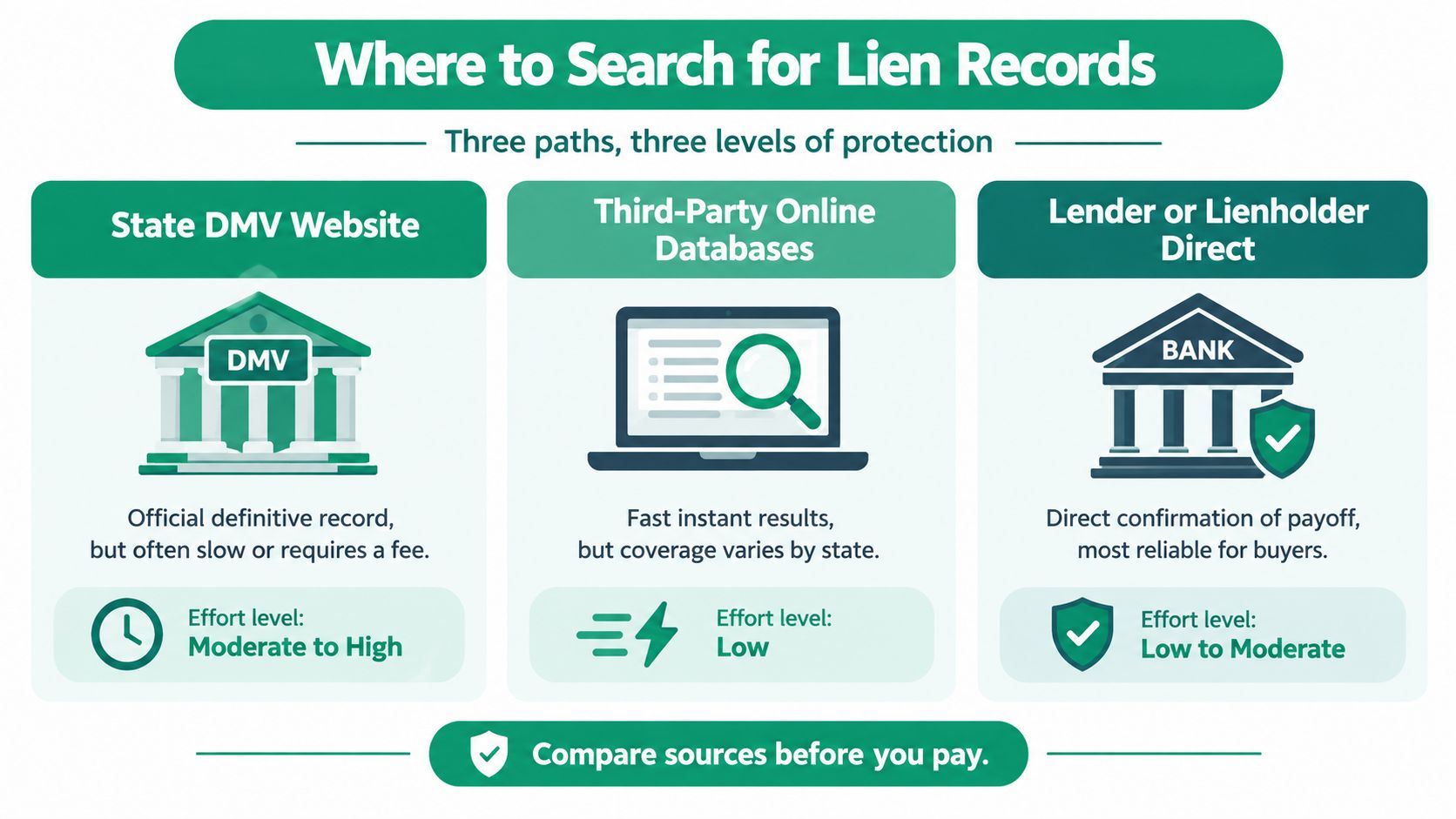
How to Interpret Lien Report Results
A lien entry is a warning, not an automatic deal breaker. It means a lender or another claimant may still have a financial interest in the vehicle. Do not hand the seller your money until the claim is resolved through a documented payoff and release process.
Match the result against the title issue date, lienholder name, seller identity, and VIN. Any mismatch deserves an explanation before negotiations continue. If the report names a bank or credit union, find its contact details independently and call directly. Never rely only on a phone number supplied by a seller who is rushing you.
When the report lists a lien
Request a current payoff statement from the lender. The statement should identify the vehicle, specify the amount required to satisfy the account under its terms, and explain where payment must be sent. The seller should not control the only copy of this information.
Set up closing so the money and release process are connected. A lender branch, licensed escrow service, title company, or coordinated DMV transaction can reduce the risk of paying the seller while waiting for a lien release that never arrives.
Keep every payoff instruction, receipt, and lender communication with the purchase file. A verbal promise from the seller is not a release.
When the report shows no lien
A clean result is a starting point. Pull the state title record next, then ask the seller in writing whether the vehicle has ever been financed. Keep the written answer with the report, title documents, and purchase agreement. Official guidance describes the limits of lien information in title-related reporting, so the report cannot replace direct verification. (NMVTIS lien-data limitations)
Inspect the title details and compare them with the vehicle and seller. If the seller refuses a state-record check or will not answer the financing question in writing, stop the transaction. This guide to title insurance for property buyers explains why ownership claims require document-level verification, although vehicle title procedures follow state rules.
A value report helps judge whether the asking price is reasonable, but it does not clear a lien. Use a Toyota Camry value lookup for negotiation context. Use the state record and lender confirmation to decide whether the transfer is safe.
The ELT Trap and Physical Documents
Electronic Lien Titles, or ELTs, are where many buyers misread the evidence. In an ELT system, the lender's interest is held electronically through the state's title process. The borrower may never receive a current paper title while the loan remains open, and a paper document produced at the sale may be an older version that no longer controls.
That creates a dangerous visual illusion. The seller opens a folder, shows you a title, and expects the document to settle the question. It doesn't. The controlling record may sit with the DMV and lender, not in the seller's filing cabinet.
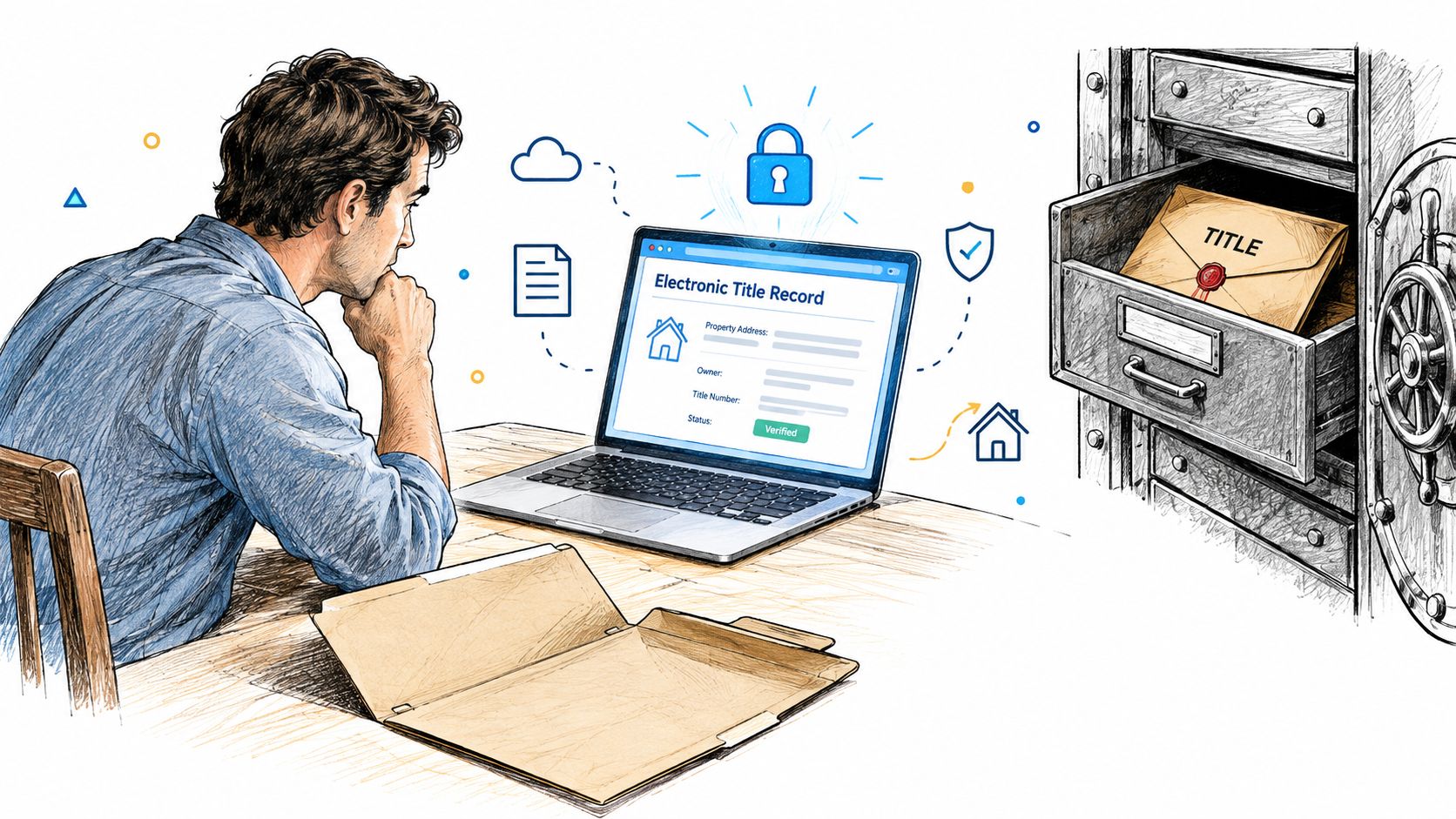
Why the paper can mislead you
A paper title may show an old lienholder, a prior release, or no current information at all. A seller may also have a registration card, a photocopy, or an older release letter. None of those items independently proves that the state has removed the current lien.
The proper question isn't, “Does the seller have a title?” Ask, “Does the current state record show a released lien, and can the lender confirm that release for this VIN?”
Electronic systems also create timing problems. The seller may have paid the lender, but the lender may not yet have transmitted the release. The state may then continue to show the lien even though the seller believes the debt is gone. That is a closing problem, not something you should solve with trust.
A paper title is evidence. A current title record and matching lender release are verification.
If the report shows a lien and the seller says it was paid, require a current release issued by the lender. Check the VIN, lender identity, seller identity, dates, and state filing instructions. A generic statement that “the bank cleared it” isn't enough.
This short video can help illustrate why electronic records and physical paperwork don't always tell the same story.
For dealer, auction, and cross-border purchases, build extra time into the closing process. ELT rules, release procedures, and title-transfer requirements vary by state, so a vehicle that appears ready for delivery may still be blocked from registration until the lender's release is processed. (Bankrate guidance on obtaining a lien release)
Documents You Must Request Before Paying
Don't hand over money because the seller promises to send paperwork later. If a lien appears, or if the title status is unclear, make the transaction conditional on documents that prove how the debt will be cleared.
The payoff statement
A payoff statement comes from the lender, not the seller. It identifies the amount required to close the loan under the lender's stated conditions and provides payment instructions. Payoff amounts can change, so an old balance estimate or a screenshot from a finance app shouldn't control the closing.
Ask the lender to confirm the vehicle's VIN and the borrower or seller associated with the account. Contact the lender independently, using its official website or published customer-service channel.
The lien release
The lien release is the document or electronic filing that removes the lender's claim. Depending on the state and title system, the release may be transmitted electronically or supplied as a signed document for submission to the titling agency.
A payoff receipt proves money moved. It isn't always the same as a recorded release. Keep both, and ask who is responsible for filing the release and issuing the new title.
The identity and VIN checks
Verify the VIN character by character across every relevant item:
- Vehicle VIN: Read the VIN from the dashboard and compare it with the driver-side door label and the title.
- Title record: Confirm the title's make, model year, owner name, and lienholder information with the state record.
- Payoff document: Make sure the lender's statement identifies the same VIN, not a similar vehicle from the seller's account.
- Release paperwork: Check that the lender, seller identity, VIN, date, and release language are consistent.
- Bill of sale: Record the full names, sale terms, payment arrangement, date, and exact VIN.
A mismatch can indicate a clerical error, a mixed-up document, or fraud. Stop the transaction until the issuing party corrects it and the state record supports the correction.
Your Final Pre-Purchase Verification Checklist
Treat the seller's paperwork as one piece of evidence, not the verdict. A safe lien check VIN workflow has several independent layers, and each layer should agree before you commit your funds.
- Inspect the vehicle VIN. Read it directly from the car and compare it with the title, registration, and report.
- Run an initial history search. Use it to flag lien indicators, title brands, theft records, salvage history, and other reasons to investigate.
- Check the official state record. Supply the VIN and any required make or model-year details. Confirm the current title and lien status.
- Contact the lienholder directly. If a lender appears, request a current payoff statement and verify the payoff process.
- Control the payment route. Pay the lender directly for the payoff portion when appropriate, and document any balance paid to the seller.
- Obtain the release. Don't accept a promise, old photocopy, or informal email as a substitute for a valid lender release.
- Confirm the transfer path. Know who will file the release, who will issue the clear title, and when you can register the vehicle.
- Walk away from pressure. A seller who refuses a DMV check, lender confirmation, or VIN comparison is giving you the answer you need.
You can use Toyota vehicle research tools to begin evaluating a specific car, but the purchase should proceed only after the official record and lender documents support a clean transfer.
VinCheck provides VIN decoding and vehicle-history reports that can surface lien indicators alongside title, salvage, theft, mileage, recall, and related records. Use VinCheck as the starting screen, then confirm any concern with the state DMV and the lender before you pay.
About the author
VinCheck Editorial Team — Editorial Standards & Review
The VinCheck Editorial Team reviews every published article against NMVTIS data accuracy and NHTSA recall validity. This byline appears on collaborative pieces and quick-update posts.