 Vin
Lien Check Free: 10 Ways to Verify a Vehicle
By VinCheck Editorial Team, Editorial Standards & Review · Published 2026-09-21 · Updated 2026-09-21 · Reviewed by VinCheck Editorial Standards
The most reliable free lien check is usually the title agency in the state where the vehicle was titled, and one state charges $15 for a mailed title and lien search request when you need a formal record. Free checks can answer the first question fast, but they don't replace payoff documents or certified title records when the sale, title history, or paperwork gets messy.
Most advice on "lien check free" searches blurs together very different tools. A state title lookup, a VIN history report, and a theft or salvage screen don't verify the same thing, and treating them as interchangeable is how buyers miss active lender claims that can block transfer.
The practical split is simple. Official state title systems are where lien status is most directly tied to title administration. New York's DMV says its title record abstract can return lienholder names and addresses, the date the lien was processed, and, if applicable, the date it was satisfied through its New York title and lien status service. Broader VIN tools help with risk screening, but lien visibility still depends heavily on title jurisdiction and the records that state exposes.
That matters because NMVTIS isn't the same thing as a lien registry. Consumer materials for NMVTIS focus on title history, brands, odometer readings, and total-loss or junk and salvage records, while lien data generally comes from state title files or separate lender and DMV systems. If you want the clearest path, identify the title state first, run the strongest free official search available, compare the result with the seller's title and payoff paperwork, and escalate when the free result leaves gaps.
If you need a quick refresher on how lender claims work beyond vehicles, Business Loan Warrior lien basics gives useful context.
Table of Contents
- 1. VinCheck
- 2. Florida FLHSMV Motor Vehicle Information Check
- 3. New York DMV Check a Title or Lien Status
- 4. Massachusetts RMV Check the Status of Your Vehicle's Title
- 5. Wisconsin DMV Lien Holder Search
- 6. South Dakota Department of Revenue Vehicle Registration and Plates Portal
- 7. Ohio BMV Online Title Search
- 8. Illinois Secretary of State Title and Registration Status Inquiry
- 9. City and County of Honolulu Motor Vehicle Title Inquiry
- 10. NICB VINCheck Theft and Salvage Check
- Free Lien Check, 10-Service Comparison
- Build a Layered Check Before You Pay
1. VinCheck
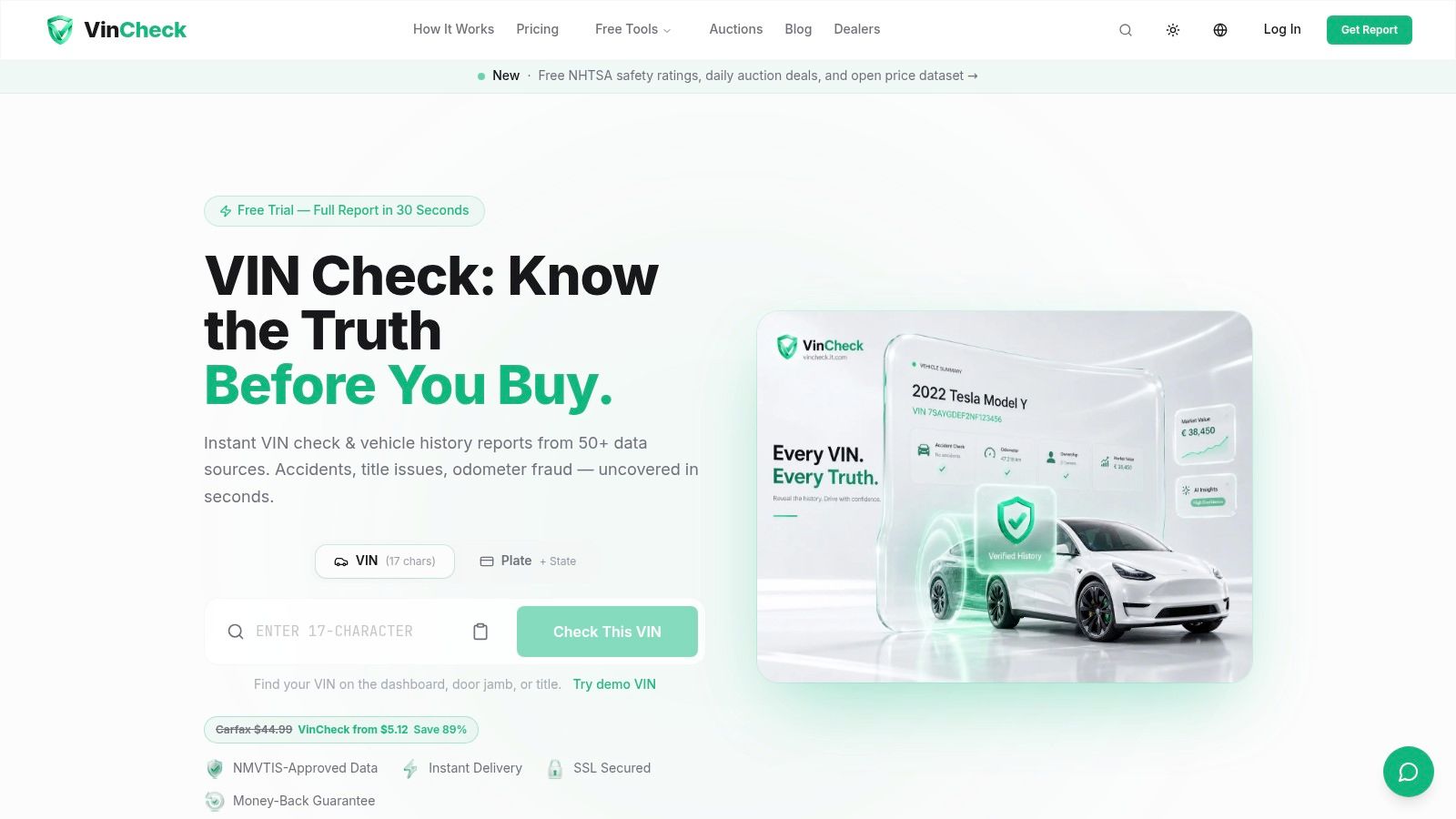
VinCheck is the strongest non-DMV companion in this list because it isn't pretending every VIN search is an official lien filing search. It works better as a broad pre-purchase risk screen that can surface lien indicators alongside title brands, theft status, mileage issues, recalls, auction traces, and other ownership or damage signals.
That distinction matters. A lot of buyers search for "lien check free" when what they really need is two layers: a title-state confirmation of whether a lender claim is recorded, plus a wider history report that can expose other reasons to slow down or walk away.
Where VinCheck fits in the workflow
Use VinCheck before you spend time chasing documents, especially when the seller's story is thin, the car crossed state lines, or the listing leaves out title details. If the report shows lien-related concern, title branding, mileage inconsistency, or auction history, you have a reason to demand payoff proof and title-state verification before money changes hands.
For model-specific entry points, VinCheck also supports direct lookups such as this 2024 Toyota Camry VIN check.
Practical rule: A vehicle history report can help you spot that something needs confirmation. It usually can't substitute for the state title record that controls transfer.
What it verifies well, and what it doesn't
VinCheck is best when you need one screen that pulls together multiple forms of vehicle risk. That's useful because a clean lien answer alone doesn't mean the car is low risk. A vehicle can still carry salvage history, theft history, or title anomalies that change the deal.
Its limitation is the same limitation that affects every private vehicle-data platform. Lien status is only as good as the underlying title and reporting sources available to the service. That's why broader history tools are strongest when paired with an official title-state lookup, not used in place of one.
- Best use: Screening private-party listings, dealer inventory, auction candidates, and interstate cars before you order records or send funds.
- Main strength: Puts lien indicators in context with title, loss, recall, and mileage risk.
- Main caution: If the seller says the lien is paid, you still need a release trail from the lienholder or title office.
2. Florida FLHSMV Motor Vehicle Information Check
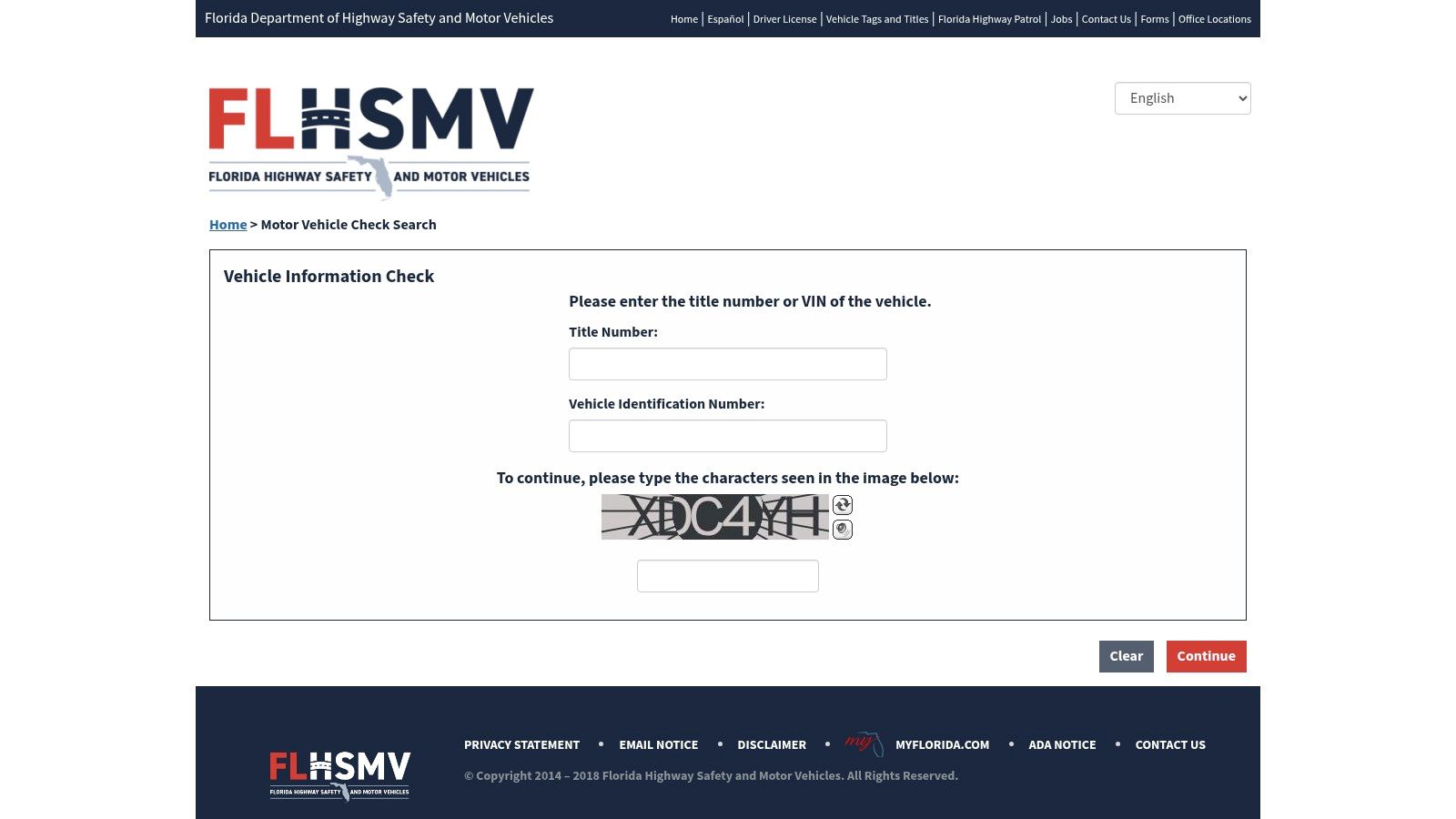
Florida is one of the better examples of what a useful free official lien search looks like. A state-by-state guide describes Florida's MVCheck as a no-login, no-cost lookup that returns title status, registration status, and lienholder information in under a minute through Florida MVCheck coverage.
That makes it a real first-pass lien tool, not just a generic VIN decoder.
When Florida is enough
If the vehicle has Florida title history, you should start with the official state portal tied to title administration rather than a seller screenshot from a third-party app.
A handy companion for broader history context is this 2024 Honda Civic VIN check, especially if the car has moved between states or passed through auction channels.
- What it can verify: Florida title status and lienholder visibility for Florida-titled vehicles.
- Where it applies: Florida records.
- When to escalate: If the seller claims the lien is paid off but the state record still shows a lien, or if the car spent time titled elsewhere.
3. New York DMV Check a Title or Lien Status
New York is useful partly because it shows the limit of a free lien check. The public tool is a status screen tied to a New York title record, so its value depends on whether the vehicle is in that system and whether the searcher has the required identifier. For a deeper record, the state routes users to its title record request process, which is the better path when a deal depends on proving a lien was released.
That distinction matters. A broad VIN history report may flag salvage, theft, or odometer issues, but it usually does not replace a state title file when the question is whether a lender still has a recorded interest.
Where New York fits in a layered check
Use the free New York lookup as a screening step when the seller presents a New York title or says the car was recently titled there. It can help verify current title status before you spend money on a paid history report or start chasing payoff letters.
If the seller says the loan was paid off very recently, timing becomes the issue. Lien releases do not always appear in state records the same day the borrower makes the final payment, so a mismatch between the seller's story and the DMV result is not automatic fraud. It is a signal to ask for dated payoff and release paperwork, then compare that paperwork against the state record once processing catches up.
- What it can verify: New York title status in the state's system, with formal record options when you need lien details documented.
- Where it applies: New York title records, not nationwide title activity.
- What it needs: The correct vehicle identifier for the state's lookup or record request workflow.
- When to escalate: The lien was supposedly paid recently, the title state is unclear, or the transaction is large enough that a formal abstract or paid multi-state report is worth the cost.
4. Massachusetts RMV Check the Status of Your Vehicle's Title
A Massachusetts title lookup is useful for a narrower reason than many buyers expect. It helps confirm what the Massachusetts RMV currently shows about a vehicle's title status, including whether a lienholder is attached in that state record. That makes the Massachusetts title status process a state-record check, not a general answer to every VIN-based risk question.
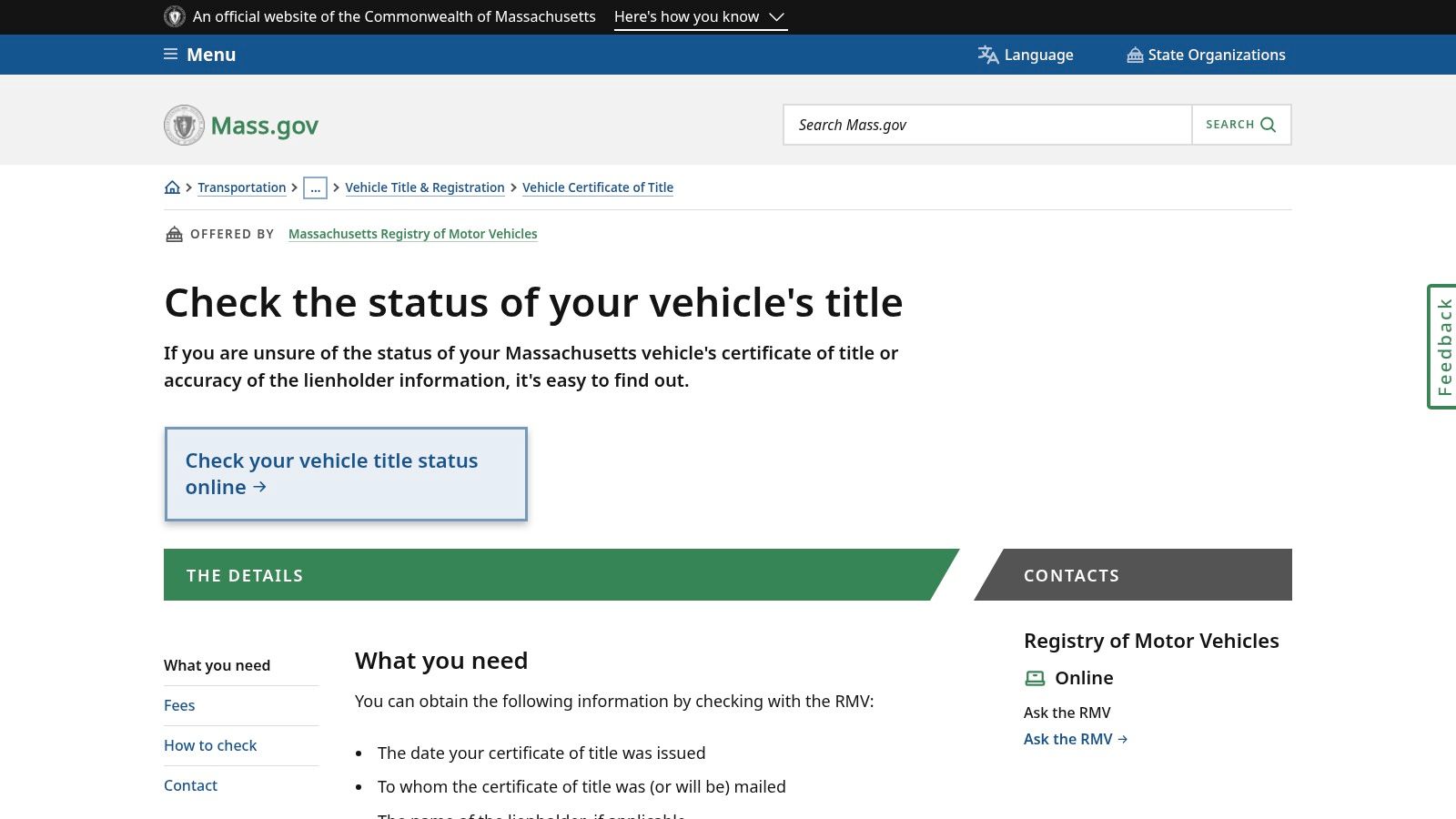
The distinction matters. A clean theft or salvage result from a service such as NICB VINCheck does not confirm that a lender's interest has been released. A Massachusetts RMV title inquiry is more relevant if the seller is handing you a Massachusetts title, the car was recently titled there, or the registration history points back to Massachusetts.
Use it as a record check tied to one jurisdiction.
That also defines its limits. If the vehicle moved across states, was refinanced elsewhere, or the seller says the loan was paid off only recently, the RMV result may lag the transaction timeline or reflect only part of the title history. In those cases, the free lookup stops being the final answer and becomes a prompt to ask for a payoff letter, lien release, or a formal record request.
A practical way to classify Massachusetts in a layered workflow:
- It can verify what the Massachusetts title record currently shows about status and recorded lienholder information.
- It applies to vehicles in the Massachusetts title system, not to nationwide lien activity.
- It becomes more valuable when the paperwork in front of you is Massachusetts-issued.
- It is worth escalating beyond the free portal when timing, title-state changes, or lender paperwork do not line up.
5. Wisconsin DMV Lien Holder Search
Wisconsin DMV Lien Holder Search stands out because it is explicitly framed as a lien holder search rather than a generic vehicle status inquiry. That's rare enough to matter.
The value here isn't just that it's free. It's that the search intent matches the buyer's problem.
Why Wisconsin deserves special attention
The state-by-state guide cited earlier identifies Wisconsin as a verified free public online lien lookup. That makes Wisconsin one of the cleaner examples of what people usually mean when they search for a free lien check, even though the result is still tied to Wisconsin title records rather than some universal VIN-only lien database.
For buyers, that means the tool is especially useful for confirming whether a lender or owner received the title and whether payoff and title delivery likely lined up.
A state can offer a free VIN-driven lien lookup and still only speak for vehicles in that state's title system. That's not a flaw. That's how title records work.
6. South Dakota Department of Revenue Vehicle Registration and Plates Portal
South Dakota motor vehicle services are a useful reminder that a free VIN lookup and a true lien search are not always the same thing. What matters is the record set behind the search. In this case, the value comes from South Dakota's own title and registration system, not from a broad vehicle-history brand that aggregates mixed data.
The portal is obscure, but it illustrates where many useful lien checks live: inside state motor vehicle service portals. That distinction matters because state systems can reflect title-linked lien information for vehicles in that jurisdiction, while a general VIN report may only flag adjacent risks such as salvage, theft, or title events.
For buyers, the practical question is narrower than "Does this VIN come back clean?" The better question is whether South Dakota's records show a lienholder tied to a South Dakota title record. If yes, pause the transaction and request payoff and release documents. If no, treat that result as a South Dakota-specific screen, not final proof that no claim exists anywhere the vehicle may have been titled before.
Where this fits in a layered check
South Dakota works best near the front of the workflow. It helps confirm whether the state record points to an active lien issue before you spend money on a paid report or formal title documents.
- What it can verify: Whether South Dakota motor vehicle records indicate lien-related status for vehicles in that system.
- What it cannot verify: A nationwide lien conclusion or off-record lender claims that have not been reflected in South Dakota title data.
- When to escalate: The seller's title papers, payoff details, or lien release story do not match what the portal shows. At that point, a paid title record request or direct documentation from the lender becomes worth it.
7. Ohio BMV Online Title Search
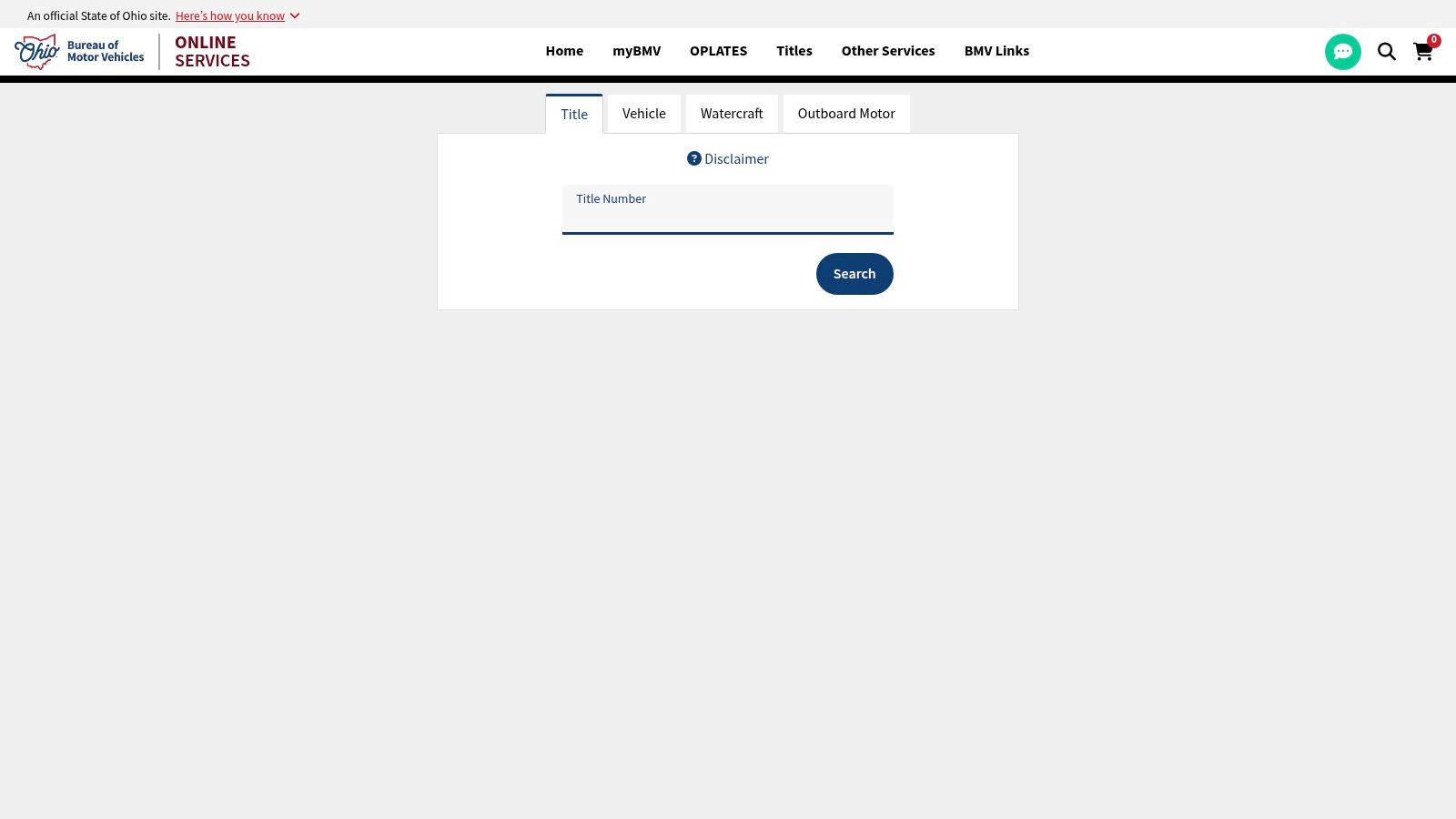
Ohio BMV Online Title Search is useful because it forces a distinction buyers often blur. A title-status lookup is not the same thing as a full lien verification process.
That distinction matters in Ohio. The online search can confirm whether a title record exists and whether the vehicle appears in the state system, which helps test the seller's basic story before you spend time or money on stronger records. If the transaction depends on proving a lien was released, or on identifying the lienholder with enough certainty to close, buyers should expect a second step through formal title documentation.
What Ohio can confirm, and where the limit appears
Ohio works best as a mid-workflow check. It is stronger than a generic VIN screening tool because it points to a state title record, but it still has coverage boundaries tied to Ohio records and the level of detail available in the public-facing search.
That makes the two-step structure practical. Use the online search to verify that the Ohio title trail is real and broadly consistent. Use a formal record request when the sale turns on lien release, payoff status, or a mismatch between the seller's paperwork and the state record.
- What it can verify: Whether an Ohio title record appears to exist and whether the vehicle's title status warrants closer review.
- What it cannot verify: A nationwide no-lien conclusion, or every lien detail needed for a disputed transfer.
- When to escalate: The seller claims the loan is paid off, the title status is unclear, or the paperwork does not line up with the Ohio record.
8. Illinois Secretary of State Title and Registration Status Inquiry
Illinois title and registration status inquiry is best understood as a front-end status screen, not a complete public lien-resolution tool. That's still useful. It tells you whether the VIN maps to a state record and whether the seller's basic story about title issuance holds up.
That first-pass role is underrated. Many buyers spend money on reports before they confirm the title trail is even coherent.
How to use Illinois well
Start here when an Illinois title is in play. If the online status confirms the record exists, compare that with the title image, seller name, and any payoff paperwork. If lienholder detail isn't visible or the paperwork conflicts, that's your cue to stop relying on the public view and request the stronger record.
Public title status is often enough to catch a mismatch. It isn't always enough to prove release.
9. City and County of Honolulu Motor Vehicle Title Inquiry
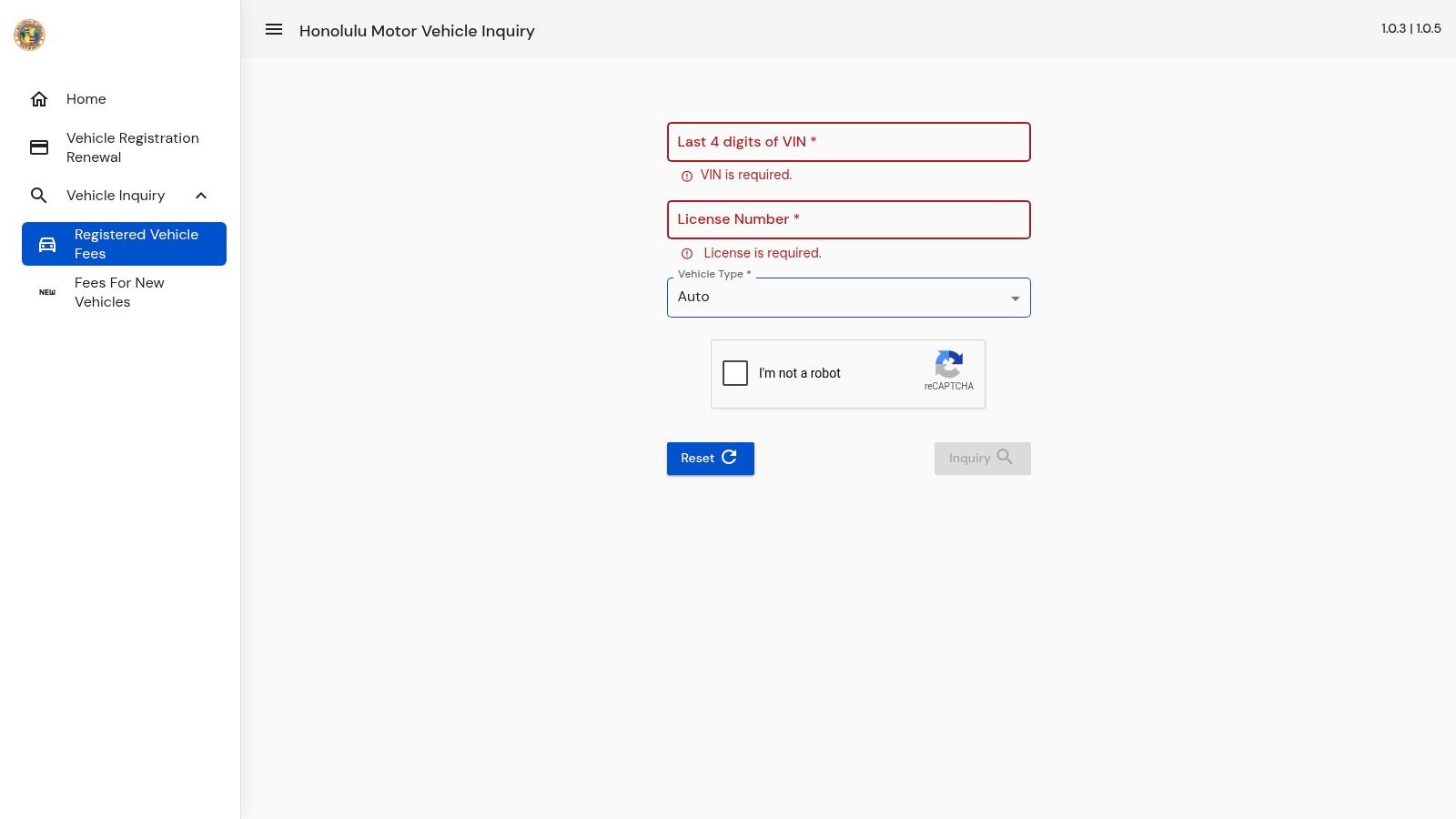
A Hawaii vehicle can expose a common flaw in "lien check free" advice. Buyers are often sent to broad VIN tools first, even though a county title record may answer the narrower question that matters in a local sale.
Honolulu Motor Vehicle Title Inquiry fits that narrower role. It is a jurisdiction-specific title inquiry for Honolulu records, so it should be treated as a record-location tool and status check, not as proof that every prior lender claim has been cleared across every place the vehicle may have been titled.
That distinction matters more in Hawaii than many buyers expect. A car sold on Oahu can still have history tied to another state, another county process, or older paperwork that does not appear in a simple public-facing screen. If the seller presents a Honolulu title and the portal aligns with that story, your risk drops. If the title trail looks interrupted, the county result stops being enough.
Use it late enough in the workflow that you already have the seller's documents in hand. Compare the VIN, title issue details, and any lien release paperwork against the county inquiry. A clean match supports the file. A mismatch is the point where a formal record request or paid title-history report becomes worth the cost.
Honolulu is useful because it is specific.
Its boundary is the same reason you should not overread it. It helps confirm whether a local title record appears consistent. It does not replace a broader title-history check for vehicles that moved between jurisdictions.
10. NICB VINCheck Theft and Salvage Check
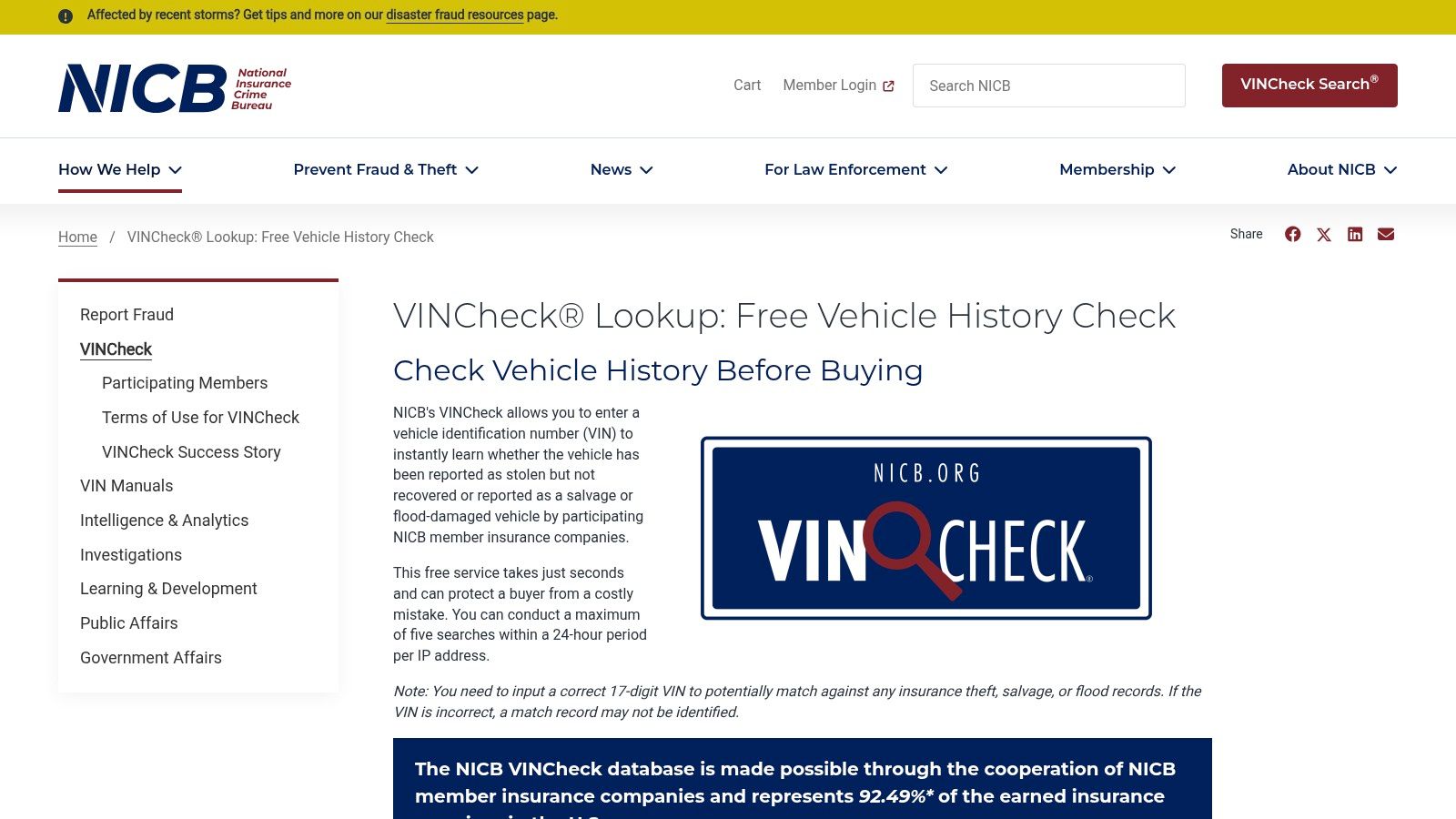
A free VIN tool can be useful and still fail the lien question.
NICB VINCheck is the clearest example. It checks for theft records and insurer-reported salvage or flood history. It does not report lienholder filings, title-status detail, or whether a lender claim was released. Calling it a lien search blurs two separate risks that should be checked with different records.
That limitation does not make NICB secondary. It changes its job in the workflow. A vehicle with no visible lien can still be a poor purchase if it was reported stolen, never properly recovered, or pushed through an insurance loss path that later affects title branding, registration, or resale. NICB addresses that exposure early, before you spend time chasing state title records or paying for a broader history file.
Use it as a screen, not as clearance.
The practical sequence is simple. Run NICB first to catch obvious theft or salvage concerns. Then move to the state or county source that can confirm title or lien status in the jurisdiction tied to the seller's paperwork. If those records line up but the deal still involves an out-of-state vehicle, a recent transfer, or gaps in ownership documents, that is the point where a paid report such as a 2024 Subaru Outback VIN check starts to make sense because it can add broader title-history, mileage, and recall context that NICB does not attempt to cover.
Free Lien Check, 10-Service Comparison
| Service | Core coverage & sources | UX & quality (★) | Price & value (💰) | Target audience (👥) | Unique selling points (✨) |
|---|---|---|---|---|---|
| VinCheck 🏆 | NMVTIS‑grade (50+ sources): accidents, branded/salvage/flood titles, liens, theft, odometer, recalls; VIN/plate/window‑sticker data | ★★★★☆ Instant (~30s), PWA, SSL, money‑back guarantee | 💰 Free VIN decode; one-time reports from $19.99; Subscribe & Save from $4.55/report; Subscribe & Save from $12.99/month | 👥 Buyers, dealers, fleet, lenders, auction bidders | ✨ NMVTIS‑grade + salvage‑auction browse + AI VIN Concierge & Risk Insights; multilingual |
| Florida FLHSMV – Motor Vehicle Info Check | Florida title status, brands, odometer at last FL title, lienholder details | ★★★★☆ Instant, official portal | 💰 Free | 👥 Buyers/dealers for Florida‑titled vehicles | ✨ Strong lien visibility; no account required |
| New York DMV – Check a Title or Lien Status | NY title existence & lien filings (VIN/HIN lookup) | ★★★★☆ Free, official, updates as filings post | 💰 Free | 👥 NY private buyers & dealers | ✨ Live lien filing updates tied to NY DMV |
| Massachusetts RMV – myRMV Title Status | MA title issuance & lienholder info via myRMV | ★★★★☆ Official portal; may require sign‑in | 💰 Free | 👥 MA buyers/dealers | ✨ Integrated with myRMV workflows |
| Wisconsin DMV – Lien Holder Search | VIN‑based current lienholder info; title delivery status | ★★★★☆ Free, explicit lienholder visibility | 💰 Free | 👥 WI buyers/dealers confirming payoff/title delivery | ✨ Clear owner vs lender/title delivery indicator |
| South Dakota DOR – VIN Check | VIN check indicates if a lienholder is on record | ★★★★☆ Free, simple state indicator | 💰 Free | 👥 SD buyers/dealers | ✨ Reflects state ELT participation and workflows |
| Ohio BMV – Online Title Search | VIN‑driven title records; lien info via title abstracts/forms | ★★★★☆ Free search entry; certified records may cost | 💰 Free (formal requests may incur fees) | 👥 OH buyers/dealers, clerks | ✨ Integrated with Ohio electronic title systems |
| Illinois SOS – Title & Registration Inquiry | VIN inquiry for title/registration status (initial screen) | ★★★☆☆ Fast first‑pass; may not show full lien detail | 💰 Free (certified requests may cost) | 👥 IL buyers/dealers doing initial checks | ✨ Quick pre‑screen before deeper records pulls |
| City & County of Honolulu – Motor Vehicle Title Inquiry | County VIN/title lookup for Honolulu (local titling data) | ★★★☆☆ Free, county portal; dynamic content | 💰 Free | 👥 Honolulu private buyers/dealers | ✨ County‑level titling details useful for island sales |
| NICB VINCheck – Theft/Salvage Check | National insurer‑reported theft & salvage/flood flags (no liens) | ★★★★☆ Free national check (limits per day) | 💰 Free | 👥 Buyers wanting theft/salvage alerts | ✨ National insurer dataset for theft & insurer salvage flags |
Build a Layered Check Before You Pay
The safest workflow is narrower than generally assumed. Start by confirming the VIN from the dashboard, door label, and title paperwork. Then identify the state that issued the current title, because lien records generally follow the title jurisdiction rather than the VIN in some universal national sense, as reflected in consumer NMVTIS guidance.
From there, run the strongest official free lookup available for that state. If you're dealing with New York, Florida, Massachusetts, Wisconsin, or another state with usable public access, that free search can answer the first operational question: is there a recorded lien and who appears to hold it. That's the value of a good "lien check free" tool. It saves time by screening for transfer blockers before you negotiate, pay for transport, or hand over funds.
After the official search, compare the result with the seller's paperwork. The title name, lienholder, and payoff story should line up. If they don't, don't explain away the mismatch. Ask for a payoff letter, a lien release, or a more formal title record. The benchmark here isn't whether the seller sounds credible. It's whether the title chain and lender claim are documented well enough for a clean transfer.
Use NICB when you want theft and salvage context that an official lien lookup won't provide. Use VinCheck when you need a wider risk screen that pulls lien indicators into a larger picture that includes title brands, mileage concerns, recalls, auction traces, and valuation context. That's especially useful for cross-state vehicles, dealer inventory, auction units, and any listing where the seller gives partial records.
A paid report or formal record request becomes worthwhile in a few common situations:
- Unclear title jurisdiction: The car appears to have moved across states, and you can't tell which title office has the current controlling record.
- Missing lienholder detail: The free lookup suggests a lien but doesn't provide enough detail to verify release.
- Conflicting documents: The seller's title, bill of sale, payoff story, and state status don't match.
- Higher-stakes purchases: Expensive vehicles, collector cars, financed purchases, and long-distance deals justify stronger documentation.
- Other warning signs: Salvage signals, theft concerns, mileage inconsistencies, or title-brand issues mean a simple free lookup isn't enough.
One final point matters more than any report. If an active lien appears, resolve it directly with the lienholder before completing the transfer. Don't rely on promises that the seller will "send the release later." And if you decide to pay for a report, verify current trial terms and regional data coverage before checkout so you know exactly what records you're buying access to.
VinCheck gives you a practical middle layer between a free state title lookup and a full formal records chase. If you want lien indicators plus title, theft, mileage, recall, auction, and valuation context in one place, visit VinCheck before you commit to the vehicle or the paperwork.
About the author
VinCheck Editorial Team — Editorial Standards & Review
The VinCheck Editorial Team reviews every published article against NMVTIS data accuracy and NHTSA recall validity. This byline appears on collaborative pieces and quick-update posts.