 Vin
How to Check Odometer Reading Before You Buy a Used Car
By VinCheck Editorial Team, Editorial Standards & Review · Published 2026-10-03 · Updated 2026-10-03 · Reviewed by VinCheck Editorial Standards
More than 450,000 vehicles are sold each year with false odometer readings, and NHTSA estimates that odometer fraud costs American consumers more than $1 billion annually (NHTSA's odometer fraud guidance). That changes the question from “What number is on the dashboard?” to “What evidence proves that number?”
A used car's mileage affects its price, expected maintenance, financing decisions, and your assessment of wear. A dishonest reading can make a heavily used vehicle look younger than it is, while a legitimate but poorly documented reading can still leave you exposed to an expensive dispute. Learning how to check odometer history properly means treating the display as a claim that must agree with the car, its paperwork, and its electronic records.
Table of Contents
- Why the Dashboard Number Is Not Enough
- Physical Inspection Cues That Reveal True Mileage
- Running a VIN Check for Mileage History
- Cross-Checking Service and Title Records
- Using OBD Scanners and Inspection Tools
- Rollback Red Flags and What to Do About Them
- Your Odometer Verification Checklist Before Buying
Why the Dashboard Number Is Not Enough
Federal guidance treats odometer fraud as the disconnection, resetting, or alteration of an odometer with intent to change the miles shown. That definition matters because tampering isn't limited to an obviously broken mechanical counter. A modern digital display can look perfectly clean while the vehicle's history tells a different story.
The displayed mileage is only one observation. It doesn't prove when the vehicle accumulated those miles, whether the instrument cluster was replaced, or whether a previous owner maintained the car properly. A low number can inflate the perceived value of the vehicle and conceal maintenance needs that should have been obvious from its actual use.
Practical rule: Treat the dashboard reading as unverified until the vehicle's physical condition and records support it.
A reliable check combines several evidence layers:
- Physical condition: Look for wear that fits the claimed mileage and inspect the cluster for signs of removal.
- History data: Compare mileage entries connected to titles, inspections, services, auctions, and other recorded events.
- Documents: Build a timeline from maintenance invoices, oil-change stickers, inspection receipts, and title paperwork.
- Electronic evidence: Use diagnostic tools when the vehicle and its systems support useful mileage comparisons.
Each layer catches a different failure. A history report may reveal a mileage decrease that your eyes can't detect. A physical inspection may expose a replaced steering wheel or worn pedal that a sparse report won't explain. Electronic data may reveal inconsistent values in vehicle modules, but it can't always distinguish fraud from a legitimate module replacement.
The same discipline applies when evaluating the rest of a used car. A resale vehicle cleaning checklist can help you separate normal presentation work from cosmetic changes that might hide wear, but cleaning never validates mileage. For a model-specific starting point, you can also review Toyota vehicle information and history resources before arranging an inspection.
The objective isn't to find one magical test. It's to make a false reading difficult to sustain across independent evidence.
Physical Inspection Cues That Reveal True Mileage
Start before connecting a scanner or paying for a report. Stand beside the vehicle in good light, open the driver's door, and inspect the areas that receive repeated contact. You're looking for a wear pattern, not one isolated scratch.
Match contact points to the claim
Press the rubber on the brake, clutch, and accelerator pedals. Check whether the edges are rounded, the grooves are shallow, or the surface is unusually smooth. Then examine the steering wheel, gear selector, window switches, seat controls, and the outer bolster of the driver's seat.
A vehicle advertised with modest mileage shouldn't automatically look new, but severe wear in several high-contact areas deserves an explanation. A claimed 30,000-mile vehicle with heavy pedal wear and a collapsed driver's seat is a mismatch worth investigating. The reverse can also be suspicious. A high-mileage car with a remarkably fresh steering wheel, pedals, or seat may have had those parts replaced before sale.
Look at the door hinges and the driver's door check strap. Excessive looseness, chipped fasteners, or damage around repeatedly used controls can support a high-use history. Check the floor mat shape and carpet beneath it as well. A new mat can hide an old carpet, while a replacement steering wheel can conceal the condition of the original contact surface.
City driving complicates this test. A vehicle used for short trips, deliveries, ride-hailing, or frequent parking maneuvers can show more interior wear than a highway-driven car with similar mileage. That's why physical condition can challenge the displayed number, but it can't establish the true number by itself.
For buyers assessing unusual vehicle types or compact electric transport, practical inspection habits still matter. Solana EV's insider buying guide for used golf carts offers relevant context on examining condition before purchase, although its subject isn't a substitute for a passenger-vehicle mileage review.
Inspect the instrument cluster without forcing anything
Use a flashlight and inspect the edges of the dashboard cluster. Look for:
- Pry marks: Scratches or fresh damage around the trim can indicate that someone removed the cluster.
- Missing hardware: Missing screws, broken tabs, and mismatched fasteners suggest prior disassembly.
- Display irregularities: Misaligned digits, uneven brightness, or unusual gaps may indicate a damaged or replaced unit.
- Contamination: Fingerprints, dust disturbance, or tool marks inside the cluster can show that it was opened.
Don't dismantle the dashboard yourself during a private viewing. Your job is to document visible evidence and ask why the cluster was accessed. A legitimate repair, replacement, or electrical fault may explain the marks, but the seller should be able to provide supporting paperwork.
The most useful physical finding is a contradiction across several areas. Worn pedals, a polished steering wheel, a sagging seat bolster, and disturbed cluster trim together carry more weight than any single worn component. Photograph what you see, then compare it with the service and history records rather than making an accusation on the spot.
Use the following demonstration as a reminder that a visual inspection is only one part of a broader diagnostic process:
Running a VIN Check for Mileage History
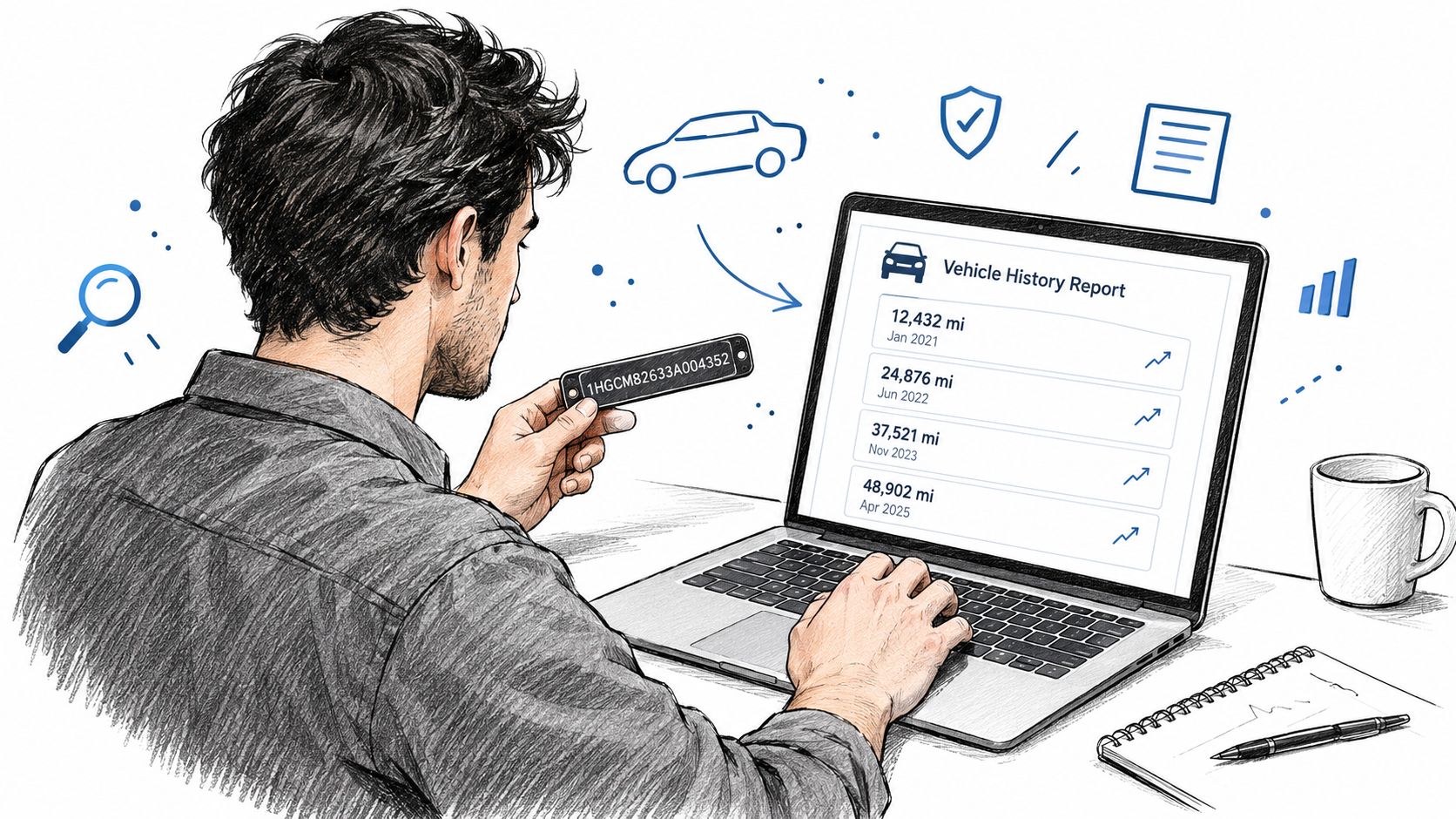
The VIN connects the physical vehicle to its recorded history. Find it at the base of the windshield on the driver's side, on the driver's door or door frame label, and in the title or registration documents. Confirm that every visible VIN matches. A mismatch between the car and its paperwork stops the mileage investigation until the identity issue is resolved.
Enter the complete VIN into a vehicle history service and focus first on entries that contain a mileage reading. Useful records can include title transfers, inspections, service visits, auction activity, and other events tied to the vehicle. Arrange those readings by date and compare each one with the current dashboard number.
Read the sequence, not just the warning label
A mileage problem often appears as a broken sequence rather than a dramatic confession. A later record may show fewer miles than an earlier record, or the current display may be lower than a documented service entry. A long gap doesn't prove rollback, but it removes evidence and raises the importance of the car's condition and original paperwork.
Don't dismiss an entry because it looks like a clerical error. Compare the date, mileage, record type, title event, and vehicle identity. A mistaken entry may be explainable, but the seller should be able to show why it doesn't represent the vehicle's actual mileage.
A report can also show whether a title was branded, whether the vehicle appeared in an auction, or whether damage history creates another reason to question the displayed condition. Those records don't automatically prove odometer fraud. They help you decide whether the seller's description deserves closer verification.
For a vehicle-specific example, a 2024 Toyota Camry VIN check can show how model and VIN research fit into the preparation stage. A service such as VinCheck consolidates vehicle identification, title and status records, auction-related information, and mileage checks into an instantly delivered report, with a free preview first and one-time reports from $19.99. Review the current terms before ordering because service features and pricing can change.
Use the report as an investigation map
A clean report isn't a guarantee. Some repairs, ownership events, or mileage readings may never enter the databases you can access. A report with an anomaly isn't a final verdict either. It tells you where to ask questions and which documents to demand.
Save the report before contacting the seller. Mark every mileage entry that supports the current reading and every entry that doesn't. Then compare those findings with the physical inspection. If the report says the car accumulated mileage steadily but the cluster has fresh pry marks, you still have an unresolved contradiction.
Cross-Checking Service and Title Records
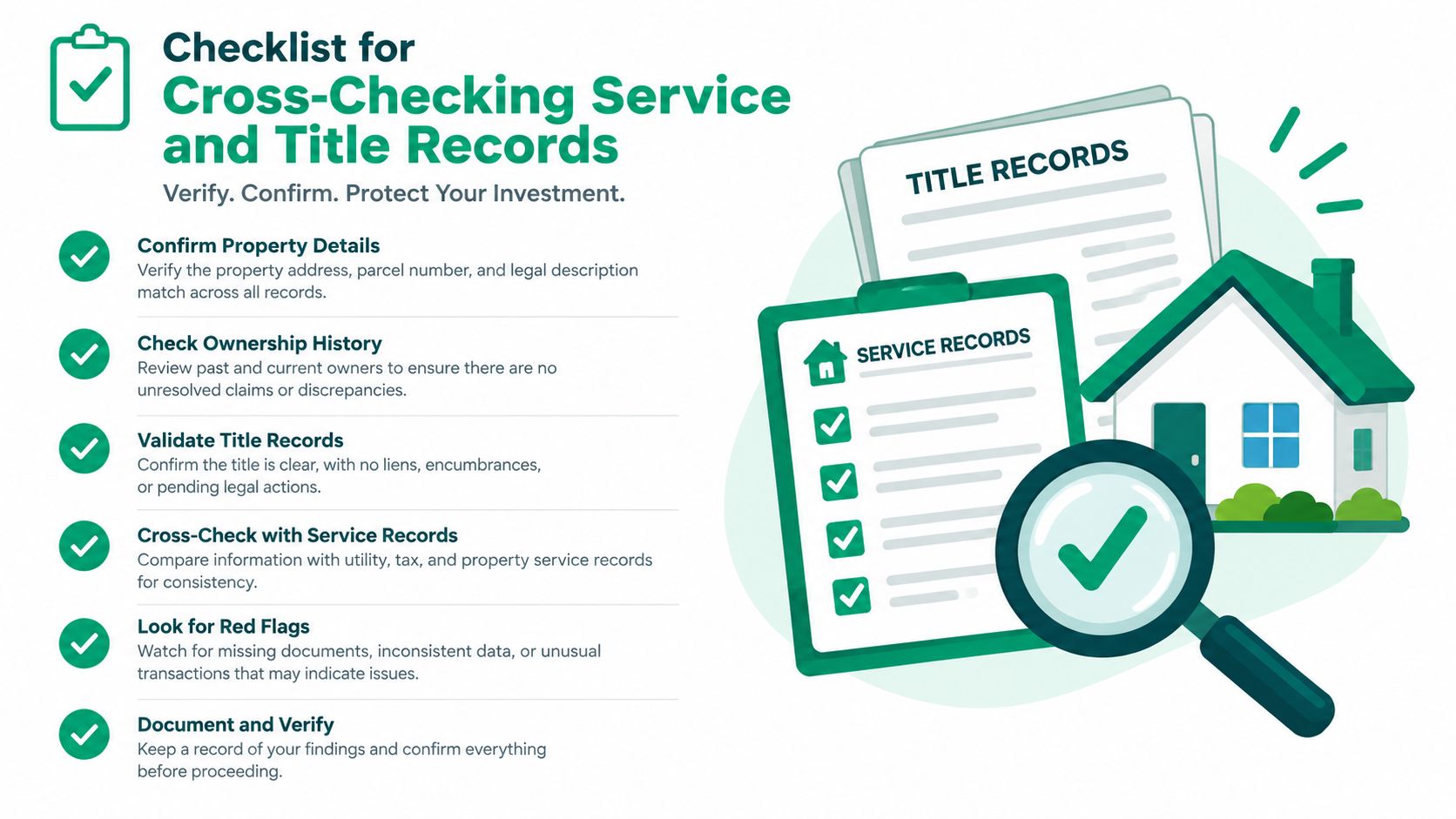
Reports summarize data. Documents let you inspect the underlying story. Ask the seller for maintenance invoices, oil-change stickers, inspection receipts, registration records, and prior title documents. A credible seller may not have every receipt, but should be able to explain where the vehicle was serviced and why important records are missing.
Write each event in a simple timeline:
- Record the date: Note when the service, inspection, or title transfer occurred.
- Record the mileage: Copy the exact figure, including whether the document says miles or kilometers.
- Identify the source: Label it as a title, repair order, inspection, oil-change sticker, or other record.
- Compare the progression: Check whether the readings rise in a believable order.
- Flag conflicts: Circle decreases, unexplained gaps, and entries that don't fit the vehicle's ownership history.
A normal timeline doesn't need perfectly regular intervals. Owners service cars late, change shops, and sometimes lose paperwork. The important question is whether the available readings move forward without a contradiction. A later document showing fewer miles than an earlier one needs a documented explanation, not a casual assurance.
Watch for gaps and suspicious precision
A long period without service or inspection records may reflect private maintenance, but it also creates an opportunity for an undisclosed mileage change. Ask who owned the car during the gap, where it was driven, and whether any cluster or electronic module was replaced.
A suspiciously round mileage figure at a title transfer isn't proof of tampering. It becomes more meaningful when it appears alongside other problems, such as a sudden decrease, a missing title history, or physical wear that doesn't fit. Record the issue and ask the seller to resolve the entire pattern.
A Toyota Camry value reference can help you judge the financial consequences of an unresolved mileage question, but valuation doesn't verify mileage. Don't let a tempting price persuade you to accept a broken timeline. A discount may only compensate for uncertainty you'll inherit.
If the true mileage is unknown, or if the odometer was repaired or replaced, federal and state guidance may require the seller to disclose that discrepancy. The CarVertical odometer rollback guide also emphasizes combining physical wear with documentary and electronic checks. Missing disclosure isn't just an administrative annoyance. It can be a compliance concern and a reason to pause the transaction until the facts are documented.
Using OBD Scanners and Inspection Tools
Electronic checks are useful when the vehicle stores mileage or operating information in more than the instrument cluster. An OBD-II scanner may retrieve diagnostic trouble codes, stored data, and module information, depending on the vehicle's make, model, year, and software. Some vehicles preserve mileage-related values in systems such as the engine, transmission, steering, or body control modules.
Connect the scanner through the vehicle's OBD-II port, follow the tool's instructions, and save the results. Compare any available mileage values with the dashboard reading and the documentary timeline. A meaningful mismatch tells you to investigate the cluster, a module replacement, or the vehicle's repair history.
A scanner isn't a universal truth machine. Tools vary widely, some vehicles expose little useful mileage data, and a replaced control unit can create a legitimate inconsistency. A digital odometer can also be altered in ways that leave no obvious discrepancy for a basic consumer scanner.
A scan can strengthen a case, but it can't rescue a weak history.
Use diagnostic equipment as a supplementary layer. If the vehicle is expensive, located out of state, or impossible for you to inspect carefully, pay for a pre-purchase inspection from a qualified mechanic. Ask the mechanic to document the cluster condition, module communication, visible wear, and any evidence of replacement.
A professional inspection costs less than discovering that the car's condition and records cannot support its mileage after purchase. More importantly, an independent mechanic has no reason to accept the seller's explanation without testing it.
Rollback Red Flags and What to Do About Them
A single odd detail deserves a question. Several independent contradictions deserve a decision. Treat these combinations seriously:
- Worn contact points: Pedals, steering wheel, seat bolster, and controls look heavily used while the advertised mileage is unusually low.
- Disturbed cluster: Pry marks, missing screws, broken tabs, fingerprints, or misaligned digits appear around the instrument panel.
- Broken data sequence: A report or document shows a lower later reading, or the dashboard is below an earlier recorded mileage.
- Unexplained gap: The seller can't account for a substantial period without title, service, inspection, or ownership evidence.
- Missing disclosure: The seller acknowledges an odometer repair or replacement but hasn't documented the discrepancy properly.
- Electronic conflict: A supported diagnostic scan shows module values that don't agree with the display.
Don't lead with an accusation. Show the seller the specific record, photograph, or scan result and ask for a direct explanation. A credible answer should identify what happened, when it happened, and which document supports it.
If the answer is a cluster replacement, request the repair invoice and the disclosure paperwork. If the answer is a data-entry mistake, ask for corroborating records from the same period. If the seller changes the subject, refuses an independent inspection, or pressures you to pay before resolving the issue, walk away.
Federal enforcement treats odometer tampering as a dedicated fraud category. NHTSA's Office of Odometer Fraud Investigation maintains the SPIN file system to gather allegations and support criminal investigations and prosecutions, as described by the U.S. Department of Transportation's SPIN information. That means suspected fraud can be reported rather than treated as a private disagreement.
Keep copies of the advertisement, bill of sale, title, report, messages, photographs, inspection results, and seller disclosures. Contact the appropriate motor vehicle authority, consumer protection office, or law-enforcement channel for your jurisdiction. If the evidence shows a material discrepancy and the seller won't correct it transparently, the safest action is to decline the purchase regardless of the price.
Your Odometer Verification Checklist Before Buying
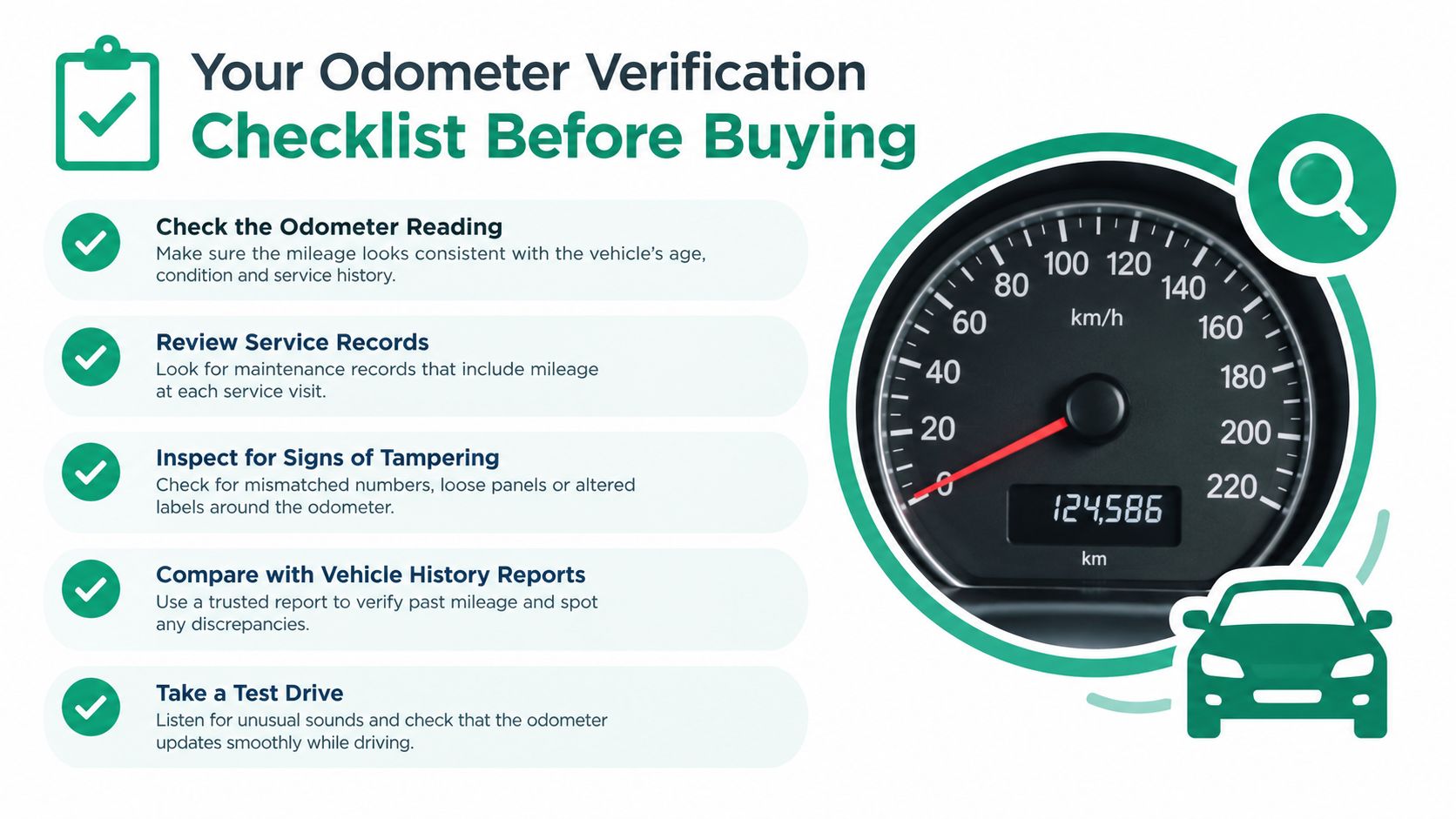
Run the checks in an order that moves from quick observation to deeper evidence:
- Inspect the cabin: Compare pedals, wheel, seat bolster, controls, hinges, and mats with the claimed use.
- Examine the cluster: Look for pry marks, broken tabs, missing screws, fingerprints, and display irregularities.
- Confirm the VIN: Match the VIN on the vehicle with the title, registration, and history report.
- Pull the history: Review mileage readings from titles, inspections, services, auctions, and other recorded events.
- Build the timeline: Put every document in date order and investigate decreases, gaps, and unexplained entries.
- Scan when needed: Use an OBD-II tool or arrange an independent inspection when the records or physical evidence conflict.
- Make the decision: Buy only when the seller's explanation and documentation resolve the contradictions.
The odometer is a claim, not a fact, until the car, records, and electronic evidence agree with it.
You don't need specialized equipment to begin. Look closely, preserve the documents, verify the VIN, and refuse to let urgency replace evidence. A seller with a legitimate vehicle should be able to explain its history. A careful buyer who checks each layer is difficult to deceive.
Use VinCheck to run a VIN-based history and mileage check before you commit to a used car. Compare its recorded mileage information with the vehicle's condition and paperwork, then take unresolved contradictions to an independent mechanic before signing anything.
About the author
VinCheck Editorial Team — Editorial Standards & Review
The VinCheck Editorial Team reviews every published article against NMVTIS data accuracy and NHTSA recall validity. This byline appears on collaborative pieces and quick-update posts.