 Vin
How to Check if a Car Has a Salvage Title: 2026 Guide
By VinCheck Editorial Team, Editorial Standards & Review · Published 2026-09-07 · Updated 2026-09-07 · Reviewed by VinCheck Editorial Standards
You've found a used car that looks unusually affordable. The photos are clean, the seller says it runs well, and the only thing standing between you and the deal is a quick VIN check. That's exactly where many buyers make an expensive mistake. A polished repair can hide a vehicle that an insurer previously declared a total loss, meaning the car may carry a salvage, junk, rebuilt, flood, or another branded title.
Learning how to check if a car has a salvage title requires more than looking at the paint or trusting a seller's description. The reliable approach combines the VIN, federal records, state DMV documentation, auction history, and a hands-on inspection. Each layer answers a different question, and together they make it much harder for a damaged vehicle to pass as an ordinary clean-title car.
Table of Contents
- Why That Great Deal Might Be Too Good to Be True
- Your First Step The Instant VIN History Check
- Digging Deeper with State DMV Records
- Finding Hidden Clues in Salvage Auction Records
- Reading the Physical Signs of a Salvage History
- Answering Your Top Salvage Title Questions
Why That Great Deal Might Be Too Good to Be True
A low-priced listing can create pressure before you verify the vehicle. The seller may claim another buyer is waiting, the car may be freshly detailed, and daylight may conceal poor repairs. A quick exterior check can miss collision damage, flood exposure, fire damage, theft recovery, or another event that led an insurer to write the vehicle off.
A salvage title generally identifies a vehicle that an insurer has declared a total loss. The label does not explain every part of the loss, but it confirms that the vehicle crossed an important point in its history. Some vehicles remain salvage-titled. Others are repaired and later receive a rebuilt or reconstructed designation after the inspection required by the relevant state.
The risks affect more than appearance:
- Safety risk: Poor structural repairs, incorrect airbag installation, damaged wiring, or compromised crumple zones may remain hidden during a casual walk-around.
- Ownership risk: A title that appears clean in one state may not show a brand recorded in another state.
- Insurance risk: Insurers may limit coverage for branded-title vehicles when repair quality or earlier damage cannot be verified.
- Resale risk: Future buyers, dealers, and lenders may value or handle a branded-title vehicle differently from one with a clean title.
Practical rule: A clean appearance proves only how the vehicle presents today. It does not prove a clean history.
That is why verification should continue even when the title is not in your hands. Start with the VIN on the vehicle, compare it with every record the seller provides, check government title information, review auction history, and inspect the car for physical evidence of repairs. One source can be incomplete or misleading. Several matching layers provide a much stronger basis for deciding whether to proceed.
Do not assume every inexpensive listing is unsafe. Verify the car before paying a deposit, signing paperwork, or arranging transport.
Your First Step The Instant VIN History Check
Start with the 17-character VIN, but take it from the vehicle itself. A seller's message or listing can contain a typo, a copied VIN, or the number from a different car. Compare the physical VIN with every document and digital record you receive.
Locate and match the VIN
Read the VIN through the lower windshield area on the driver's side. Check the certification label inside the driver's door or door jamb, then compare it with the title or registration if those documents are available.
Inspect the labels for lifting, replacement, damage, or anything placed over the original characters. Every letter and number must match, including characters that are easy to confuse. A mismatch does not by itself prove fraud, but it is enough reason to pause the transaction until the seller explains it and the record is corrected through official channels.
If the seller will not show the title before the meeting, request a clear photo of the vehicle's VIN and run the report from that number. A license plate lookup can help identify a VIN-linked record, but verify the resulting VIN against the physical car before relying on it. The title is useful, not required for this first check.
Run a report that includes federal title data
Check the VIN against NMVTIS, the federal National Motor Vehicle Title Information System. It can provide current title information, brand history, the latest reported odometer reading, and, in some cases, historical theft data. Insurance companies, junk yards, and salvage yards must report salvage and total-loss vehicles to NMVTIS, making its record a useful starting point for finding a branded history. Review the official NMVTIS consumer information before selecting a report provider.
Search the report for these terms:
- Salvage or junk: The vehicle may have been declared a total loss or transferred to a salvage or recycling business.
- Rebuilt or reconstructed: Repairs may have followed a salvage event. This label does not remove the earlier loss from the vehicle's history.
- Flood or water damage: Inspect electronics, corrosion, upholstery, and concealed areas carefully.
- Total loss: This may appear even when the current title wording is less direct.
Use a commercial report for a convenient first review, then compare its findings with government title information. For more background on interpreting title and ownership records, use this guide to US vehicle history checks. A model-specific example is available in this Toyota Camry VIN check.
A blank result is not proof of a clean history. NMVTIS does not cover every vehicle, and incomplete reporting can produce a false negative, according to NMVTIS consumer guidance. Treat the report as a filter. If the title is unavailable, use the VIN report to identify questions, then confirm the answers through government records and a physical inspection before paying or arranging transport.
Digging Deeper with State DMV Records
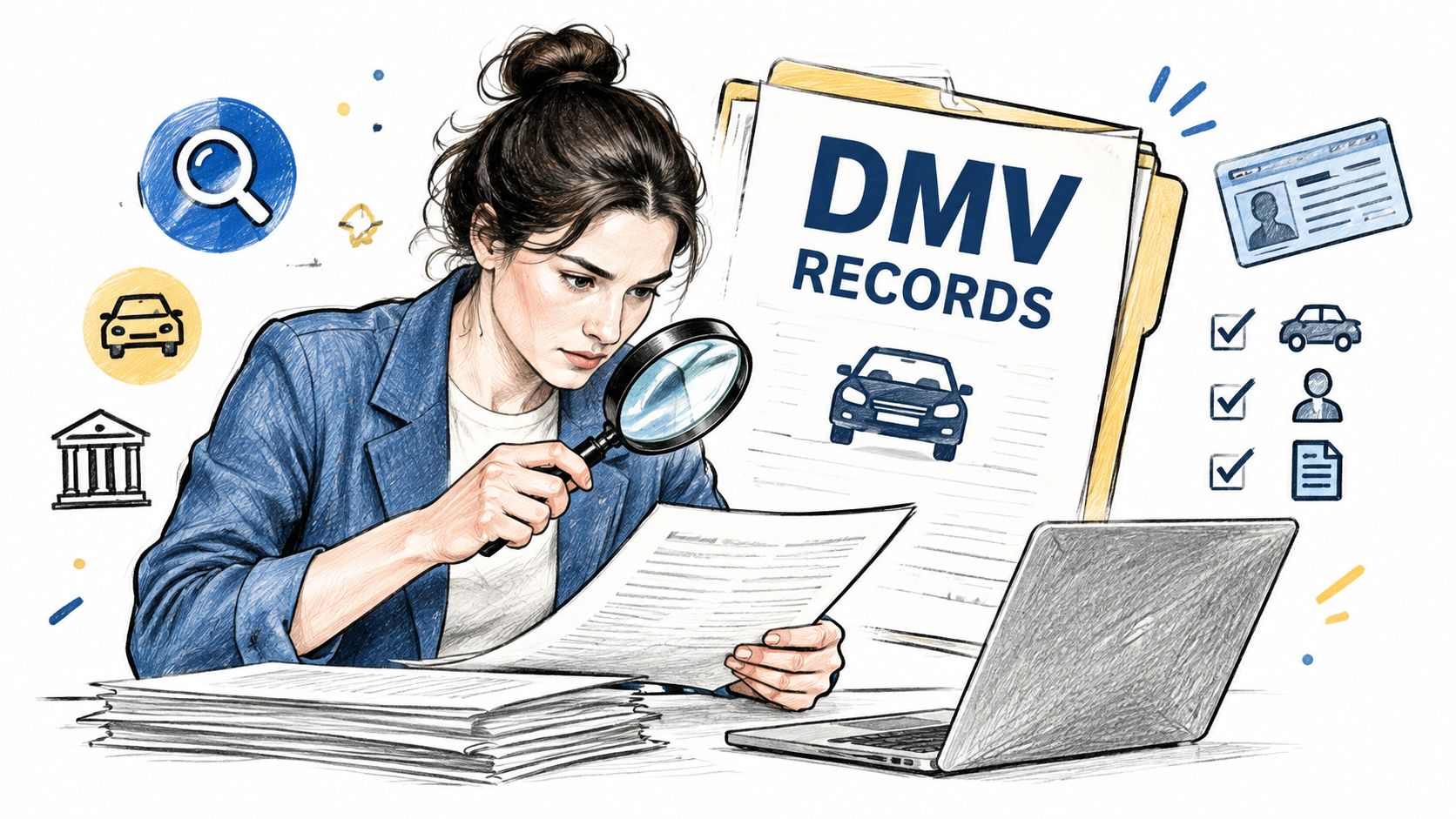
A history report aggregates records from different sources. The state DMV controls the official title record for a vehicle, so its documentation can resolve conflicts that a commercial report can't explain by itself.
Start with the state where the seller says the vehicle is titled. Search that DMV's title-history instructions and determine whether it offers an online lookup, a records request, or a title verification process. Requirements vary, and some agencies may limit the information they release to the registered owner or an authorized requester.
If the seller has the paper title, inspect the brand field rather than relying on a verbal description. Look for wording such as salvage, rebuilt, reconstructed, junk, flood, or another state-specific designation. California DMV guidance says the brand appears on the title and must be disclosed when the vehicle is offered for sale, as explained in its branded-title guidance.
Compare the records, not just the labels
Use the same VIN across the dashboard, door jamb, title, registration, history report, and DMV record. The comparison should answer three basic questions:
| What to compare | What a conflict may indicate |
|---|---|
| VIN characters | VIN mismatch, altered documentation, or an administrative error |
| Title brand | Possible title washing or an incomplete commercial record |
| Odometer history | Mileage inconsistency or a separate ownership problem |
| State chronology | A title transfer that requires further explanation |
Title washing happens when a branded vehicle moves through jurisdictions that use different branding rules, allowing the current document to appear cleaner than the vehicle's broader history. State variation is why a single-state search can't rule out a prior salvage event.
Ask the seller for a photo of the complete title, not just the front corner or VIN area. Refusal isn't proof of a salvage title, but it removes an important verification layer. If the report, title, and seller's explanation don't align, postpone the purchase until the state record clarifies the vehicle's status.
Finding Hidden Clues in Salvage Auction Records
車輛的品牌標題只能說明曾發生重大事件,拍賣紀錄則可能說明實際發生了什麼。保險公司或其他車主可能會把全損車送往救援拍賣場,當時的刊登資料通常會保留維修前照片、損壞描述、車輛批次資訊,以及修復前的外觀線索。
即使手上沒有車輛標題,也可以先用 VIN 搜尋救援拍賣索引和拍賣歷史工具。優先查看維修前照片,不要只看賣家目前上傳的圖片。車頭撞擊可能暴露受損的縱梁、彈出的安全氣囊、斷裂的懸吊零件,或保險桿後方的損壞。泡水車可能出現積水、泥線、拆除內裝或濕地毯。火災、失竊找回和側面撞擊,也會留下不同的損壞模式。
找不到拍賣紀錄,不代表車輛沒有全損歷史。資料可能不完整,刊登頁面可能消失,也不是每輛全損車都會經過相同的銷售管道。只要找到舊刊登,就能建立修復前後的時間線,並核對賣家的說法。
一項 2026 年分析指出,13.7% 的 2.73 億輛車,約每七輛就有一輛,帶有 salvage 或 junk title,因此數位紀錄、政府資料和實車檢查應互相驗證,不能只依賴賣家保證,詳見 the salvage-title inventory analysis。拍賣資料也能協助討論價格,可參考 Toyota Camry vehicle value reference,但車況和修復品質仍比單一估值更重要。
把拍賣照片當作重建工具。將原始損壞與目前安裝的零件逐項比較,再要求維修發票、四輪定位結果、安全氣囊文件和檢驗資料。若存檔照片顯示嚴重撞擊,賣家只說「輕微損傷」就不足以完成核實。
Reading the Physical Signs of a Salvage History
Digital records can miss events, and paperwork can contain errors. The vehicle itself may still show how it was repaired. Inspect it in daylight, with the doors, hood, and trunk open, and don't let a fresh detail job rush you through the examination.
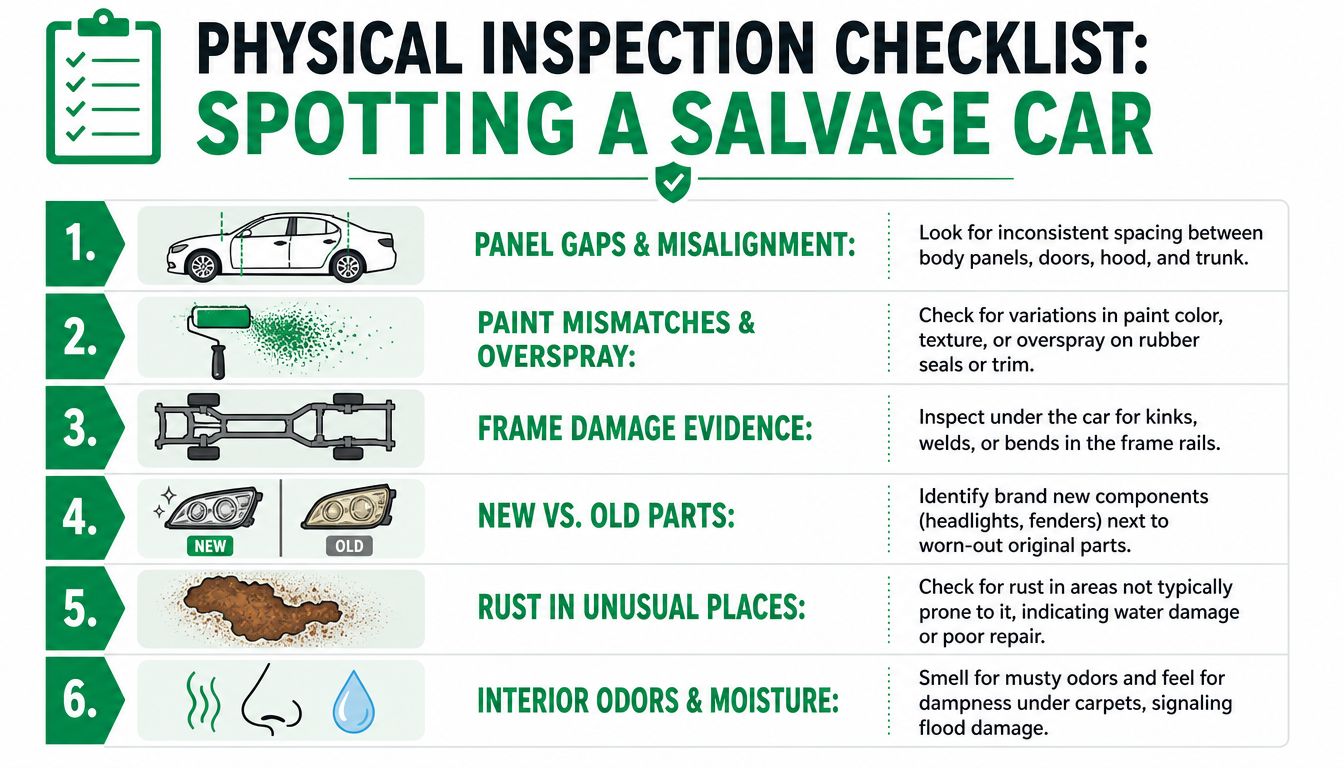
Start with the body alignment. Uneven panel gaps, doors that require extra force, a hood that sits high on one side, or a trunk that doesn't seal evenly can indicate previous impact or rushed reassembly. Paint should be compared panel by panel. Differences in color, texture, gloss, or metallic flake often point to refinishing, while paint on rubber seals, wiring, glass edges, or trim suggests overspray.
Look beyond the exterior
- Frame areas: Inspect accessible frame rails and structural sections for bends, kinks, unusual welds, ripples, or fresh undercoating that may conceal repairs.
- Replacement patterns: New headlights, fenders, hood panels, or suspension parts beside heavily worn components can reveal where a repair focused.
- Fasteners and hardware: Scratched bolt heads, missing clips, disturbed seam sealer, and inconsistent hardware suggest panels or structural parts were removed.
- Cabin and electronics: Test every switch, warning light, window, seat function, and restraint indicator. A repaired car should not be judged only by whether the engine starts.
- Moisture clues: Musty odors, damp carpet, corrosion beneath seats, stained upholstery, or rust in unusual locations deserve particular attention because flood damage can remain hidden.
For a broader perspective on diagnosing water intrusion, this resource on addressing water intrusion in your RV illustrates why moisture often demands inspection beyond visible stains. The same principle applies to cars, especially around wiring connectors, sound-deadening material, and areas beneath carpeting.
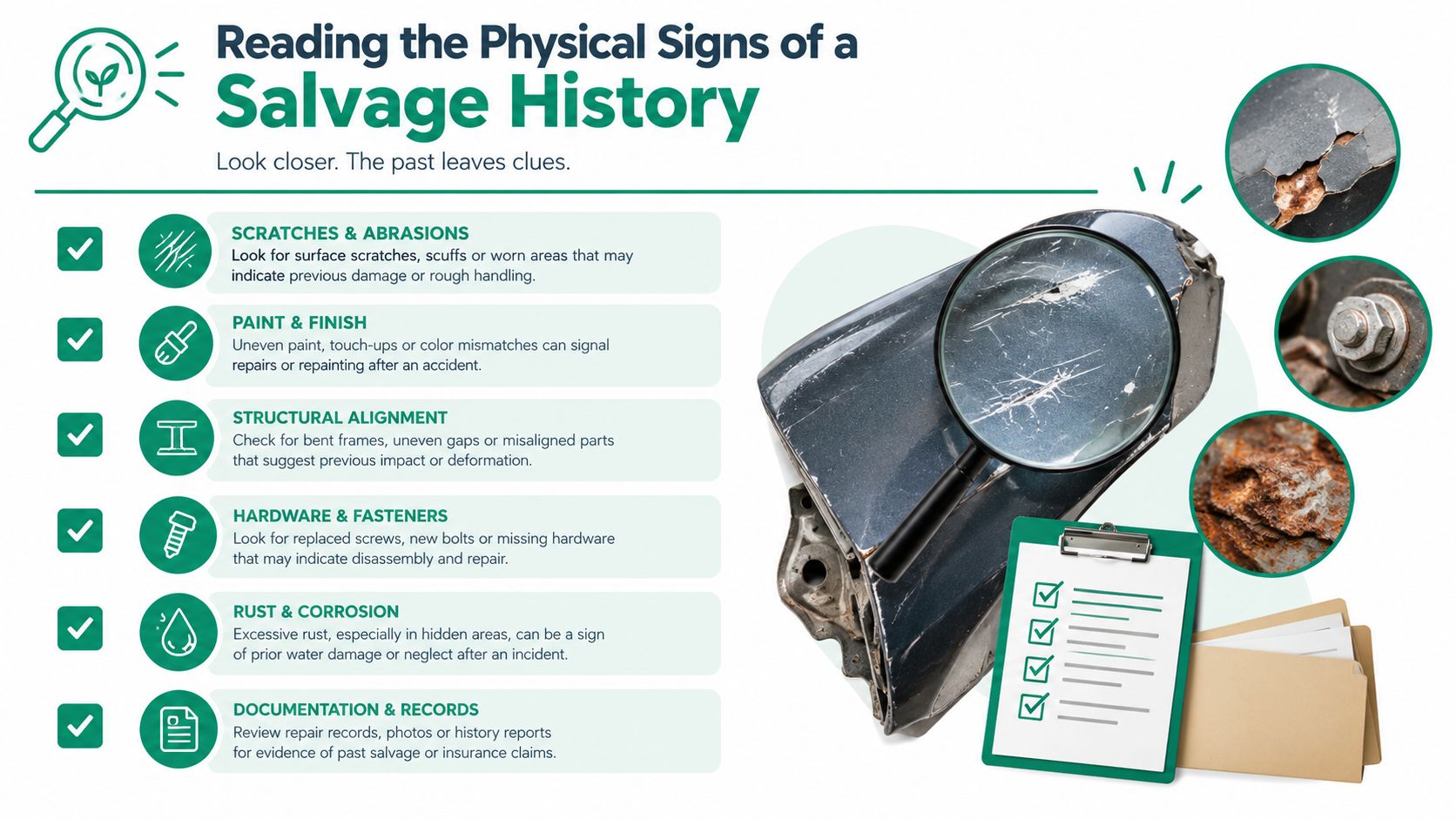
A clean report still isn't conclusive. NMVTIS coverage is incomplete, so a vehicle inspection and title comparison remain necessary, as explained in the NMVTIS consumer guidance. If you aren't qualified to assess frame alignment, take the car to an independent collision specialist before buying. A basic mechanical inspection may not include the structural checks that matter most after a total loss.
You can also check related safety and recall information through a Toyota Camry safety-rating search, but safety ratings for an undamaged model don't establish that a particular repaired vehicle is safe today.
Answering Your Top Salvage Title Questions
Is salvage different from rebuilt?
Yes. Salvage generally identifies the vehicle after an insurer has declared it a total loss, before the repair and retitling process is complete. Rebuilt or reconstructed usually means the previously salvaged vehicle was repaired and passed a state-required inspection, but the original loss history remains relevant. A rebuilt designation isn't a clean-title designation.
Can a rebuilt vehicle be worth considering?
It can be, but only when the evidence supports the repair quality and the buyer understands the trade-offs. Review the original damage, repair invoices, inspection documents, title chronology, insurance availability, and results from an independent mechanic or collision specialist. Don't buy one merely because the seller says the damage was cosmetic or because the car looks straight.
How does title washing affect the search?
Title washing exploits differences among state branding rules. A vehicle may receive a cleaner-looking title after moving jurisdictions even though earlier records still show a salvage or total-loss event. That's why the VIN report, state record, physical title, and auction history should tell the same story.
Do title words mean the same thing everywhere?
No. States can use different terms and apply salvage, rebuilt, junk, flood, and total-loss brands differently. A straightforward explanation of insurance and title terminology is available in this insurance glossary, but the relevant DMV remains the authority for the title issued in that state.
The safest decision rule is simple. If the seller won't provide the VIN, avoids a title inspection, rejects an independent inspection, or gives explanations that conflict with the records, walk away. A salvage history isn't automatically a reason to reject every car, but an unexplained history is a reason to reject this one.
VinCheck provides VIN decoding and vehicle-history reports that can surface title brands, salvage and flood records, theft indicators, mileage issues, recalls, liens, and prior auction activity. Visit VinCheck before you commit money, then compare the report with the title, DMV record, auction evidence, and an independent physical inspection.
About the author
VinCheck Editorial Team — Editorial Standards & Review
The VinCheck Editorial Team reviews every published article against NMVTIS data accuracy and NHTSA recall validity. This byline appears on collaborative pieces and quick-update posts.