 Vin
How to Check a Used Car Before Buying Without Getting Burned
By VinCheck Editorial Team, Editorial Standards & Review · Published 2026-09-22 · Updated 2026-09-22 · Reviewed by VinCheck Editorial Standards
You're standing on a dealer's lot, the paint is clean, the interior smells freshly detailed, and the seller is already talking about monthly payments. That's exactly when buyers make expensive mistakes. A polished car can still carry a branded title, inconsistent mileage, hidden structural repairs, flood damage, or mechanical faults that only appear after a cold start.
The right way to check a used car before buying isn't one quick walkaround. It's a triage workflow. Start with records, inspect the physical car, then verify how it starts, scans, drives, and behaves under load. Each layer exposes a different risk, and a small clue in one layer should tell you what to do next, whether that means measuring a repaired panel, booking a professional inspection, or leaving the car behind.
Table of Contents
- The Three-Layer Used Car Check Framework
- Decoding the VIN and Reading the History Report
- Walking Around the Car in Daylight
- Cold Start, Scan, and Road Test
- Pricing, Value, and Negotiation Anchors
- Red Flags That Mean Walk Away
- Your Pre-Purchase Action Plan
The Three-Layer Used Car Check Framework
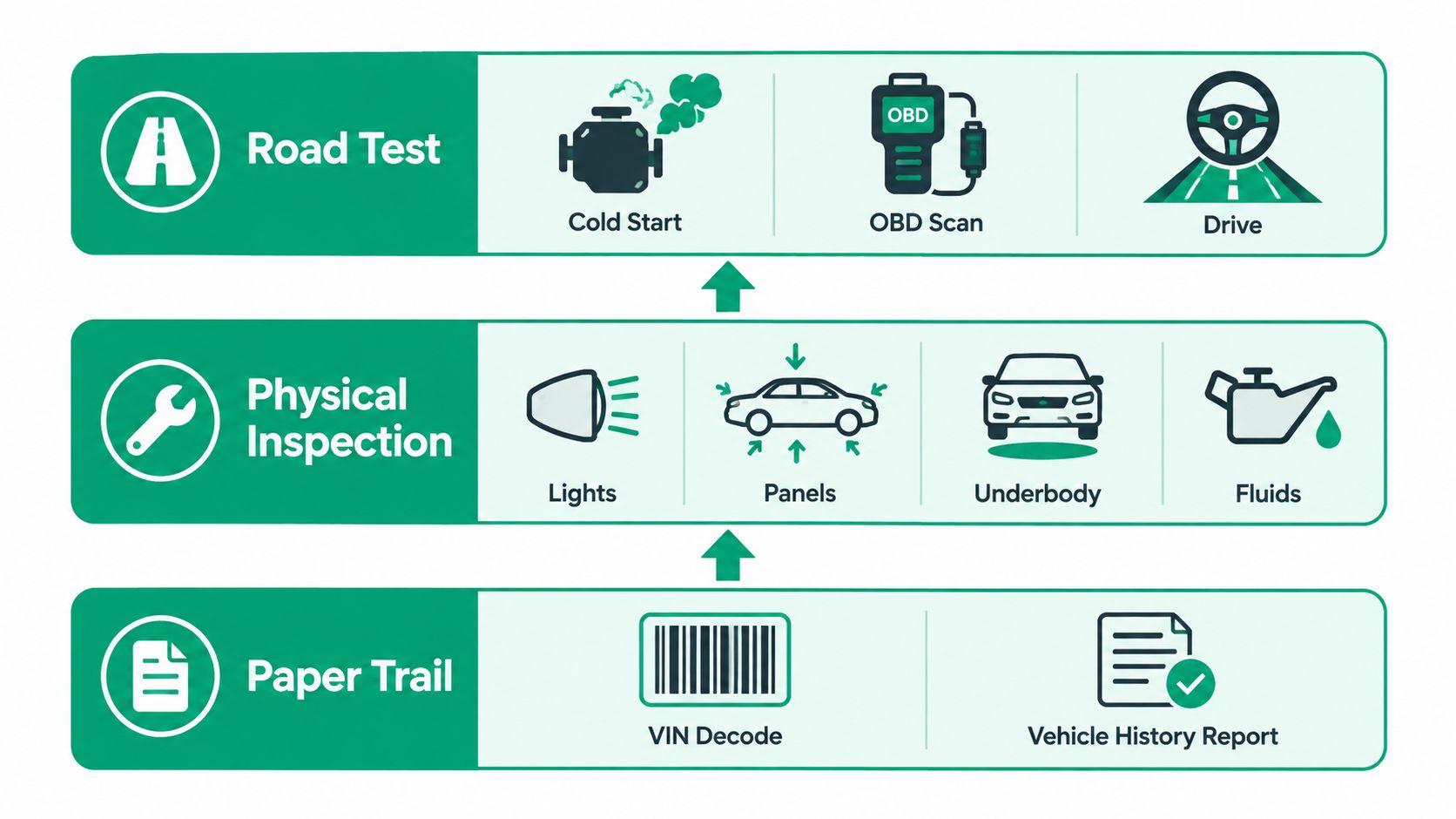
A used-car check works best when you stack three separate filters instead of trusting one impressive-looking report or a short test drive.
Layer one is the paper trail
Begin with the VIN, title information, registration history, odometer records, recalls, liens, and service documentation. This layer can expose title fraud, mileage conflicts, stolen-vehicle concerns, and ownership gaps before you spend time traveling to the seller. NMVTIS, the U.S. National Motor Vehicle Title Information System, was designed to help buyers verify title status, brand history, odometer readings, safety recalls, and damage records through approved vehicle-history providers, as explained by the Bureau of Justice Assistance's NMVTIS guidance.
Layer two is the physical inspection
Your eyes, hands, flashlight, and magnet examine what paperwork may miss. Look at paint reflections, panel gaps, welds, tires, fluid leaks, corrosion, wiring, damp carpeting, and signs of rushed collision repairs. A visual clue isn't automatically proof of a bad car. It is a trigger. Overspray on a rubber seal should lead to closer panel inspection, not an instant conclusion.
Layer three is ride and verification
The cold start, diagnostic scan, and road test reveal faults that don't show up while the car sits still. Rough idle, persistent warning lights, stored codes, transmission hesitation, brake vibration, steering pull, and suspension noise all belong here.
Practical rule: Every suspicious finding should produce a specific next action. Don't collect red flags without deciding what they mean.
A professional inspection is now a routine part of modern buying. One industry estimate placed the global pre-purchase used-car inspection market at USD 1.28 billion in 2025, with a projection of USD 2.48 billion by 2032 (360iResearch market estimate). The numbers reflect a practical reality. Buyers need both official history data and physical verification.
For a model-specific safety reference, you can also review Toyota Camry safety ratings for 2024, but safety ratings don't replace a vehicle-specific history report or inspection.
Decoding the VIN and Reading the History Report
Before you drive to see the car, copy the VIN from the listing and compare it with the vehicle's actual identifiers. A VIN is a 17-character vehicle identification number. You'll usually find it on the dashboard near the windshield, on the driver-side door jamb sticker, and sometimes in the engine bay or registration documents.
The first part identifies the vehicle's origin and manufacturer. Other positions identify the vehicle attributes, model year, assembly plant, and production sequence. You don't need to memorize every position. You need to compare identifiers. The dashboard VIN should match the door sticker, title, registration, and seller's paperwork exactly. A missing sticker, damaged plate, mismatched character, or freshly replaced label deserves escalation.
Run a report before visiting the lot. Services such as Carfax, AutoCheck, and VinCheck can organize accident, title, mileage, ownership, recall, lien, and auction information, but the underlying data has limits. NMVTIS exists to help buyers locate approved providers and verify key title and condition information. You can start with a Toyota Camry VIN check and decoder as an example of the type of vehicle-specific lookup to perform.
Match records instead of merely scanning them
Read the report as a timeline. Compare the dates of registrations, inspections, service entries, auction events, and mileage readings. A mileage increase that doesn't fit the timeline, a reading that moves backward, or a long unexplained gap should stop the purchase process until the seller explains it with original documentation.
A history report can show that a vehicle received a salvage, rebuilt, flood, lemon, or other branded title. It can also show registration movement between states, reported accidents, liens, recalls, and recorded odometer readings. A clean title doesn't prove a clean car, because an unreported accident, incomplete database entry, or poor repair may never appear.
| Data Source | Accident Records | Title Brands | Odometer History | Liens | Recalls |
|---|---|---|---|---|---|
| NMVTIS-based report | May show reported damage or total-loss events | Strong source for title brands | May show recorded readings | May identify lien information where available | May connect buyers to recall information |
| State title and registration records | May reflect title-related events | Shows official state branding | Can add inspection or transfer readings | Helps verify title status | Usually separate from title data |
| Service invoices | May mention repair work | Rarely establishes legal title status | Useful for mileage consistency | Usually doesn't prove lien release | May record completed work |
| Physical inspection | Can reveal unreported repairs | Cannot legally confirm title branding | Cannot prove historical accuracy alone | Cannot clear a lender's claim | Can reveal warning signs, not recall completion |
| Diagnostic scan | May reveal airbag or system faults | Doesn't establish title status | May expose mileage-related module conflicts | Not applicable | Can identify active fault conditions |
Treat a report as evidence, not a mechanical guarantee. It won't tell you the current condition of the transmission, whether frame repairs were measured correctly, or whether today's mileage is accurate. Those questions belong to the physical and diagnostic layers.
Walking Around the Car in Daylight
Do the walkaround in daylight and reserve roughly 45–60 minutes. Follow one fixed route: exterior, underbody, engine bay, interior, then electronics. Good light exposes paint mismatch, uneven gaps, rust, filler, leaks, and corrosion. Start outside before opening anything.
Stand several steps away first. Trace reflections across the doors, fenders, hood, and quarter panels. Wavy reflections can reveal body filler or an uneven repair. Check whether the car sits level, then compare the gaps around the hood, doors, trunk, and fenders. A small visual clue does not prove collision damage, but it tells you where to look next.
Follow the evidence around the body
Walk slowly and inspect each area from more than one angle. Look for:
- Paint transitions: Different color, gloss, cloudy clear coat, or a fresh-looking panel beside faded paint can indicate repainting.
- Overspray: Paint on rubber seals, plastic trim, window channels, lights, or wheel-well liners points to masking or preparation work.
- Panel gaps: Gaps that widen, narrow, or change direction can indicate poor alignment or prior impact damage.
- Repair texture: Press a flat panel lightly with your fingertips, or use a magnet where appropriate. Weak magnetic pull may indicate filler. Do not scratch the paint or force the tool against delicate surfaces.
- Welds and fasteners: Uneven welds, disturbed bolts, fresh undercoating, and mismatched fasteners deserve an underside inspection.
Several clues together change the decision. Fresh paint, uneven gaps, and abnormal tire wear indicate more than a cosmetic defect. Ask for repair invoices. If the explanation remains incomplete, pay for a body-shop inspection or frame measurement before proceeding. If the seller refuses, leave.
Inspect tires, engine bay, and cabin
Check all four tires across the full tread width. Inner or outer wear can point to alignment or suspension trouble. Compare brands, sizes, and apparent ages. A new pair on one axle beside older tires may follow ordinary maintenance, or it may reflect damage repair. Use the tire pattern as a prompt for further inspection, not as a verdict.
Use a flashlight underneath. Look for oil or coolant drips, heavy structural rust, damaged exhaust parts, missing plastic undertrays, and impact marks. In the engine bay, check fluid levels, belts, battery terminals, and disconnected or improvised wiring. A freshly washed engine bay proves nothing. Cleaning can remove evidence.
Inside, operate every major feature: seat adjustments, windows, mirrors, locks, lights, climate modes, infotainment, cameras, wipers, and the horn. Lift the carpets where possible and smell for mildew. Musty odors, damp padding, water marks, or excessive air freshener justify a flood-focused inspection. Weak or cold air conditioning is a repair cost, not a minor inconvenience. Use what you find here to decide whether the next step is a paid inspection, a price adjustment, or walking away.
Cold Start, Scan, and Road Test
A car that drives acceptably after the seller has warmed it up hasn't passed. Ask for a genuine cold start. If the engine is already warm when you arrive, ask why, and treat the answer as part of the evidence.
Watch the engine start, settle, and idle. Listen for knocking, loud ticking, rattling, or repeated surging. Observe exhaust smoke, especially blue, thick white, or unusually dark smoke. Check the dashboard during startup. Warning lights may illuminate briefly as part of the normal bulb check, but important lights should not remain on after the engine runs.
Scan before the drive
Bring a basic OBD-II scanner or compatible phone setup and scan before negotiating. Look for stored and pending diagnostic trouble codes connected to the engine, emissions system, ABS, airbag, or EVAP system. Don't accept “the light was just reset” as an explanation. A recently cleared system can erase useful context without repairing the underlying fault.
A scan also helps identify readiness issues. If multiple monitors aren't ready, ask what work was recently performed and why the system hasn't completed its checks. The scanner doesn't replace a mechanic, but it gives you another layer of evidence before you spend money.
A seller who refuses a cold start or diagnostic scan is withholding part of the inspection, not helping you move faster.
Drive every system that matters
Make the road test long enough to expose different behavior. Drive through low-speed streets, a faster road where legal and safe, turns, stops, and uneven pavement. Keep the radio off at first.
- Transmission: Shift from Park into Drive and Reverse, then accelerate normally. Watch for delays, harsh engagement, slipping, shuddering, or a rise in engine speed without matching acceleration.
- Brakes: Make controlled stops in a safe area. The pedal should feel firm, and the car shouldn't pull, grind, or shake.
- Steering: Check whether the car tracks straight. Notice steering-wheel vibration, wandering, stiffness, or delayed return after a turn.
- Suspension: Cross a rough surface at a safe speed. Clunks, repeated bouncing, rattles, and instability can point to worn struts, bushings, mounts, or wheel bearings.
- Climate and electronics: Test the air conditioning and heat while driving, confirm the compressor engages, and watch for new warning lights.
A structured road test can take 20–30 minutes, according to the used-car test-drive checklist from Mitchell Chrysler Dodge Jeep Ram. If the car passes the drive but showed collision clues earlier, don't downgrade the concern. Driving quality and structural repair quality are separate questions.
Pricing, Value, and Negotiation Anchors
The asking price is not evidence that the car is worth the asking price. It's an opening position. A seller can price a repaired, neglected, or poorly documented car beside clean examples and rely on buyers to compare only the monthly payment.
Build your own comparison. Search AutoTrader, Cars.com, CarGurus, and Carsoup for the same model, trim, drivetrain, mileage range, and ZIP code. Then compare condition, title status, ownership history, equipment, tire condition, warning lights, and documented repairs. Don't compare a clean-title example with a branded-title car and call the difference a bargain.
Separate market context from condition evidence
Kelley Blue Book and NADA can provide valuation context, but neither one can inspect the specific vehicle sitting in front of you. Use valuation tools as a starting reference, then adjust your judgment for collision history, missing records, worn tires, mechanical symptoms, open recalls, and title branding.
A practical negotiation file should contain:
- Comparable listings: Save similar vehicles with their prices and condition notes.
- Documented defects: Photograph paint mismatch, tire wear, leaks, warning lights, and damaged equipment.
- Repair estimates: Ask an independent mechanic or body shop to price the work when the issue affects safety or drivability.
- History evidence: Highlight title brands, mileage conflicts, accident entries, lien concerns, and ownership gaps.
- A walk-away number: Decide what the car is worth to you before the seller applies pressure.
You can also review used-car value information for a 2024 Toyota Camry as one valuation reference, not as a substitute for comparing the actual car with comparable listings.
| Source | What It Provides | How to Use It |
|---|---|---|
| Comparable listings | Current asking context for similar vehicles | Filter tightly by trim, mileage, location, and title status |
| KBB or NADA | General valuation framework | Use as a baseline, then adjust for actual condition |
| History report | Recorded accidents, title events, mileage, and recalls | Use verified entries to question the asking price |
| Mechanic inspection | Mechanical and safety findings | Convert symptoms into repair-based negotiation points |
| Body-shop assessment | Repair-quality and structural findings | Escalate cosmetic clues when alignment or frame damage is possible |
Don't invent a repair bill to negotiate. Show the evidence, explain the risk, and make one clear offer. If the seller won't discuss documented problems, keep your money.
Red Flags That Mean Walk Away
Some problems are repairable. Some problems make the car a bad purchase even when the price looks attractive. Your job isn't to win the negotiation. Your job is to avoid inheriting someone else's unresolved risk.
Walk away from a salvage, rebuilt, flood, lemon, or other branded title unless you're a specialist buyer who understands the damage and the discount compensates for the risk. A branded title can affect financing, insurance, resale, and the ability to verify how the car was repaired. Don't let a clean-looking exterior overrule the title record.
Treat contradictions as a pattern
One questionable detail may deserve investigation. Several contradictions should end the inspection.
- Mileage conflict: Service records, inspection stickers, dashboard readings, or history entries don't follow a logical progression.
- VIN mismatch: The dashboard, door jamb, title, and registration don't show the same identifier.
- Unresolved lien: The seller can't provide written proof that the lender's interest will be released before transfer.
- Fresh bodywork: New paint, overspray, uneven gaps, disturbed bolts, and suspiciously smooth panels appear together.
- Safety concern: Airbag warning lights, damaged restraint components, or scan codes remain unexplained.
- Water evidence: Mildew, damp carpet, corrosion in unusual places, or a strong masking fragrance suggests moisture exposure.
- Seller resistance: The seller refuses an independent inspection, avoids direct answers, withholds records, or pressures you to close immediately.
Walk-away rule: If the seller's explanation requires you to ignore the report, the inspection, and your instincts at the same time, leave.
A current lien deserves special caution. The seller may possess the car, but the lender may still control the title interest. A wire transfer doesn't solve that problem. Require a documented payoff and title-release process through the appropriate institution before you treat the vehicle as transferable.
The same principle applies to accident repairs. Uneven paint alone isn't proof of structural damage. Uneven paint combined with inconsistent gaps, weld marks, tire wear, and a pull on the road is enough to demand professional measurement. If the seller won't allow that inspection, you already have your answer.
Your Pre-Purchase Action Plan
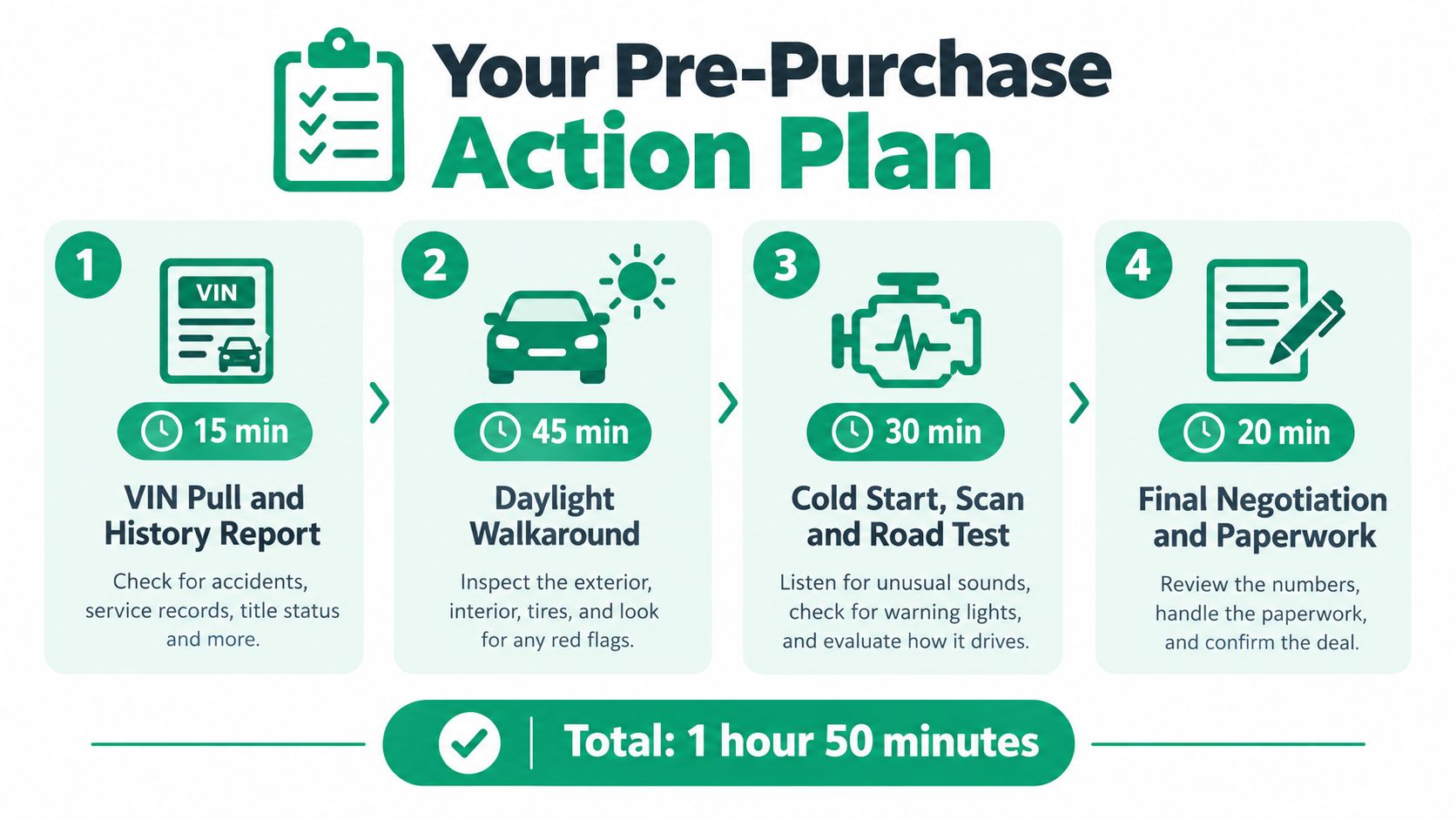
Use a fixed order at the lot. It keeps a polished listing or eager salesperson from rushing your judgment. Before leaving home, spend 15 minutes pulling the VIN and reviewing the available history. Match the listing VIN to the report, check title brands, compare mileage entries, review recalls, and write down every unanswered question.
Bring your driver's license, proof of insurance, a flashlight, magnet, and phone for photos and notes. Ask directly:
- “Can I see the title and registration?”
- “Can I compare the VIN on the dashboard with the door sticker?”
- “Can I see the service records and repair invoices?”
- “Will you allow an independent pre-purchase inspection?”
- “Can I see the second key?”
- “Who was the previous owner, and how was the car used?”
- “Why was the engine already warm?”
Use this lot sequence
- Paper trail: Verify the VIN, title, registration, mileage, recalls, liens, and service records.
- Daylight walkaround: Spend 45–60 minutes checking paint, gaps, tires, lights, underbody, engine bay, odors, and electronics. Treat a small clue as a triage signal. One odd panel may need closer inspection. Several clues together justify a paid body-shop or mechanic assessment.
- Cold start and scan: Start the engine cold, watch the idle and exhaust, then scan for stored and pending codes.
- Road test: Drive long enough to assess the transmission, brakes, steering, suspension, climate control, and warning lights.
- Escalation: Collision clues call for a mechanic, body-shop measurement, alignment-rack check, or structural inspection. Do not guess at hidden damage in the parking lot.
- Negotiation: Base your offer on documented defects and inspection findings, not payment size or sales pressure.
- Cooling-off period: Leave without signing immediately. Give yourself 24 hours before committing to paperwork.
A mechanic's inspection commonly costs about $100–$200 and may identify $1,000–$5,000 or more in hidden repairs, according to Decide Before Buying's used-car checklist. Pay for it when the vehicle is older, the history is unclear, or visual evidence suggests collision damage. Walk away when the seller blocks the inspection or refuses to explain a serious finding.
The paper trail filters the car. The walkaround finds the risk. The cold start, scan, and road test decide whether professional verification is justified.
VinCheck provides a starting point for VIN decoding and vehicle-history information, including title brands, accidents, mileage issues, recalls, liens, theft indicators, and prior sales activity. Run the VIN before visiting the lot, then use the results to decide whether the car deserves your inspection time through VinCheck.
About the author
VinCheck Editorial Team — Editorial Standards & Review
The VinCheck Editorial Team reviews every published article against NMVTIS data accuracy and NHTSA recall validity. This byline appears on collaborative pieces and quick-update posts.