 Vin
Do Recalls Expire? What Every Owner Needs to Know
By VinCheck Editorial Team, Editorial Standards & Review · Published 2026-09-08 · Updated 2026-09-08 · Reviewed by VinCheck Editorial Standards
A vehicle recall itself doesn't expire, but in the United States the manufacturer's obligation to provide a free remedy is generally limited to vehicles no more than 15 years old when the defect or noncompliance is determined. The age is measured from the vehicle's original sale date to its first purchaser, not from the recall announcement or the date you bought it used.
So why do so many owners ask, “Do recalls expire?” The confusion comes from treating two different things as one. The recall record can remain open on the vehicle's VIN indefinitely, while the legal right to receive that repair at no cost may depend on the vehicle's age and the type of campaign involved.
That distinction matters if you own an older car or are considering a used one. An open recall shouldn't be ignored merely because it's old, and an owner shouldn't assume that every old campaign still guarantees a free repair. You need to check both the vehicle's recall status and its remedy eligibility.
Table of Contents
- The Short Answer to Whether Recalls Expire
- What a Vehicle Recall Actually Is
- Open Versus Completed Recalls Explained
- The 15 Year Free Repair Window Most Owners Miss
- Why Recall Type Changes Whether the Repair Stays Free
- What to Do When You Find an Open Recall
- How Recalls Affect Used Car Buyers and Resale Value
- Key Takeaways and Your Next Steps
The Short Answer to Whether Recalls Expire
A safety or compliance recall doesn't fall off the record with time. Once a campaign is associated with a vehicle identification number, or VIN, it remains open until the required remedy is recorded as completed. Canada Drives describes this as a VIN-specific process, meaning an unrepaired recall can remain attached to a vehicle through ownership changes rather than disappearing when a warranty ends. Learn how VIN-specific recall tracking works.
The separate question is whether the repair is still guaranteed to be free. In the United States, NHTSA states that a vehicle generally can't be more than 15 years old on the date the defect or noncompliance is determined for the free remedy requirement to apply. The clock uses the original sale date to the first purchaser. NHTSA's recall guidance explains the distinction.
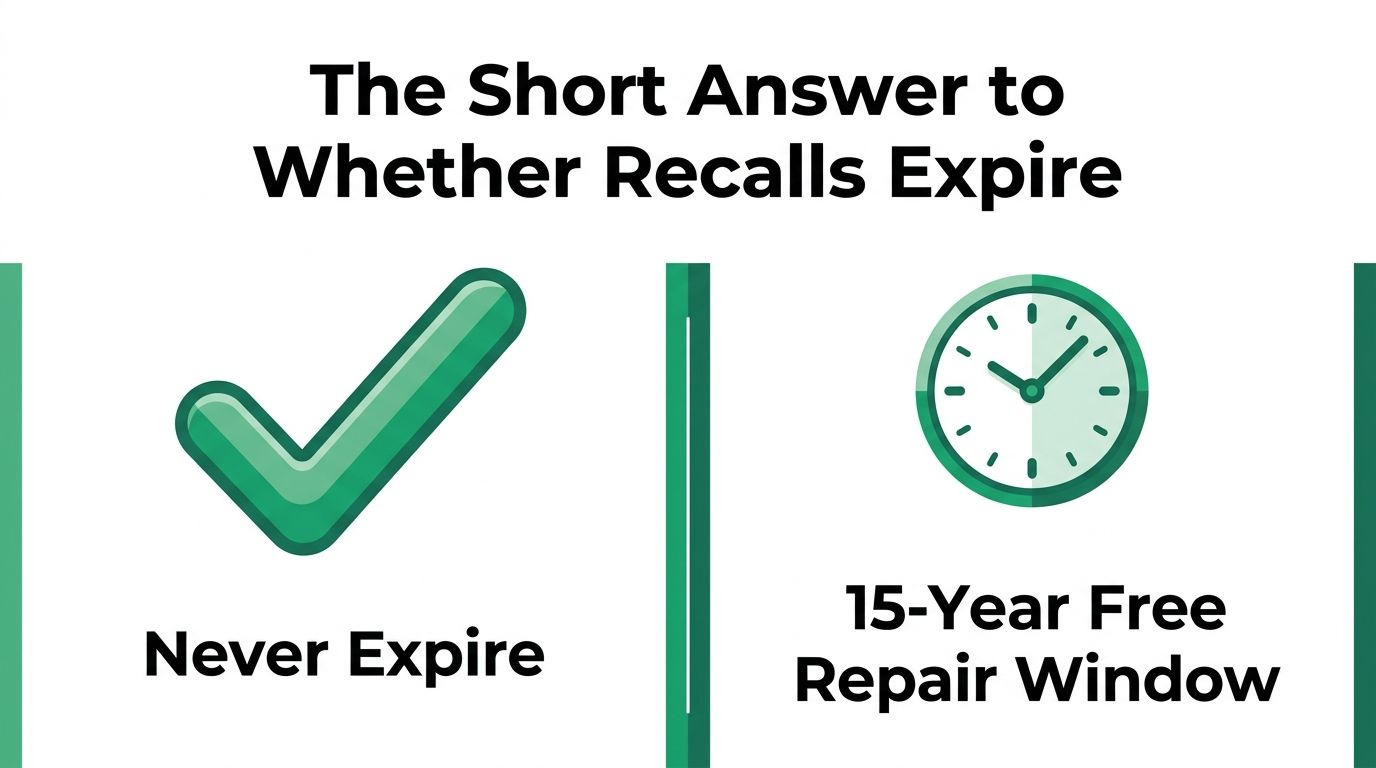
Think of the rule as two separate tracks:
- The vehicle record: An open recall stays associated with the VIN until the repair is completed.
- The free-repair window: Federal eligibility can be limited by the vehicle's age and the campaign category.
Practical rule: Never decide that a recall is irrelevant just because it's old. First confirm whether it's open, then ask whether the free remedy still applies.
This prevents two common mistakes. Some owners miss an important repair because they assume an old notice expired. Others expect a dealer to provide a free repair without checking the original in-service date or whether the program is a regulated recall at all.
What a Vehicle Recall Actually Is
A vehicle recall is a formal response to a safety-related defect or a failure to meet an applicable requirement. A manufacturer may identify the problem and initiate the campaign, or NHTSA may investigate and require corrective action. The issue might involve equipment fitted to a vehicle or a particular component installed during a defined production range.
The important detail is that a recall doesn't belong to the person who received the notice. It belongs to the vehicle covered by the campaign. The manufacturer identifies the affected VIN range, component, model configuration, and production circumstances, then records whether the remedy has been performed on each individual vehicle.
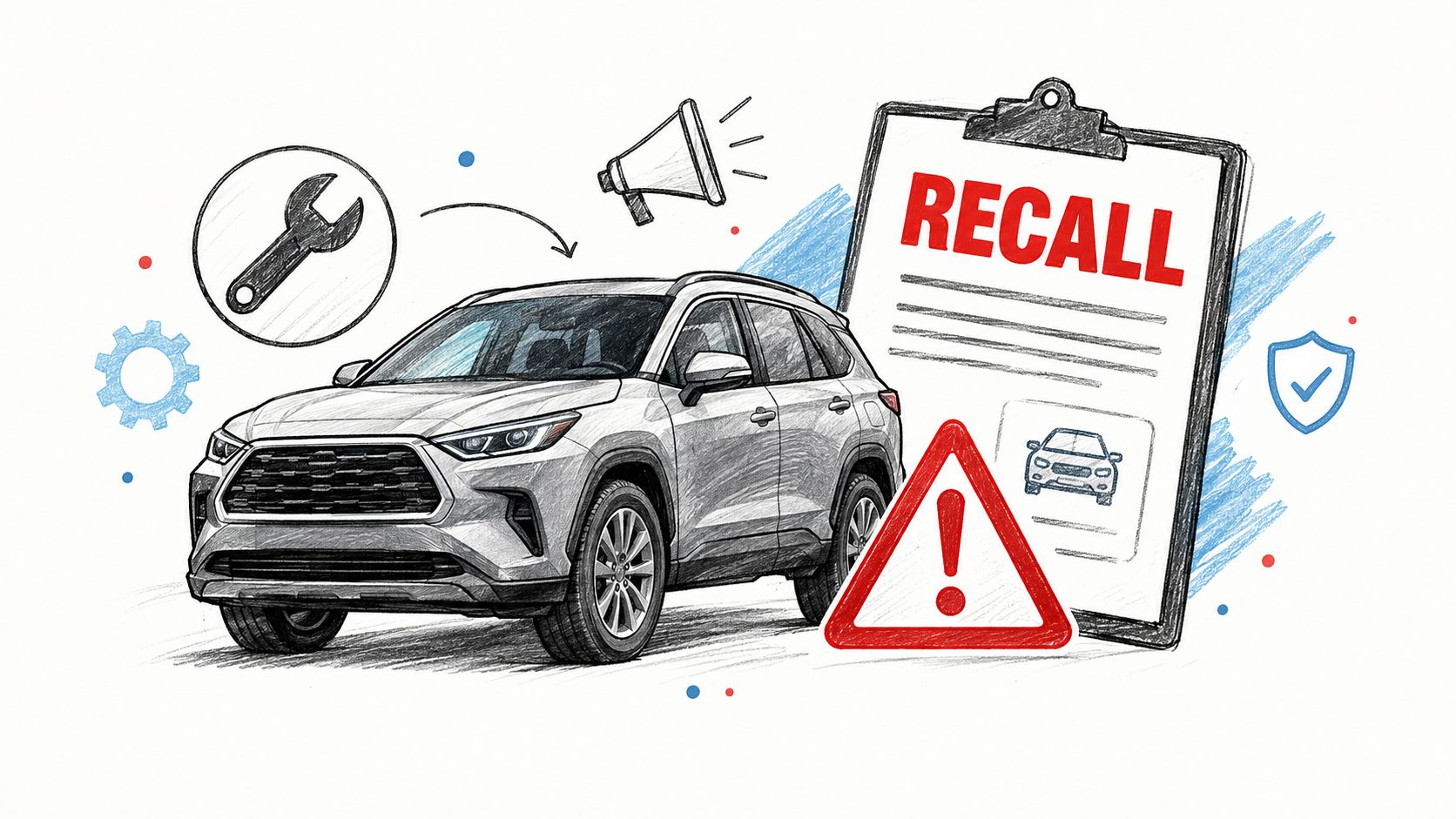
How the campaign follows the VIN
Ownership can change, the car can move between states or provinces, and the warranty can end. None of those events automatically completes the campaign. A buyer researching a Toyota Camry safety profile should treat recall status as a vehicle-specific issue, not as something settled by the seller's ownership history.
The paperwork usually identifies the campaign number, the affected part or condition, the risk, and the proposed remedy. An owner notification letter may also explain how to arrange service through an authorized dealer. Those details help the service department match the campaign to the correct VIN and determine what work remains.
Why the record matters
A recall database is not a warranty ledger. It's a record of an identified defect or noncompliance and the remedy status for a particular vehicle. That's why the key question isn't whether the model was ever recalled. The useful question is whether this VIN shows an open campaign or a completed remedy.
Open Versus Completed Recalls Explained
An open recall means the remedy hasn't been recorded as performed on that specific VIN. Until an authorized repair is documented, the database treats the campaign as unresolved. That doesn't prove the defect will fail today, but it does mean the vehicle lacks a verified completion record.
A completed recall means the required remedy was carried out and reported against the VIN. The repair could involve replacing a component, modifying a system, or completing another manufacturer-specified correction. The record changes because the vehicle received the campaign remedy, not because the calendar advanced.
The simplest mental model
Use this comparison when reading a report:
| Status | What it means | What you should do |
|---|---|---|
| Open | The remedy isn't recorded for this VIN | Contact an authorized dealer and confirm eligibility |
| Completed | The campaign repair is recorded for this VIN | Keep the repair documentation with the vehicle records |
A recall from years ago can still show as open if nobody performed the work. Conversely, a recently announced campaign can show as completed if the dealer already repaired that particular vehicle. Age affects remedy eligibility, but it doesn't convert an open status into a completed one.
Why records sometimes need confirmation
Dealers report completed repairs through manufacturer systems, and the database may not update at the exact moment the work is finished. If you have a repair order showing that the campaign was completed but the online result still says open, ask the dealer to verify the record and submit any necessary update.
The status also doesn't answer every financial question. An open entry tells you that the remedy remains unrecorded. It doesn't, by itself, establish whether the manufacturer still has to provide that remedy at no cost. That requires checking the campaign type and the vehicle's original sale date.
The 15 Year Free Repair Window Most Owners Miss
The 15-year rule is measured from the vehicle's original sale date to the first purchaser, according to NHTSA's recall guidance. It isn't measured from the date you acquired the car, the date the recall was announced, or the date the database first displayed the campaign. Review NHTSA's explanation of recall investigations and remedies.
That timing creates a practical trap for used-car buyers. A vehicle can be relatively old when the recall is announced, or it can change hands several times before anyone checks the VIN. The recall may still appear open, but the dealer needs the original in-service information to determine whether the free-remedy requirement applies.
A simple date example
Suppose a truck was originally sold to its first purchaser in a particular year and a fuel-pump defect was identified several years later. If the vehicle remains within the applicable age window on the date the defect or noncompliance is determined, the owner may still qualify for the free repair even if the current owner bought the truck much later.
The reverse can also happen. An open campaign can remain visible in the vehicle record after the applicable age limit has passed. In that situation, open does not automatically mean free. The record remains useful because it tells you that the remedy was never documented, but the dealer may need to explain whether the manufacturer's legal obligation still covers the work.
What to verify before making assumptions
Ask the manufacturer's authorized dealer to check:
- Original sale date: Confirm the date used to calculate the vehicle's age.
- Campaign category: Determine whether the entry is a regulated safety, compliance, or emissions recall.
- Remedy status: Verify that the repair remains outstanding on the VIN.
- Current eligibility: Ask whether parts and labor are covered under the campaign.
Consumer Reports also highlights the difference between a recall remaining listed and the free repair being available, a distinction that owners of older vehicles often miss. Read its recall guide for the practical eligibility issue.
Why Recall Type Changes Whether the Repair Stays Free
Not every manufacturer notice has the same legal status. A regulated safety or compliance campaign is different from a customer-satisfaction program, warranty extension, or regional service action. Ford's recall FAQ separates safety, compliance, and emissions recalls from programs that may have their own limits involving time, distance, or other conditions. See Ford's explanation of recall categories and expiration rules.
A practical comparison
| Recall Type | Issued By | Free Repair? | Time Limit | Can Be Withdrawn? |
|---|---|---|---|---|
| Safety recall | Manufacturer or safety authority | Generally covered when eligible | Federal age rules may apply | The open record remains until remedied |
| Compliance recall | Manufacturer or regulatory authority | Generally covered when eligible | Federal age rules may apply | The open record remains until remedied |
| Emissions recall | Manufacturer under applicable emissions requirements | Generally covered when eligible | Federal age rules may apply | The open record remains until remedied |
| Customer-satisfaction campaign | Manufacturer | Only under the program terms | May include time, distance, or other limits | The manufacturer may end the program |
| Warranty extension or service action | Manufacturer | Only under the stated conditions | Depends on the written program | It may have a defined end point |
The first three categories have a regulatory foundation. Their campaign records can remain open until the remedy is completed, but free eligibility still depends on the applicable age rule and campaign documentation.
Voluntary programs work differently. A manufacturer might offer a repair to address customer concerns without classifying the issue as a safety recall. That offer can include conditions that don't apply to a regulated campaign. Calling every notice a “recall” can therefore create the wrong expectation about lifetime free service.
Before approving paid work, ask the service department to identify the campaign type in writing.
This is especially important for imported, cross-border, and high-mileage vehicles. A campaign recognized in one market may not have identical coverage in another, and a customer-support action may carry different terms from a federally regulated recall.
What to Do When You Find an Open Recall
An open recall gives you a clear next task, not a reason to panic. Work from the VIN record, then confirm the remedy with the brand's authorized service department.
Run the VIN through NHTSA's recall lookup. Use the official NHTSA vehicle recall search and save the result for your records. If you're reviewing a used car, a separate Toyota Camry VIN check can help place the recall result alongside other vehicle-history information.
Record the campaign details. Write down the campaign number, affected component, stated risk, and remedy description. Those details give the service adviser something precise to verify instead of relying on a general model-year search.
Call an authorized dealer. Ask whether the repair is available for your VIN, whether the necessary parts are in stock, and whether the work is covered at no cost. Give the adviser the original sale or in-service information if the vehicle is older, because the current year alone doesn't settle eligibility.
Treat driving restrictions seriously. If the notice includes a do-not-drive instruction, follow it. Certain airbag campaigns, including Takata-related notices, have carried urgent driving warnings. Ask the manufacturer or dealer whether the vehicle should be parked or transported rather than driven to the appointment.
Keep the repair order. Store the invoice or repair order with the title and maintenance records. It provides evidence that the remedy was performed and can help resolve a later discrepancy in a vehicle-history report.
Repair shops and dealerships also face their own operational risks, so owners comparing coverage for an independent business may find it useful to compare garage liability plans before choosing a service provider. For the recall itself, however, use the authorized dealer designated by the manufacturer.
How Recalls Affect Used Car Buyers and Resale Value
For a used-car buyer, an open recall is both a safety question and a negotiation point. The campaign remains tied to the VIN, so changing owners doesn't erase the unresolved status. A seller who says, “It's an old recall,” hasn't answered the important question, which is whether the remedy was completed.
Start before the viewing appointment. Ask for the VIN, check the recall databases, and compare the result with the seller's service records. A report that says the campaign is open should lead to a conversation about repair scheduling, not an assumption that the vehicle is automatically unsafe to buy or that the seller's verbal assurance is enough.
A buyer's recall checklist
- Search before visiting: Check the VIN before spending time inspecting or test-driving the vehicle.
- Request proof: Look for a dealer repair order identifying the campaign and the completed remedy.
- Confirm the current status: If the seller says the repair was done, ask the dealer to verify the manufacturer record.
- Price the inconvenience: Consider the appointment, parts availability, and any driving restriction when negotiating.
- Put the agreement in writing: If the seller promises to complete the repair, include that promise in the purchase documents.
An open recall can affect trade-in discussions and private-sale negotiations because the next owner will inherit the unresolved record. Financing and insurance decisions can also involve additional review when a vehicle has an active safety issue, although the exact effect depends on the lender, insurer, vehicle, and campaign.
For a broader negotiation context, a Toyota Camry used-car value reference can be considered alongside the recall result. The recall doesn't determine the entire vehicle's worth, but it can change what a careful buyer is willing to pay today.
Key Takeaways and Your Next Steps
The answer to “Do recalls expire?” has two parts. The recall itself remains associated with the VIN until the remedy is recorded as completed. In the United States, the manufacturer's free-remedy obligation is generally limited to vehicles no more than 15 years old when the defect or noncompliance is determined, with age measured from the original sale date to the first purchaser. NHTSA provides the governing consumer guidance.
Keep these distinctions separate:
- Open status: The repair hasn't been documented for that vehicle.
- Completed status: The campaign remedy has been recorded against the VIN.
- Free eligibility: The campaign type, original sale date, and manufacturer rules determine whether the repair remains covered.
- Voluntary program: A customer-satisfaction action or warranty extension may follow different limits.
Your next steps are straightforward. Look up the VIN, save the result, identify every open campaign, and call an authorized dealer with the campaign number. Ask the dealer to verify the original in-service date and confirm whether parts, labor, and related work are covered before scheduling the repair.
If you're buying a used vehicle, complete the recall search before agreeing on a price. Older cars remain traceable even when their ownership history is complicated, and checking costs nothing through the official lookup process. Skipping the check is the avoidable risk.
VinCheck can help you review VIN-linked vehicle history alongside recall information, including records such as title brands, accidents, mileage issues, theft indicators, and other status details. Visit VinCheck before buying or selling a used vehicle, then use the results to ask better questions and confirm that open recalls are addressed.
About the author
VinCheck Editorial Team — Editorial Standards & Review
The VinCheck Editorial Team reviews every published article against NMVTIS data accuracy and NHTSA recall validity. This byline appears on collaborative pieces and quick-update posts.